Table of Contents
Tumour Lysis Syndrome: A Treatment Emergency in Blood Cancers

By Dr. Gajendra Kumar Himanshu


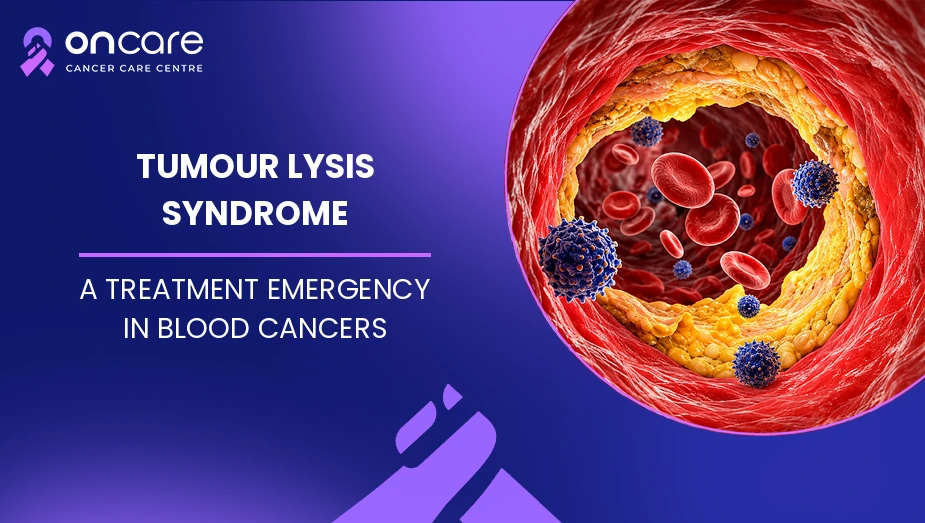
Tumour lysis syndrome (TLS) is a serious medical emergency that can happen when a large number of cancer cells die quickly, often after cancer treatment. When these cells break down, they release substances into the blood that can cause dangerous changes in potassium, phosphate, uric acid, and calcium levels. These changes can damage the kidneys, heart, and other organs if not treated quickly. TLS is seen most often in fast-growing blood cancers such as some leukaemias and lymphomas, especially when treatment causes a rapid response.
Tumour lysis syndrome can develop shortly after treatment begins, and in some cases it can happen even before treatment. Because the condition can become serious quickly, doctors often identify patients at higher risk before starting therapy and use preventive treatment and close blood-test monitoring.
In this blog, we explain what tumour lysis syndrome is, why it happens, who is at higher risk, the symptoms to watch for, how doctors prevent and treat it, and why urgent medical care is important.
What Is Tumour Lysis Syndrome?
Tumour lysis syndrome happens when cancer cells break down faster than the body can safely remove the substances released from them. These substances enter the bloodstream and can change the body’s normal chemical balance.
The main changes doctors watch for are:
- High uric acid: Can build up and damage the kidneys.
- High potassium: Can affect the heart and may cause dangerous heart rhythm problems.
- High phosphate: Can contribute to kidney problems and cause calcium levels to fall.
- Low calcium: Can cause muscle cramps, tingling, seizures, or heart-related problems when severe.
Because several of these changes can happen at the same time, TLS needs quick recognition and treatment.
You can learn more about how chemotherapy treats blood cancer and why some fast-growing blood cancers may respond rapidly to treatment.
Why Does Tumour Lysis Syndrome Happen?
Cancer treatments such as chemotherapy can destroy cancer cells very quickly. Targeted therapy and other treatments can also cause rapid cancer-cell breakdown in some situations. TLS is especially associated with cancers that have a large number of rapidly growing cells and are very sensitive to treatment.
The condition is most often linked with certain types of leukaemia and lymphoma, but it can occur with other cancers as well. A person’s risk depends on the type and amount of cancer, how quickly the cancer is growing, the treatment being given, and kidney function.
Importantly, TLS does not mean that cancer treatment has gone wrong. It can occur because treatment is successfully killing a large number of cancer cells very quickly. The concern is that the substances released during this process can overwhelm the body’s ability to remove them.
Who Is at Higher Risk?
Doctors assess TLS risk before treatment so that preventive steps can be taken when needed. Risk is higher in some patients with fast-growing cancers, a large amount of cancer in the body, high blood levels of certain substances, or reduced kidney function.
Some situations that may increase risk include:
- Fast-growing leukaemia or lymphoma
- A large tumour burden, meaning many cancer cells are present
- High uric acid or other abnormal blood-test results before treatment
- Kidney problems
- Certain cancers that respond very strongly to treatment
- Treatments expected to destroy cancer cells rapidly
Not every patient with blood cancer develops TLS. Your cancer team will assess your individual risk before and during treatment.
For a simple overview of the major blood cancers, you can read our blog on different types of blood cancer.
What Are the Symptoms of Tumour Lysis Syndrome?
Symptoms can develop quickly and may be different from person to person. Some symptoms happen because the kidneys are affected, while others are caused by changes in potassium, calcium, or phosphate levels.
Possible symptoms include:
- Nausea or vomiting
- Muscle cramps or weakness
- Tingling or numbness
- Reduced urine output
- Swelling
- Shortness of breath
- Irregular or fast heartbeat
- Confusion
- Seizures in severe cases
Some people may have abnormal blood-test results before they notice any symptoms. This is one reason why frequent blood tests are important in patients who are at high risk.
If a patient receiving cancer treatment suddenly develops severe weakness, confusion, difficulty breathing, seizures, significant changes in urination, or an abnormal heartbeat, the oncology team should be contacted immediately, or emergency care should be sought.
Tumour Lysis Syndrome: Important Changes in the Body
The table below explains the main blood chemistry changes seen in tumour lysis syndrome and why each one matters.
Change | What happens | Why it matters |
|---|---|---|
High uric acid | Cancer-cell breakdown releases substances that form uric acid | Can damage the kidneys |
High potassium | Potassium is released from damaged cells | Can cause dangerous heart rhythm problems |
High phosphate | Phosphate is released from cancer cells | Can contribute to low calcium and kidney problems |
Low calcium | Calcium can fall when phosphate rises | May cause cramps, tingling, seizures, or heart problems |
Kidney injury | Kidneys may struggle to remove waste | Can worsen the chemical imbalance |
These changes can occur together, which is why TLS requires close monitoring and timely treatment.
How Is Tumour Lysis Syndrome Diagnosed?
Doctors diagnose TLS using blood tests and the patient’s clinical condition. Blood tests may be repeated frequently during the period when the risk is highest.
Doctors usually monitor levels of:
- Uric acid
- Potassium
- Phosphate
- Calcium
- Creatinine and other measures of kidney function
The medical team may also monitor urine output, heart rhythm, fluid balance, and other signs of organ problems.
The timing of monitoring depends on the patient’s risk level and the cancer treatment being given. Patients at high risk may need very close monitoring in a hospital setting.
How Can Tumour Lysis Syndrome Be Prevented?
Prevention is an important part of TLS management. Doctors usually identify high-risk patients before starting cancer treatment and take steps to reduce the chance of serious complications.
One of the main preventive measures is giving enough fluids, often through a vein when appropriate. Good hydration helps the kidneys remove waste products from the blood.
Doctors may also use medicines such as allopurinol or rasburicase in selected patients. Allopurinol reduces the formation of new uric acid, while rasburicase helps break down uric acid that is already present.
The choice of medicine depends on the patient’s risk and medical condition. These medicines should only be used under medical supervision.
How Is Tumour Lysis Syndrome Treated?
If TLS develops, treatment focuses on correcting the abnormal blood levels and protecting important organs, especially the kidneys and heart.
Treatment may include intravenous fluids, medicines to control uric acid, treatment for dangerous potassium or calcium changes, and close monitoring of kidney function and heart rhythm. In severe cases, dialysis may be needed if the kidneys cannot remove waste and excess fluid adequately.
Treatment needs to be individualised. Doctors may also adjust or temporarily change cancer treatment depending on how severe the TLS is and the patient’s overall condition.
You can learn more about chemotherapy and what patients can expect during treatment, including why blood tests and medical monitoring are important during cancer treatment.
Can Tumour Lysis Syndrome Be Avoided?
TLS cannot always be completely prevented, but careful risk assessment, hydration, preventive medicines, and regular blood tests can greatly help doctors identify and manage the problem early.
Patients should not try to manage TLS symptoms at home. The condition is related to changes in blood chemistry that may become dangerous before obvious symptoms appear.
If your doctor tells you that you are at high risk of TLS, follow the instructions about fluids, medicines, blood tests, and hospital monitoring carefully.
Why Close Monitoring Matters During Blood Cancer Treatment
The risk of TLS is usually greatest around the time cancer treatment starts or when a treatment is expected to destroy cancer cells quickly. This is why your oncology team may order repeated blood tests even when you feel well.
Monitoring allows doctors to detect changes in potassium, uric acid, phosphate, calcium, and kidney function early. Treatment can then be started before the problem becomes more severe.
This is particularly important for patients with fast-growing leukaemias and lymphomas, where TLS can develop rapidly.
If you want to read more about tumour lysis syndrome, you can visit the National Library of Medicine.
Consult Today
Tumour lysis syndrome is a serious complication that can occur when cancer cells die rapidly, especially during treatment of certain blood cancers. Although it can affect the kidneys, heart, and other organs, careful risk assessment, preventive treatment, and close monitoring can help doctors manage the risk.
At Oncare Cancer Hospital, cancer specialists can assess your blood cancer, treatment plan, and individual risk of complications such as tumour lysis syndrome. The team can use blood tests, preventive medicines, hydration, and close monitoring when appropriate to support safer cancer treatment.
If you or a family member is starting treatment for a fast-growing blood cancer, ask your cancer specialist whether you are at risk of tumour lysis syndrome and what precautions are needed.
Disclaimer
This information is for educational purposes only and does not constitute medical advice, diagnosis, or treatment. Always discuss decisions about fluids, medicines, blood tests, or any cancer treatment with a certified cancer healthcare provider.





Frequently Asked Questions
Yes, severe TLS can cause dangerous changes in blood chemistry and damage the kidneys, heart, and other organs. It requires urgent medical management.
It is most commonly associated with certain fast-growing leukaemias and lymphomas, particularly when they respond rapidly to treatment.
Yes, although it often occurs after treatment starts, TLS can occasionally develop before treatment, particularly in cancers with a high tumour burden.
Doctors may use hydration, preventive medicines such as allopurinol or rasburicase, and frequent blood tests in patients who are at risk.
Written and Verified by:
Dr. Gajendra Kumar Himanshu Exp: 10 Yr
Medical Officer
Book an Appointment
Related Blogs
IMRT and IGRT: How Modern Radiotherapy Spares Healthy Tissue
Learn the difference between IMRT and IGRT, how they work, their benefits, side effects, and role in precise cancer radiation treatment at Oncare Cancer Hospital.
Myelofibrosis: A Bone Marrow Disorder That Thickens With Scar Tissue
Learn about myelofibrosis, its causes, symptoms, diagnosis, bone marrow fibrosis, treatment options, and stem cell transplant at Oncare Cancer Hospital.
Ampullary Cancer: A Rare Tumour Near the Pancreas Explained
Learn about ampullary cancer, its symptoms, causes, diagnosis, Whipple surgery, treatment options, and recovery, with expert cancer care at Oncare Cancer Hospital.