Table of Contents
Ampullary Cancer: A Rare Tumour Near the Pancreas Explained

By Dr. Gajendra Kumar Himanshu


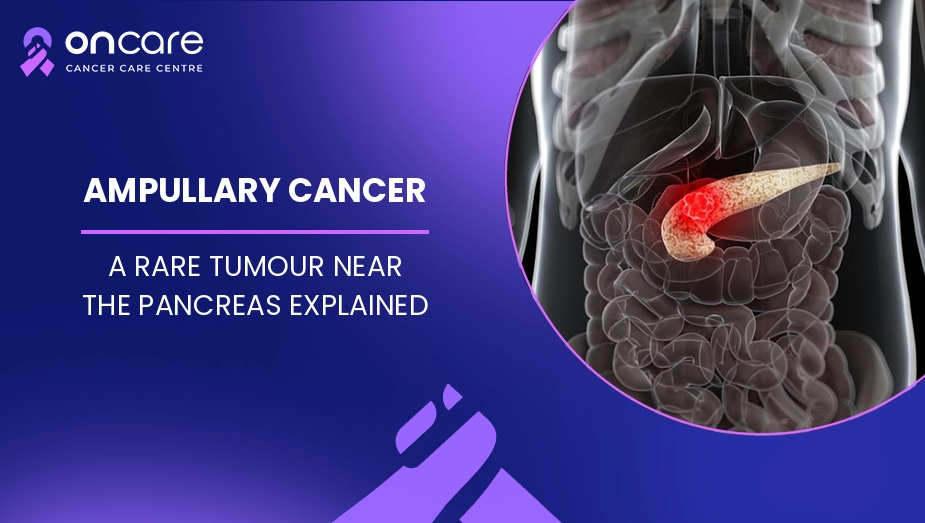
Ampullary cancer is a rare cancer that develops in the ampulla of Vater, a small area where the bile duct and pancreatic duct meet and open into the first part of the small intestine. Because a tumour in this area can block the flow of bile, jaundice, dark urine, pale stools, abdominal pain, nausea, and unexplained weight loss can occur. Treatment depends on the tumour’s size, stage, location, and whether it can be completely removed, with surgery such as the Whipple procedure being an important option for some patients.
Ampullary cancer can be confusing because it develops close to the pancreas but is not the same as pancreatic cancer. It can also begin from different types of cells in this small area.
In this blog, we will explain what ampullary cancer is, its symptoms and risk factors, how doctors diagnose it, how it is treated, and what patients may expect during treatment and follow-up.
What Is Ampullary Cancer?
The ampulla of Vater is a small opening where two important ducts meet. The common bile duct carries bile from the liver and gallbladder, while the pancreatic duct carries digestive juices from the pancreas. Both open into the duodenum, which is the first part of the small intestine.
When abnormal cells grow in this area and form a tumour, it is called ampullary cancer. Because the ampulla is very close to the pancreas, bile duct, and small intestine, doctors need to carefully determine exactly where the cancer started.
What Are the Symptoms of Ampullary Cancer?
One of the important features of ampullary cancer is that it can cause symptoms relatively early when the tumour blocks the bile duct. Jaundice, or yellowing of the skin and eyes, is one of the most common early symptoms.
Other possible symptoms include:
- Yellow skin or eyes
- Dark-coloured urine
- Pale or light-coloured stools
- Itchy skin
- Pain or discomfort in the upper abdomen
- Nausea or vomiting
- Loss of appetite
- Unexplained weight loss
- Tiredness or weakness
These symptoms do not always mean cancer. Gallstones, infections, liver problems, and other conditions can also cause jaundice or abdominal symptoms. However, unexplained jaundice or symptoms that continue should be checked by a doctor.
You can also read our blog on pancreatic cancer symptoms to understand why jaundice, stool changes, weight loss, and digestive problems may need medical evaluation.
What Causes Ampullary Cancer?
There is no single known cause of ampullary cancer. Like many cancers, it develops when cells acquire changes that cause them to grow and divide abnormally.
Ampullary cancer is uncommon, so researchers are still learning about the factors that may increase its risk. Some people may have an increased risk because of inherited conditions or changes in certain genes, while others may develop the disease without a clear reason.
Having a risk factor does not mean that a person will definitely develop ampullary cancer. Similarly, someone without known risk factors can also develop it.
How Is Ampullary Cancer Diagnosed?
Diagnosing ampullary cancer may require several tests because the tumour is located in a small and complex area.
Doctors may begin by asking about symptoms and medical history and performing a physical examination. Blood tests may be used to check liver function and bilirubin levels, especially when jaundice is present.
Imaging and Endoscopy
Doctors may use imaging tests such as CT scans or MRI to look at the pancreas, bile ducts, liver, and nearby organs.
An endoscopic procedure can also allow doctors to look at the inside of the digestive tract and the ampulla. In some cases, an endoscopic ultrasound may be used to create detailed pictures of the tumour and nearby tissues.
Biopsy and Pathology
A biopsy involves taking a tissue sample and examining it under a microscope. A biopsy may help confirm whether abnormal cells are cancerous and provide information about the type of tumour.
For more information about how cancer is confirmed, read our blog on cancer biopsy tests.
Ampullary Cancer Symptoms and Diagnosis at a Glance
The table below summarises the key points about where ampullary cancer develops, how it is found, and how it is treated.
Area | Important information |
|---|---|
Location | Ampulla of Vater, where the bile and pancreatic ducts meet the small intestine |
Common symptom | Jaundice or yellowing of the skin and eyes |
Other symptoms | Abdominal pain, weight loss, nausea, dark urine, pale stools and itching |
Diagnosis | Blood tests, imaging, endoscopy and tissue testing |
Main surgery | Whipple procedure for many operable tumours |
Other treatment | Chemotherapy, radiation or other medicines may be used depending on the case |
Treatment decision | Depends on tumour type, stage, spread and overall health |
How Is Ampullary Cancer Treated?
Treatment depends on whether the tumour can be removed completely, whether it has spread, the type of cells involved, and the patient’s overall health. A cancer team may recommend surgery, chemotherapy, radiation therapy, or a combination of treatments.
Whipple Procedure
For many patients whose ampullary cancer has not spread and can be removed, the Whipple procedure, also called pancreaticoduodenectomy, is the main surgical treatment.
This is a major operation. Depending on the exact situation, the surgeon removes the ampulla along with the head of the pancreas, part of the bile duct, the gallbladder, the duodenum, and sometimes part of the stomach. The remaining digestive organs are then reconnected.
The aim is to remove the cancer while leaving enough healthy tissue for the digestive system to continue working.
What If Surgery Is Not Possible?
Surgery may not be suitable when the cancer has spread to distant organs, cannot be safely removed, or when a patient’s overall health makes major surgery too risky.
In these situations, doctors may use medicines such as chemotherapy and, in selected cases, radiation therapy or other treatments to control the cancer and relieve symptoms. If a tumour blocks the bile duct, procedures such as placing a stent may help bile drain normally and reduce jaundice.
The treatment goal may be to control the cancer, reduce symptoms, and maintain quality of life when complete removal is not possible.
Recovery and Follow-Up After Treatment
Recovery depends on the treatment received. After a Whipple procedure, patients may initially experience tiredness, appetite changes, weight changes, or digestive problems. Nutrition and gradual physical activity are important parts of recovery.
Follow-up visits allow doctors to check recovery and look for signs that the cancer has returned. The exact follow-up plan depends on the original cancer, treatment, and overall health.
Patients should also tell their doctor about new jaundice, increasing abdominal pain, unexplained weight loss, changes in digestion, or other new symptoms.
Why Early Medical Evaluation Matters
Ampullary cancer is rare, but its location can cause bile blockage and jaundice even when the tumour is still potentially treatable with surgery. This makes unexplained jaundice especially important to evaluate.
At the same time, jaundice does not automatically mean cancer. Many non-cancerous conditions can cause similar symptoms. The important step is to find the cause through appropriate tests rather than assuming what is responsible.
If you want to read more about ampullary cancer, you can visit the National Library of Medicine.
Consult Today
Ampullary cancer is a rare tumour in a complex area near the pancreas, bile duct, and small intestine. Getting the correct diagnosis and understanding whether the tumour can be removed are important steps in choosing treatment.
At Oncare Cancer Hospital, cancer specialists can review symptoms, scans, biopsy reports, and other test results to develop a treatment plan based on the patient’s individual condition. Depending on the case, treatment may involve surgery, chemotherapy, radiation therapy, or supportive care.
If you or someone in your family has been diagnosed with ampullary cancer or has unexplained jaundice and related symptoms, speak with a cancer specialist for an appropriate evaluation.
Disclaimer
This information is for educational purposes only and does not constitute medical advice, diagnosis, or treatment. Always discuss decisions about jaundice, surgery, or any cancer treatment with a certified cancer healthcare provider.





Frequently Asked Questions
No, ampullary cancer starts in the ampulla of Vater, while pancreatic cancer starts in the pancreas. They are located close to each other but are different cancers.
Jaundice, or yellowing of the skin and eyes, is one of the most common early symptoms.
Yes, when the cancer has not spread and can be safely removed, a Whipple procedure is commonly used.
Yes, ampullary cancer is a rare cancer that develops in the ampulla of Vater.
Written and Verified by:
Dr. Gajendra Kumar Himanshu Exp: 10 Yr
Medical Officer
Book an Appointment
Related Blogs

Sinonasal Cancer: Symptoms of Tumours in the Nose and Sinuses
Learn about sinonasal cancer, including warning signs, risk factors, treatment options, and when persistent nose symptoms need medical care at Oncare Hospital.

Cancer Rehabilitation: Physiotherapy and Regaining Strength After Treatment
Learn how cancer rehabilitation and physiotherapy can improve strength, reduce fatigue, and support daily activities during or after treatment at Oncare Cancer Hospital.

Obesity and Cancer Risk: What Research Shows and How to Reduce It
Learn how obesity may increase cancer risk, which cancers are linked to excess weight, and the role of weight loss and healthy habits at Oncare Cancer Hospital.