Table of Contents
TACE (Trans-Arterial Chemoembolisation): Targeted Treatment for Liver Cancer

By Dr. Gajendra Kumar Himanshu


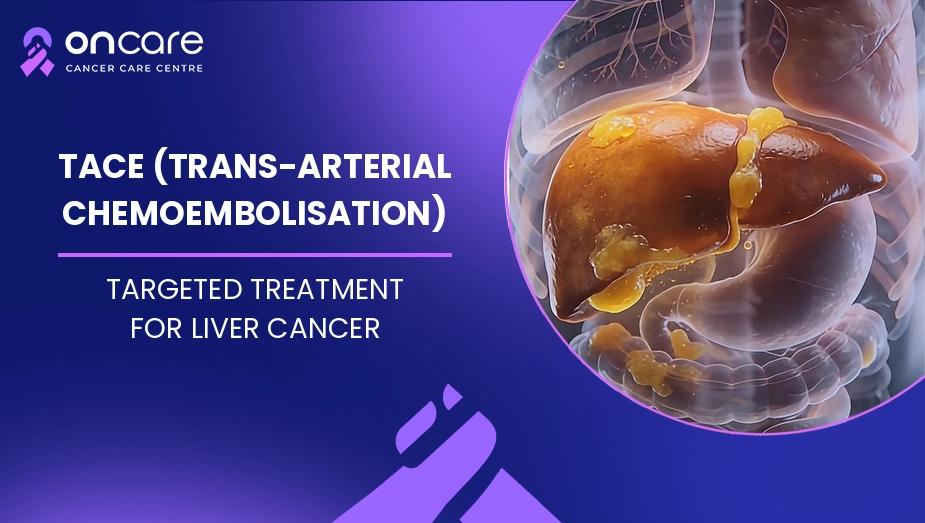
TACE (Trans-Arterial Chemoembolisation) is a liver cancer treatment that delivers chemotherapy directly to the blood vessels feeding a liver tumour and then blocks those blood vessels. This helps keep the medicine close to the tumour and reduces its blood supply. TACE is mainly used for selected people with liver cancer, especially when surgery or other treatments may not be suitable.
Being diagnosed with liver cancer can bring many questions about treatment. Patients often want to know whether they need surgery, chemotherapy, radiation, or another treatment. TACE is different because it targets the tumour through its blood supply rather than giving chemotherapy throughout the body.
In this blog, we will explain what TACE is, how the procedure is done, who may benefit from it, its possible side effects, recovery, and follow-up care.
What Is TACE for Liver Cancer?
TACE stands for Trans-Arterial Chemoembolisation. It is a minimally invasive treatment that combines two actions. First, chemotherapy is delivered through a small tube called a catheter into the artery supplying the liver tumour. Then, small particles or beads are used to block that blood flow.
Liver tumours often receive much of their blood supply from the hepatic artery, while healthy liver tissue receives most of its blood from the portal vein. This difference allows doctors to target the tumour while continuing to supply blood to much of the healthy liver.
If you want to understand how liver cancer is found before treatment begins, you can read our blog on liver cancer diagnosis, which explains the common tests in simple words.
How Does TACE Work?
TACE works by combining chemotherapy with embolisation.
The chemotherapy medicine is delivered as close as possible to the tumour. The doctor then blocks the artery supplying the tumour. This keeps the medicine near the cancer for longer and reduces the blood and oxygen reaching the tumour.
The aim is to damage or kill cancer cells and slow tumour growth. TACE is a local treatment, so it can expose the tumour to a higher concentration of chemotherapy while less of the medicine travels through the rest of the body compared with standard intravenous chemotherapy.
You can also learn more about the different options available on our liver cancer treatment page.
Who May Need TACE?
TACE is not suitable for every person with liver cancer. Doctors look at the cancer stage, tumour size and number, liver function, overall health, and whether the cancer has spread outside the liver.
It is commonly considered for selected patients with liver cancer that cannot be removed safely with surgery or treated effectively with ablation. It has an important role in some people with intermediate-stage hepatocellular carcinoma (HCC).
Doctors may consider factors such as:
- Number and size of liver tumours
- Location of the tumours
- Liver function and presence of cirrhosis
- Blood vessel involvement
- Whether the cancer has spread outside the liver
- Previous cancer treatments
Your medical team will review your scans and liver health before deciding whether TACE is appropriate.
How Is the TACE Procedure Performed?
Before TACE, your doctor may order blood tests and imaging such as CT or MRI. These tests help the team understand the tumour and plan the safest route for treatment.
During the Procedure
TACE is usually performed by an interventional radiologist. You will normally receive local anaesthesia and medicine to help you relax.
A small cut is made, commonly near the groin or sometimes the wrist, and a thin catheter is inserted through an artery toward the blood vessels supplying the liver tumour. Imaging is used to guide the catheter.
Once the catheter reaches the correct blood vessel, the chemotherapy medicine is delivered. Small particles or beads are then injected to block the blood supply to the tumour.
The catheter is removed after the treatment, and the entry site is covered with a dressing.
TACE vs Regular Chemotherapy
Although both treatments use chemotherapy medicines, they are given differently.
Feature | TACE | Regular Chemotherapy |
|---|---|---|
How medicine is given | Directly into the artery feeding the tumour | Usually through a vein or by mouth |
Main treatment area | Mainly the liver tumour | Can affect cancer cells throughout the body |
Blood supply | Tumour blood supply is also blocked | Blood vessels are not intentionally blocked |
Treatment approach | Local treatment | Systemic treatment |
Common use | Selected liver cancers | Many types of cancer |
Can TACE Be Combined With Other Treatments?
TACE may be used alone or as part of a wider treatment plan. Depending on the cancer, doctors may also consider surgery, ablation, radiation therapy, targeted therapy, or immunotherapy.
For a simple overview of liver cancer symptoms, you can also read our article on early symptoms of liver cancer.
What Are the Side Effects of TACE?
TACE is generally performed without major surgery, but side effects can occur. The most common group of symptoms is sometimes called post-embolisation syndrome.
It may include:
- Fever
- Tiredness
- Nausea or vomiting
- Loss of appetite
- Pain or discomfort in the upper abdomen
These symptoms can happen because the tumour and nearby tissue respond to the treatment. The medical team can provide medicines to control pain, nausea, and other symptoms.
More serious complications are possible but less common. These may include infection, bleeding, damage to nearby tissues, or worsening liver function. The risk depends on the patient's liver health and the location and extent of the tumour.
Recovery After TACE
After the procedure, you will usually stay under observation while the medical team checks your blood pressure, heart rate, pain, and the catheter entry site. Some patients may go home the same day, while others may need to stay in the hospital longer.
Feeling tired or having mild abdominal discomfort for several days can be normal. Your doctor may recommend medicines for pain or nausea and give specific instructions about food, activity, and wound care.
Recovery is different for every patient, especially when there is existing liver disease. Follow your doctor's instructions and attend all scheduled follow-up appointments.
Follow-Up After TACE
TACE is not the end of liver cancer care. Follow-up scans are important to check how the tumour has responded to treatment. CT or MRI may be used to look for changes in the treated area and to determine whether further treatment is needed.
Some patients may need more than one TACE treatment depending on their response and overall condition. Other treatments may also be added when appropriate. Current research is also studying combinations of TACE with immunotherapy and other medicines for certain patients with intermediate-stage liver cancer.
If you want to read more about TACE (Trans-Arterial Chemoembolisation), you can visit the National Cancer Institute.
Consult Today
TACE can be an important treatment option for selected patients with liver cancer, particularly when the tumour cannot be safely removed with surgery or treated with certain local therapies. However, the right treatment depends on the tumour, liver function, cancer stage, and overall health.
At Oncare Cancer Hospital, our cancer care team can review your scans, reports, and previous treatments to help you understand whether TACE or another liver cancer treatment may be suitable for you. Early discussion with a cancer specialist can help you understand your options and plan the next step.
Disclaimer
This information is for educational purposes only and does not constitute medical advice, diagnosis, or treatment. Whether TACE is suitable depends on the tumour, liver function, cancer stage, and each patient's overall health, and requires individual evaluation. Always discuss treatment decisions with a certified cancer healthcare provider.





Frequently Asked Questions
Yes, TACE uses chemotherapy, but the medicine is delivered directly into the artery supplying the liver tumour.
Some patients experience abdominal pain or discomfort after TACE. Medicines can usually help control these symptoms.
Recovery varies from person to person. Tiredness, nausea, or abdominal discomfort may continue for several days after treatment.
TACE can control or shrink liver tumours in selected patients, but it is not a cure for every patient. The expected result depends on the cancer stage, tumour characteristics, and liver health.
Written and Verified by:
Dr. Gajendra Kumar Himanshu Exp: 10 Yr
Medical Officer
Book an Appointment
Related Blogs
Radiofrequency Ablation (RFA) for Liver Tumours: Procedure and Recovery
Learn how RFA treats liver tumours, its benefits, recovery, side effects and suitability. Get clear guidance and expert care from Oncare Cancer Hospital.
SBRT (Stereotactic Body Radiation Therapy): Precision Radiation in Fewer Sessions
Learn how SBRT works, its benefits, sessions, side effects and who may be eligible. Get clear guidance from Oncare Cancer Hospital for your cancer care.
Frozen Section Biopsy: How Doctors Take Decisions During Surgery
Learn what a frozen section biopsy is, how it is done during surgery, and its uses, results, benefits, and limitations with guidance from Oncare Cancer Hospital.