Table of Contents
Radiofrequency Ablation (RFA) for Liver Tumours: Procedure and Recovery

By Dr. Gajendra Kumar Himanshu


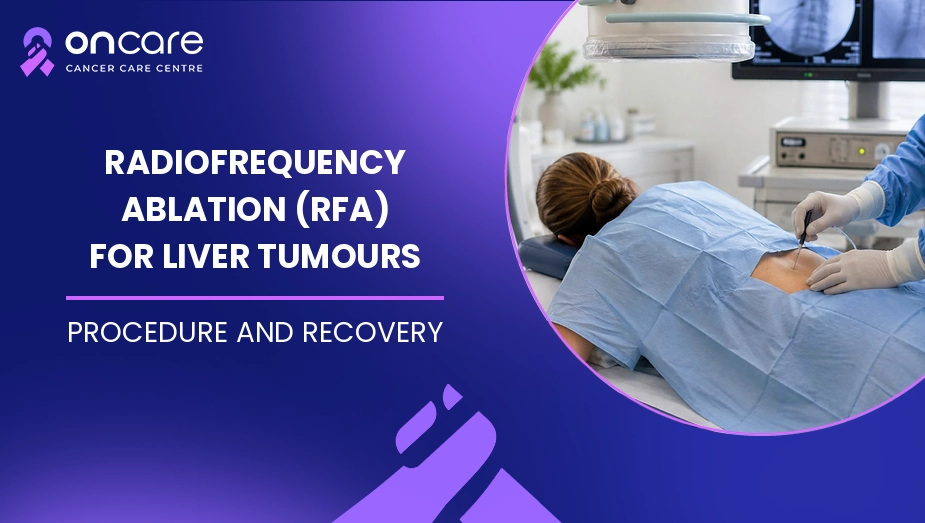
Radiofrequency Ablation (RFA) for liver tumours is a minimally invasive treatment that uses heat produced by radio waves to destroy cancer cells in the liver. During the procedure, a thin needle or probe is inserted into the tumour, usually with the help of ultrasound or CT imaging. RFA is mainly considered for selected small liver tumours and may be an option when surgery is not suitable.
Being told that you need treatment for a liver tumour can be stressful. Many patients also worry about surgery, hospital stays, pain, and recovery time. RFA is different from traditional surgery because it does not require the tumour to be cut out. In this blog, we will explain what RFA is, how the procedure is performed, who may benefit from it, possible side effects, and what recovery is usually like.
What Is Radiofrequency Ablation for Liver Tumours?
Radiofrequency Ablation, or RFA, is a type of thermal ablation. It uses radiofrequency energy to create heat around the tip of a special needle. This heat raises the temperature of the tumour and destroys the cancer cells.
The procedure is usually performed by a specialist such as an interventional radiologist. Imaging, such as CT or ultrasound, helps the doctor place the needle accurately inside the tumour.
If you are looking for more information about how liver cancer is diagnosed, you can also read our blog on liver cancer diagnosis to understand the tests doctors may use before treatment.
Who May Be Suitable for RFA?
RFA is not suitable for every liver tumour. Doctors consider several factors before recommending it. These include the tumour's size, number, location, the condition of the liver, and the patient's overall health.
RFA is particularly useful for some small liver cancers. The National Cancer Institute notes that RFA generally gives the best results for tumours smaller than about 3 cm. Tumours close to important structures, such as major bile ducts or some blood vessels, may require another treatment approach.
Other treatments, such as surgery, liver transplant, microwave ablation, TACE, or radiation therapy, may be considered depending on the patient's condition. You can learn more about different cancer treatment options before discussing the most suitable choice with your doctor.
How Is RFA for Liver Tumours Performed?
Before RFA, your doctor may review CT, MRI, or ultrasound scans and perform blood tests. You may also be asked about medicines, especially blood-thinning medicines. Do not stop any medicine unless your healthcare team tells you to do so.
During the Procedure
RFA can often be performed through the skin, which is called a percutaneous procedure. You may receive local anaesthesia with sedation or, in some cases, general anaesthesia.
The doctor uses CT or ultrasound imaging to place a thin needle into the liver tumour. Once the needle is in the correct position, radiofrequency energy passes through it and produces heat. The heat destroys the tumour cells.
The needle is then removed, and the small entry point is covered with a dressing. The procedure can take around 30 minutes to a few hours, depending on the size and number of tumours and the treatment plan.
RFA vs Liver Cancer Surgery
RFA and surgery both aim to control or remove cancer, but they work differently. RFA destroys the tumour using heat, while surgery physically removes the tumour or part of the liver.
Feature | Radiofrequency Ablation (RFA) | Liver Cancer Surgery |
|---|---|---|
How it works | Uses heat to destroy tumour cells | Removes tumour and some liver tissue |
Size of treatment | Mainly used for selected small tumours | Can be used for tumours that can be safely removed |
Incision | Usually a small needle entry point | Larger surgical incision or keyhole cuts |
Hospital stay | Often same day or overnight | Usually longer |
Recovery | Generally faster | Usually takes longer |
Suitability | Depends on tumour size and location | Depends on tumour location, liver function and overall health |
The best option depends on the individual case. Surgery may provide better results in some patients, while RFA may be useful when surgery would be difficult or unsafe.
What Is Recovery Like After RFA?
Recovery after RFA is usually shorter than recovery from major liver surgery. Some patients can go home on the same day, while others may stay overnight for observation.
You may experience mild pain or soreness around the treatment area. Some patients also develop shoulder pain because of irritation of nerves near the liver. Flu-like symptoms, including tiredness, body aches, nausea, or a mild fever, can occur a few days after treatment. This is sometimes called post-ablation syndrome.
Many people can return to their usual activities within several days to about a week, depending on their health and the type of procedure performed. Your doctor will tell you when it is safe to return to work, exercise, and other activities.
For more information about liver cancer symptoms and when medical advice is important, you can also read our blog on liver cancer symptoms.
Possible Side Effects and Risks of RFA
RFA is generally considered a minimally invasive treatment, but like any medical procedure, it can have risks.
Common or possible side effects include:
- Mild pain or discomfort
- Tiredness and flu-like symptoms
- Mild fever
- Nausea
- Bleeding
- Infection
- Rare injury to nearby organs or tissues
Serious complications are uncommon, but the risk depends on where the tumour is located and the patient's overall health. Contact your healthcare team if you develop severe or worsening pain, significant bleeding, difficulty breathing, or a high or persistent fever after the procedure.
Follow-Up After RFA
RFA does not mean that follow-up care is finished. Doctors usually use imaging, such as CT or MRI, after treatment to check how well the tumour has responded. A follow-up scan may be performed several weeks after the procedure.
Your doctor may recommend further treatment if some tumour remains or if another tumour develops. Follow-up is especially important for people with chronic liver disease or a history of liver cancer.
Consult Today
Radiofrequency Ablation can be an effective treatment option for selected liver tumours, especially smaller tumours where surgery may not be the best choice. However, the right treatment depends on the tumour's size and location, liver function, cancer stage, and overall health.
At Oncare Cancer Hospital, our cancer care team can review your reports and scans and help you understand whether RFA or another liver cancer treatment may be suitable for you. Discuss your treatment options with a cancer specialist before making a decision.
Disclaimer
This information is for educational purposes only and does not constitute medical advice, diagnosis, or treatment. Whether RFA is suitable depends on the tumour's size and location, liver function, and each patient's overall health, and requires individual evaluation. Always discuss treatment decisions with a certified cancer healthcare provider.





Frequently Asked Questions
RFA is performed with anaesthesia or sedation to control discomfort. Mild pain or soreness can occur after the procedure.
Many patients return to normal activities within a few days to about a week, but recovery varies from person to person.
RFA can destroy selected small liver tumours in some patients. Whether it can provide long-term cancer control depends on the tumour and the patient's overall condition.
Yes, cancer can recur, or another tumour can develop. Regular scans and follow-up appointments are important after RFA.
Written and Verified by:
Dr. Gajendra Kumar Himanshu Exp: 10 Yr
Medical Officer
Book an Appointment
Related Blogs
SBRT (Stereotactic Body Radiation Therapy): Precision Radiation in Fewer Sessions
Learn how SBRT works, its benefits, sessions, side effects and who may be eligible. Get clear guidance from Oncare Cancer Hospital for your cancer care.

Immunohistochemistry (IHC) Testing: How Labs Identify Your Exact Cancer Type
Learn what IHC testing is, why it is done, common cancer markers, how results are interpreted, and how they can guide treatment with Oncare Cancer Hospital.
Frozen Section Biopsy: How Doctors Take Decisions During Surgery
Learn what a frozen section biopsy is, how it is done during surgery, and its uses, results, benefits, and limitations with guidance from Oncare Cancer Hospital.