Table of Contents
Frozen Section Biopsy: How Doctors Take Decisions During Surgery

By Dr. Gajendra Kumar Himanshu


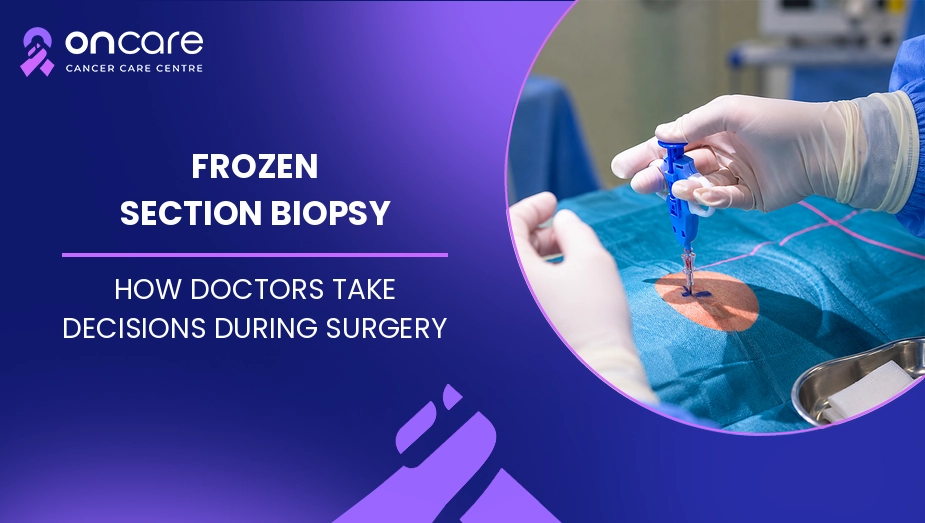
A frozen section biopsy is a rapid tissue test performed during surgery to give the surgeon an early idea about whether abnormal tissue is cancerous or whether the surgical margins contain cancer cells. In this procedure, a small piece of tissue is quickly frozen, cut into very thin sections, stained, and examined under a microscope by a pathologist. The result can often be available within about 15 to 20 minutes, allowing the surgical team to make certain decisions while the operation is still going on.
Unlike a regular biopsy, where the final tissue report may take several days, a frozen section is mainly used when the surgeon needs quick information during an operation. It can help answer a specific question, such as whether a suspicious area is cancerous or whether the edge of removed tissue appears free of cancer. However, it is not suitable for every situation, and the final diagnosis is usually based on the more detailed permanent tissue examination.
In this blog, we will explain what a frozen section biopsy is, why doctors use it during surgery, how it is performed, what information it can provide, and its benefits and limitations.
What Is a Frozen Section Biopsy?
Intraoperative pathology tests are performed during surgery, and a frozen section biopsy is one type of intraoperative pathology test. The surgeon takes a small piece of tissue and sends it to pathology. The tissue is snap-frozen and cut into extremely thin slices on special equipment called a cryostat. The slices are then stained and viewed under a microscope.
The main objective is to give the surgeon immediate information that can help guide the procedure. This is not simply a faster version of every kind of biopsy. Frozen sections are used when a quick answer can make a difference to the surgical decision.
For a basic understanding of how tissue samples help doctors diagnose cancer, you can also read this blog on cancer diagnosis.
Why Do Doctors Use Frozen Section During Surgery?
During some cancer operations, the surgeon may need to know what a particular piece of tissue contains before deciding what to do next.
For example, the surgeon may want to know whether:
- A suspicious area contains cancer cells.
- The edge of the tissue that has been removed is free from visible cancer cells.
- A lymph node or another tissue sample appears to contain cancer.
- The tissue removed during surgery is adequate for the question being asked.
The answer may help the surgeon decide whether additional tissue needs to be removed during the same operation.
However, the decision is not based on the frozen section alone. Surgeons and pathologists consider the patient's scans, medical history, previous biopsy results, and the appearance of the tissue together.
How Is a Frozen Section Biopsy Done?
The process is carefully coordinated between the operating room and pathology team.
Step 1: Tissue Is Removed
During surgery, the surgeon removes the tissue that needs to be checked. The sample is immediately sent to the pathology team.
Step 2: The Tissue Is Examined
The pathologist first looks at the tissue and selects the area that needs to be tested. This is important because only a small part of the specimen may be frozen.
Step 3: The Tissue Is Quickly Frozen
The selected tissue is rapidly frozen so that it becomes firm enough to cut into very thin sections.
Step 4: Thin Sections Are Prepared
A special instrument called a cryostat is used to cut the frozen tissue into thin slices. The slices are placed on microscope slides and stained.
Step 5: The Pathologist Examines the Slide
The pathologist examines the tissue under a microscope and communicates the findings to the surgical team. The process can often be completed in around 15 to 20 minutes.
This quick communication is what makes frozen section useful during an operation.
What Questions Can a Frozen Section Answer?
A frozen section is generally used to answer a specific and urgent question. It is not always designed to provide every detail about a tumor.
One important use is checking the surgical margin. A margin is the edge of the tissue removed during surgery. If cancer cells are seen at the edge, the surgeon may need to consider removing additional tissue, depending on the type and location of cancer. A margin without cancer cells suggests that no cancer is seen at that examined edge.
Frozen sections can also help distinguish between some types of abnormal tissue during surgery.
Frozen Section vs Regular Biopsy
Both tests involve examining tissue under a microscope, but they are performed for different purposes and at different speeds.
Feature | Frozen Section Biopsy | Regular/Final Tissue Examination |
|---|---|---|
Timing | During surgery | Usually after surgery or biopsy |
Tissue preparation | Rapidly frozen | Usually fixed and processed |
Result | Quick preliminary information | Detailed final diagnosis |
Main purpose | Help guide decisions during surgery | Confirm diagnosis and provide detailed information |
Detail | May provide less detail | Usually provides better tissue detail |
Time | Often around 15–20 minutes | Can take several days |
The permanent tissue examination generally gives better-quality tissue sections and more detailed information. For this reason, a frozen section result does not always replace the final pathology report.
How Does the Frozen Section Help Surgeons?
The biggest advantage is speed. A surgeon does not always have the option of waiting several days for a standard pathology report because the patient is already undergoing surgery.
Suppose a surgeon removes a tumor and needs to know whether cancer cells are present at a particular edge. If the frozen section suggests that cancer is still present at that edge, the surgeon may decide that more tissue needs to be removed, if it is safe and appropriate.
This can sometimes help avoid the need for another operation to address the same surgical margin. However, this depends on the cancer type, location, surgical plan, and the reliability of the frozen section for that particular question.
Cancer surgery is usually planned carefully before the operation. You can also read about different cancer treatment options to understand how surgery may be combined with other treatments.
What Are the Limitations of a Frozen Section?
Although frozen section biopsy is useful, it has important limitations.
The tissue is processed very quickly, so the microscopic quality may not be as clear as that of a permanent section. Some tissues are also difficult to interpret after freezing.
A frozen section may therefore not be able to provide a definite answer in every case. Sometimes the pathologist may tell the surgeon that the result is uncertain and that a permanent section will be needed.
Another limitation is that only a selected portion of the tissue may be examined during the operation. The final pathology examination can examine the specimen in greater detail and may include additional tests that cannot be completed during surgery.
Does a Frozen Section Confirm Cancer?
Not always. A frozen section can provide important information, but it should not be considered a complete cancer diagnosis in every situation.
The final pathology report is often more detailed and may provide information about the exact cancer type, tumor features, margins, lymph nodes, and other findings. Additional laboratory tests, including special stains or molecular tests, may also be needed depending on the cancer.
If the frozen section and final pathology results do not match, the medical team will review the complete tissue examination to establish the final diagnosis.
Is Frozen Section Biopsy Safe?
The frozen section itself does not usually create a separate major procedure for the patient because the tissue is collected as part of the planned surgery. The main risks come from the surgery or biopsy procedure being performed, rather than from freezing the tissue in the laboratory.
Cancer surgery can involve risks such as bleeding, infection, pain, and reactions to anaesthesia. The exact risks depend on the type and location of surgery.
Your surgeon should explain the expected benefits and risks of the planned operation before surgery.
If you want to read more about frozen section, you can visit the National Library of Medicine.
Consult Today
A frozen section biopsy can provide doctors with useful information while cancer surgery is still taking place. By quickly examining selected tissue, the pathology team can help surgeons answer specific questions and make informed decisions during the operation. However, the frozen section is not suitable for every case, and the final pathology report remains important for a complete diagnosis.
At Oncare Cancer Hospital, patients can discuss their diagnosis, surgery, biopsy results, and treatment options with an oncology team. If your doctor has recommended surgery or a frozen section biopsy, ask your medical team why it is being considered and what information it may provide in your specific case.
Disclaimer
This information is for educational purposes only and does not constitute medical advice, diagnosis, or treatment. Whether a frozen section biopsy is suitable depends on the type of surgery and each patient's condition, and requires individual evaluation. Always discuss decisions about surgery, biopsy, and treatment with a certified cancer healthcare provider.





Frequently Asked Questions
A frozen section can often provide an initial result within about 15 to 20 minutes, although the exact time can vary depending on the case and the number of samples examined.
No, a frozen section is a rapid tissue examination performed during surgery, while a regular pathology examination takes longer and usually provides more detailed information.
Yes, in suitable cases, a frozen section can be used to check whether cancer cells are seen at a surgical margin during the operation.
Not always; the final diagnosis is generally based on the complete pathology examination, which provides more detailed information than a rapid frozen section.
Written and Verified by:
Dr. Gajendra Kumar Himanshu Exp: 10 Yr
Medical Officer
Book an Appointment
Related Blogs
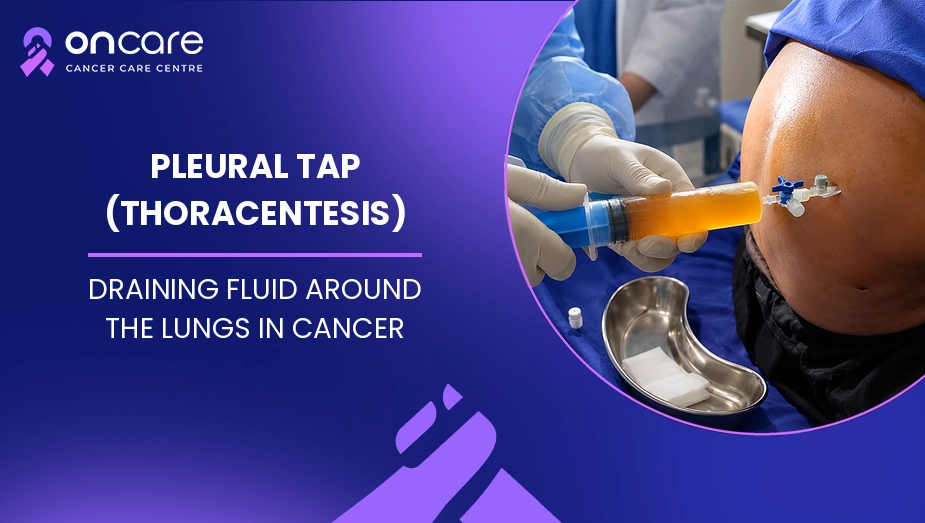
Pleural Tap (Thoracentesis): Draining Fluid Around the Lungs in Cancer
Learn what a pleural tap is, why it is done in cancer, how it helps with breathing, its risks, and what happens if fluid returns. Oncare Cancer Hospital's guidance.

Chemotherapy-Induced Peripheral Neuropathy: Managing Numbness and Tingling
Learn about chemotherapy-induced neuropathy, including numbness, nerve pain, and weakness. Know simple ways to manage symptoms with Oncare Cancer Hospital.
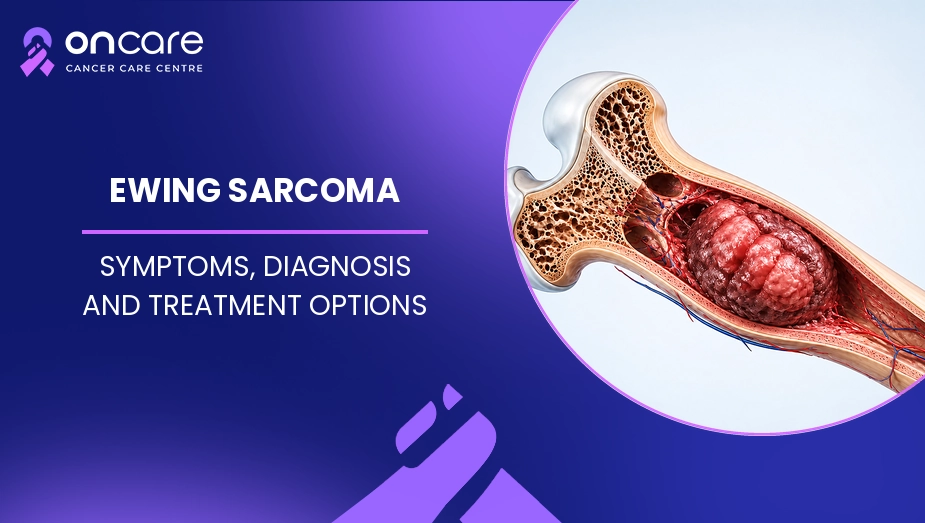
Ewing Sarcoma: Symptoms, Diagnosis and Treatment Options
Learn about Ewing sarcoma symptoms, diagnosis, and treatment options, including chemotherapy, surgery, and radiation. Get expert care at Oncare Hospital.