Table of Contents
Low Platelet Count (Thrombocytopenia) During Chemotherapy: Precautions That Matter

By Dr. Gajendra Kumar Himanshu


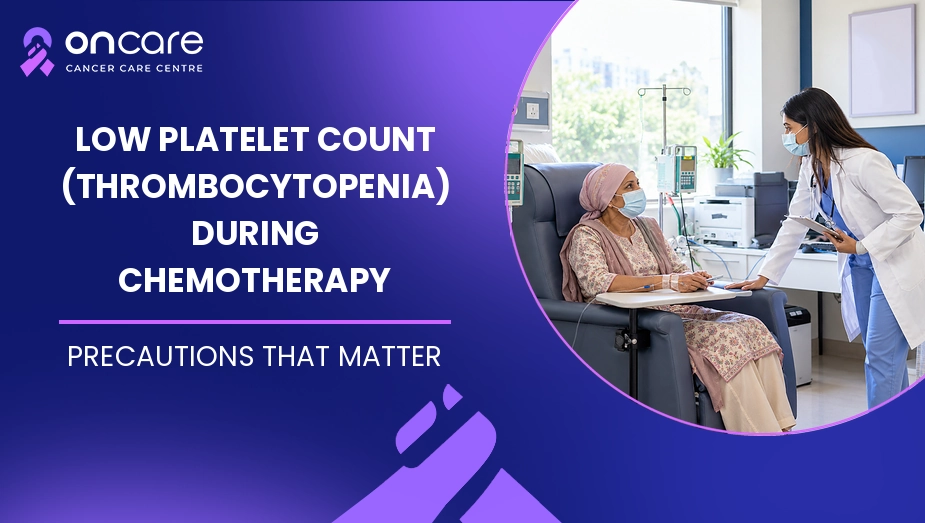
Low platelet count during chemotherapy, also called thrombocytopenia, means there are fewer platelets in the blood than normal. Platelets help the blood form clots and stop bleeding. Some chemotherapy and other cancer treatments can reduce platelet production in the bone marrow, which can increase the risk of bruising and bleeding. Regular blood tests help doctors monitor platelet levels and decide whether any changes in treatment or additional care are needed.
Low platelets can be worrying, but there are simple precautions that can help reduce the chance of bleeding. In this blog, we will explain why platelet counts fall during chemotherapy, the symptoms to watch for, how doctors monitor the condition, important precautions at home, and when immediate medical attention may be needed.
What Are Platelets and Why Do They Matter?
Platelets are small blood cells made in the bone marrow. Their main job is to help stop bleeding when a blood vessel is damaged. They stick together and help form a clot at the injured area.
When chemotherapy affects the bone marrow, the body may make fewer platelets. As the platelet count falls, even a small cut or injury may take longer to stop bleeding. Some people may also develop bruises or small red or purple spots on the skin.
Patients receiving chemotherapy may experience several side effects at the same time. Understanding common chemotherapy side effects can help patients and families know what changes should be discussed with the cancer care team.
Why Does Chemotherapy Cause Low Platelets?
Chemotherapy medicines are designed to destroy fast-growing cancer cells, but they can also affect some healthy cells that grow quickly. Bone marrow is one of the tissues that can be affected. Since bone marrow makes platelets, their number can fall after treatment.
The level and duration of thrombocytopenia can vary from person to person. It depends on the chemotherapy medicines being used, their dose, the treatment schedule, and the patient's overall health.
Other factors can also contribute to a low platelet count, including certain cancers that affect the bone marrow or treatments such as targeted therapy.
What Are the Signs of Low Platelets?
Mild thrombocytopenia may not cause noticeable symptoms. As the platelet count becomes lower, bleeding and bruising can become easier.
Common signs may include:
- Bruising easily, sometimes without remembering an injury
- Nosebleeds
- Bleeding from the gums
- Small red or purple spots on the skin
- Cuts that take longer than usual to stop bleeding
- Heavier or longer menstrual bleeding
- Blood in urine or stool
Tell your doctor or nurse if you notice new bruising, bleeding, or small red spots on your skin.
How Is Platelet Count Checked?
Doctors usually check platelet levels through a complete blood count (CBC) or full blood count. Blood tests are commonly done before chemotherapy and may also be repeated during treatment to make sure blood counts are at a safe level.
Check | What it tells the doctor |
|---|---|
Platelet count | Number of platelets in the blood |
Complete blood count | Platelets, red blood cells and white blood cells |
Repeat blood tests | Whether the platelet count is recovering |
Other tests | May help identify another cause of low platelets |
Precautions That Matter During Chemotherapy
If the platelet count is too low, the doctor may delay the next chemotherapy session or adjust the treatment plan until the blood count improves. This does not necessarily mean that cancer treatment has failed.
When platelet levels are low, preventing injuries and avoiding medicines that can increase bleeding risk become especially important.
Protect Yourself From Cuts and Injuries
Try to avoid activities that can cause cuts, falls or other injuries. Use extra care when handling knives, scissors or other sharp objects. If you garden, protective gloves can help prevent cuts and scratches. Wearing suitable footwear can also reduce the chance of injury.
For daily mouth care, use a very soft toothbrush and follow your cancer team's advice. Ask your doctor before using dental floss if your platelet count is low because it can sometimes cause gum bleeding.
Be Careful With Medicines
Do not take aspirin, ibuprofen or other over-the-counter medicines without asking your doctor. Some medicines can increase the risk of bleeding. Also tell your cancer team about vitamins, supplements and herbal products you are taking.
Patients undergoing treatment should also understand how their medicines are monitored. You can read our page on chemotherapy treatment to learn more about what patients should know.
What Should You Do If You Start Bleeding?
If you have a small cut, apply firm pressure with a clean cloth and keep pressing until the bleeding stops. Avoid repeatedly removing the cloth to check the wound because this can disturb the forming clot.
Contact your healthcare team promptly if bleeding does not stop, becomes heavy, or happens without an obvious reason.
Seek urgent medical attention for serious symptoms such as severe or persistent bleeding, vomiting blood, black or bloody stools, blood in the urine, or a severe headache, confusion, or vision changes. These symptoms can sometimes indicate serious bleeding and should not be ignored.
Can Low Platelets Be Treated?
Treatment depends on how low the platelet count is, whether the patient has bleeding, and why the platelet count has fallen.
Sometimes doctors simply monitor the platelet count while the bone marrow recovers. If the count becomes very low or significant bleeding occurs, a platelet transfusion may be needed. Platelets are given through a vein and can start working quickly.
In some situations, the next chemotherapy dose may be delayed or adjusted until the platelet count improves. The decision is based on the patient's cancer, treatment plan, blood counts, and overall health.
Everyday Tips to Reduce Bleeding Risk
Small changes can make daily life safer when platelet levels are low:
- Keep sharp objects away or use them carefully.
- Avoid activities with a high risk of falls or injury.
- Use a soft toothbrush and follow your doctor's advice about dental care.
- Do not start painkillers, supplements or herbal products without medical advice.
- Tell your cancer team about any unusual bruising or bleeding.
- Keep your scheduled blood tests and treatment appointments.
The exact precautions may differ depending on your platelet count, cancer type, and treatment, so always follow the instructions given by your oncology team.
If you want to read more about Low Platelet Count (Thrombocytopenia), you can visit the National Institutes of Health.
Consult Today
Low platelet count during chemotherapy can increase the risk of bruising and bleeding, but regular monitoring and the right precautions can help keep patients safer during treatment. Most importantly, do not ignore new bleeding, unusual bruises or other warning signs.
At Oncare Cancer Hospital, patients can discuss low platelet counts, chemotherapy side effects and treatment-related concerns with their cancer care team. If your platelet count has fallen during chemotherapy or you are experiencing unusual bleeding, consult your doctor to understand the safest next step.
Disclaimer
This information is for educational purposes only and does not constitute medical advice, diagnosis, or treatment. The management of low platelet count depends on each patient's blood counts, cancer type, and treatment plan. Always discuss medicines, precautions, and treatment decisions with a certified cancer healthcare provider.





Frequently Asked Questions
Low platelets can increase the risk of bruising and bleeding because platelets help the blood form clots.
It depends on the platelet count and the treatment plan. Doctors may delay or adjust chemotherapy if the count is too low.
Avoid activities that can cause injury, and do not take aspirin, ibuprofen, or supplements without asking your doctor.
Yes, mild cases may only need monitoring, while very low counts or serious bleeding may require a platelet transfusion.
Written and Verified by:
Dr. Gajendra Kumar Himanshu Exp: 10 Yr
Medical Officer
Book an Appointment
Related Blogs

Molar Pregnancy and Gestational Trophoblastic Disease: Highly Curable Cancers
Learn about molar pregnancy, its symptoms, types, diagnosis, treatment, hCG follow-up, and risk of gestational trophoblastic cancer at Oncare Cancer Hospital.

TURBT: The First Surgery Most Bladder Cancer Patients Undergo
Learn how TURBT removes bladder tumours, what to expect during recovery, possible side effects, and treatment after surgery at Oncare Cancer Hospital.

Appendix Cancer: Understanding a Rare Gastrointestinal Malignancy
Learn about appendix cancer, including its symptoms, types, diagnosis, treatment options, HIPEC, and recovery. Get clear guidance from Oncare Cancer Hospital.