Table of Contents
Appendix Cancer: Understanding a Rare Gastrointestinal Malignancy

By Dr. Gajendra Kumar Himanshu


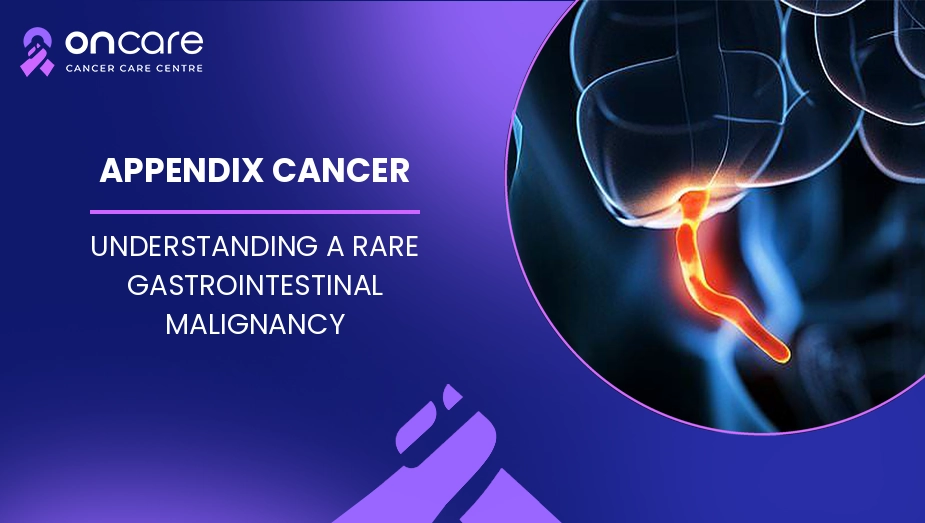
Appendix cancer is a rare type of gastrointestinal cancer that starts in the appendix, a small pouch attached to the first part of the large intestine. It can develop from different types of cells, including epithelial cells and neuroendocrine cells. Because appendix cancer often causes few or unclear symptoms in its early stages, it is sometimes found unexpectedly during surgery for suspected appendicitis.
Being diagnosed with appendix cancer can be confusing because it is much less common than cancers of the colon or rectum. Some appendix tumours grow slowly, while others can spread inside the abdomen. The treatment depends on the exact type of tumour, its size, whether it has spread, and the patient's overall health. In this blog, we will explain appendix cancer, its symptoms, types, diagnosis, treatment options, and what patients should know after diagnosis.
What Is Appendix Cancer?
The appendix is a small, finger-shaped pouch connected to the beginning of the large intestine. Appendix cancer, also called appendiceal cancer, develops when abnormal cells in the appendix grow out of control. It is a rare cancer and is different from typical colorectal cancer, although some treatment approaches may be similar.
There are different types of appendix tumours. Some are epithelial cancers, including mucinous tumours, while others are neuroendocrine tumours. These types can behave differently and may need different treatments.
If you want to understand more about cancers affecting the large intestine, our page on colon cancer treatment explains common treatment and surgery options in simple terms.
What Are the Types of Appendix Cancer?
Appendix cancer is not one single disease. Doctors identify the tumour type by examining the cancer cells under a microscope.
Epithelial and Mucinous Tumours
Epithelial appendix cancers start in the cells lining the appendix. Some of these tumours produce a jelly-like substance called mucin. If a mucin-producing tumour ruptures, mucin and tumour cells can spread inside the abdomen and may cause a condition called pseudomyxoma peritonei (PMP).
Neuroendocrine Tumours
Neuroendocrine tumours develop from special cells in the appendix. Many appendix neuroendocrine tumours are small and are discovered when an appendix is removed for appendicitis or another reason. Treatment depends on the tumour's size, location, grade, and other risk factors.
What Are the Symptoms of Appendix Cancer?
Appendix cancer often does not cause clear symptoms in its early stages. Many people discover it only after an appendix operation or during an imaging test performed for another reason.
When symptoms do occur, they may include:
- Abdominal pain or discomfort
- Bloating or an increase in abdominal size
- A lump or swelling in the abdomen
- Nausea or vomiting
- Feeling full after eating only a small amount
These symptoms can also occur with many non-cancerous conditions. If symptoms continue for several weeks or become worse, it is important to speak with a doctor rather than assuming the cause.
You can also read our information about colorectal cancer symptoms to understand some symptoms that may overlap with other digestive cancers.
How Is Appendix Cancer Diagnosed?
Appendix cancer can be difficult to diagnose because it is rare and may not cause specific symptoms. Doctors may use your medical history, physical examination, imaging tests, blood tests, and pathology results.
CT or MRI scans can help doctors look at the appendix and surrounding areas. In some cases, diagnostic laparoscopy may be used. This involves placing a small camera through an opening in the abdomen to look for signs of cancer and, when needed, take tissue samples.
A biopsy or examination of tissue by a pathologist helps identify the exact type of tumour. Because taking a biopsy directly from the appendix can be difficult, tissue removed during surgery may provide the diagnosis.
How Is Appendix Cancer Treated?
Treatment depends strongly on the tumour type and whether it has spread.
Treatment | What it means | When it may be considered |
|---|---|---|
Appendectomy | Removal of the appendix | Some small or localised tumours |
More extensive surgery | Removal of the appendix and nearby bowel or tissues | Selected larger or higher-risk tumours |
Chemotherapy | Medicines used to kill or control cancer cells | Some advanced or higher-risk cancers |
HIPEC | Heated chemotherapy delivered inside the abdomen during surgery | Selected cancers that have spread within the abdomen |
Follow-up | Regular scans and medical checks | After treatment or for selected low-risk tumours |
Surgery and HIPEC for Appendix Cancer
For some appendix neuroendocrine tumours, removing the appendix alone may be enough. Larger or higher-risk tumours may require more extensive surgery.
When epithelial appendix cancer has spread within the abdomen, some patients may be considered for extensive surgery combined with HIPEC (hyperthermic intraperitoneal chemotherapy). This involves removing visible cancer and then using heated chemotherapy inside the abdomen during surgery.
Our blog on cancer surgery can also help you understand why surgery may be an important part of cancer treatment.
What Factors Affect the Treatment Plan?
There is no single treatment plan for every person with appendix cancer. Doctors consider several details before recommending treatment.
Important factors include:
- Type and grade of the tumour
- Tumour size
- Whether the appendix has ruptured
- Whether cancer has spread into the abdomen or lymph nodes
- Whether all visible cancer can be removed
- Overall health and liver and kidney function
The pathology report is especially important because it tells the treatment team more about the tumour's type and behaviour.
What Is Recovery Like After Treatment?
Recovery depends on the type of treatment. A simple appendectomy usually has a shorter recovery than extensive abdominal surgery. Patients undergoing major surgery may need more time in the hospital and several weeks or longer to regain strength.
After treatment, your medical team may recommend follow-up visits and scans. Follow-up is important because appendix cancer can behave differently depending on its type and stage.
Patients should also tell their doctor about new abdominal swelling, persistent pain, bowel changes, unexplained weight loss, or other symptoms that develop during follow-up.
Can Appendix Cancer Be Cured?
Some appendix cancers can be treated successfully, especially when they are small, low-grade, and have not spread. More advanced disease can be harder to treat, but surgery and other treatments may still help control the cancer.
Prognosis varies widely. It depends on the type of appendix cancer, how far it has spread, and how much of the tumour can be removed. Because appendix cancer is rare, survival estimates may not accurately predict what will happen to an individual patient.
If you want to read more about appendiceal cancer, you can visit the National Cancer Institute.
Consult Today
Appendix cancer is rare and can be complex, so getting the correct diagnosis and treatment plan is important. The best treatment depends on the exact tumour type, stage, spread, and overall health.
At Oncare Cancer Hospital, the cancer care team can review your pathology reports, scans, and previous treatment and help you understand the available options. If you or a family member has been diagnosed with appendix cancer, speak with a cancer specialist to plan the next step.
Disclaimer
This information is for educational purposes only and does not constitute medical advice, diagnosis, or treatment. Appendix cancer types and treatment needs vary from person to person and require individual evaluation. Always discuss diagnosis and treatment decisions with a certified cancer healthcare provider.





Frequently Asked Questions
Yes, appendix cancer is considered a rare cancer, and it can occur at different ages.
Yes, some appendix tumours are discovered unexpectedly when the appendix is removed for suspected appendicitis.
Yes, surgery is an important treatment for many types of appendix cancer. The amount of surgery depends on the tumour type, size, location, and spread.
HIPEC is a treatment in which heated chemotherapy is placed inside the abdomen during surgery after visible cancer has been removed. It may be considered for selected cancers that have spread within the abdomen.
Written and Verified by:
Dr. Gajendra Kumar Himanshu Exp: 10 Yr
Medical Officer
Book an Appointment
Related Blogs

Colostomy and Stoma Care After Colorectal Surgery: A Practical Guide
Learn how to care for a colostomy, including stoma cleaning, bag changes, diet, recovery, common problems, and daily life. Oncare Cancer Hospital's guidance.
TACE (Trans-Arterial Chemoembolisation): Targeted Treatment for Liver Cancer
Learn how TACE treats liver cancer, including the procedure, benefits, side effects, recovery, and follow-up care. Oncare Cancer Hospital provides clear guidance.
Radiofrequency Ablation (RFA) for Liver Tumours: Procedure and Recovery
Learn how RFA treats liver tumours, its benefits, recovery, side effects and suitability. Get clear guidance and expert care from Oncare Cancer Hospital.