Table of Contents
Molar Pregnancy and Gestational Trophoblastic Disease: Highly Curable Cancers

By Dr. Gajendra Kumar Himanshu


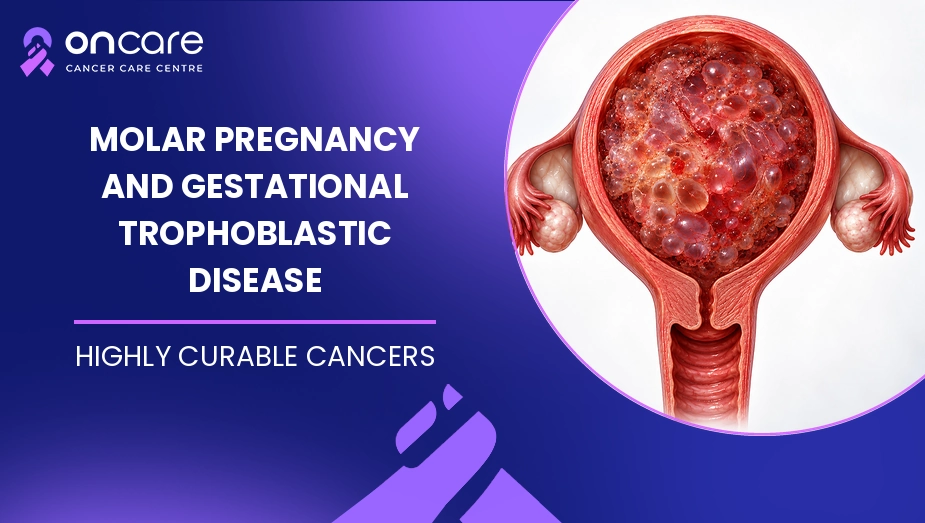
A molar pregnancy is a rare pregnancy condition in which abnormal cells grow inside the uterus instead of a healthy baby and placenta developing normally. It is the most common form of gestational trophoblastic disease (GTD). Most molar pregnancies are not cancer, but in some cases, abnormal cells can remain or become cancerous. The good news is that gestational trophoblastic cancers are highly treatable and can usually be cured, even when the disease has spread.
A diagnosis of molar pregnancy can be emotionally difficult because it involves a pregnancy loss and may also raise concerns about cancer. In this blog, we will explain what molar pregnancy and gestational trophoblastic disease mean, their types, symptoms, diagnosis, treatment, follow-up, and why early medical care gives patients a very good chance of recovery.
What Is a Molar Pregnancy?
A molar pregnancy happens when there is an abnormal fertilisation of an egg, causing the tissue that should form the placenta to grow abnormally. A healthy baby cannot develop from a molar pregnancy. There are two main types: complete molar pregnancy and partial molar pregnancy.
In a complete mole, there is no normal developing baby. In a partial mole, some early fetal tissue may be present, but the pregnancy cannot develop normally or survive.
A molar pregnancy usually happens by chance. It is not caused by something the mother did or did not do during pregnancy.
What Is Gestational Trophoblastic Disease?
Gestational trophoblastic disease is a group of rare conditions that develop from trophoblast cells, which normally help form the placenta after conception. Most forms of GTD are benign, meaning they are not cancer. However, some can become malignant and are known as gestational trophoblastic neoplasia (GTN).
GTN can include invasive mole, choriocarcinoma, placental-site trophoblastic tumour and epithelioid trophoblastic tumour. These conditions are uncommon, but they need specialist treatment and regular monitoring.
For people who are concerned about how doctors confirm an abnormal growth, understanding the cancer diagnostics process and common tests can also be helpful.
What Are the Symptoms of Molar Pregnancy?
Some women may have few or no symptoms, while others may notice changes that need medical attention. A molar pregnancy may be found during an early ultrasound scan.
Common signs may include:
- Vaginal bleeding or dark vaginal discharge
- Severe nausea or vomiting
- A uterus that is larger than expected for the stage of pregnancy
- Abdominal or pelvic discomfort
- Symptoms of pregnancy that seem unusual or become more severe
These symptoms do not always mean a woman has a molar pregnancy. Other pregnancy conditions can cause similar symptoms, so proper medical assessment is important.
How Is Molar Pregnancy Diagnosed?
Doctors usually use an ultrasound scan and blood tests when a molar pregnancy is suspected. The blood test measures beta-hCG, a pregnancy hormone that may be much higher than expected in a molar pregnancy.
The pregnancy tissue removed during treatment is also examined in a laboratory to confirm the diagnosis. In some cases, additional scans and tests are needed to check whether abnormal cells have remained or spread.
If you want to understand more about tissue testing, this simple blog about a biopsy test for cancer explains why laboratory examination can be important.
Tests Used to Diagnose Molar Pregnancy
The main tests and why they may be done are summarised below:
Test | Why it may be done |
|---|---|
Ultrasound | To look at the uterus and pregnancy tissue |
Beta-hCG blood test | To measure pregnancy hormone levels |
Tissue examination | To confirm the type of molar pregnancy |
Additional scans | To check for remaining or spread disease |
How Is a Molar Pregnancy Treated?
The main treatment for a molar pregnancy is usually removal of the abnormal pregnancy tissue from the uterus. This is commonly done through a procedure called suction evacuation or dilation and curettage, depending on the individual situation.
After the procedure, regular beta-hCG blood tests are very important. Doctors check whether the hormone level falls back to normal. A rising or persistently high hCG level may indicate that abnormal trophoblastic cells are still present and need further treatment.
When Does Molar Pregnancy Become Cancer?
Most molar pregnancies do not become cancer. However, abnormal trophoblastic cells can sometimes continue growing after the molar pregnancy has been removed. This may develop into gestational trophoblastic neoplasia.
One important example is choriocarcinoma, a rare cancer that can develop after a molar pregnancy but can also occur after a normal pregnancy, miscarriage, or ectopic pregnancy.
The important point is that GTD is different from many other cancers because it often responds very well to treatment.
Treatment for Gestational Trophoblastic Cancer
Treatment depends on the type of disease, hCG level, risk group, and whether the disease has spread. Chemotherapy is an important treatment for many cases of gestational trophoblastic neoplasia. Low-risk disease may be treated with a single chemotherapy drug, while high-risk disease may require a combination of medicines.
Surgery may also be considered in selected situations. Radiation therapy has a role in certain cases, especially when disease has spread to specific areas. The treatment plan is always decided according to the patient's individual condition.
To understand the side effects patients may experience during treatment and how they can be managed, you can read our blog on cancer treatment side effects.
Why Follow-Up After Treatment Is Important
Follow-up is one of the most important parts of treatment. Doctors regularly check beta-hCG levels to make sure the abnormal cells have completely disappeared. Patients are usually advised to avoid pregnancy during the follow-up period because a new pregnancy can increase hCG and make monitoring difficult.
With proper follow-up and treatment, the outlook is generally very good. Even some patients with disease that has spread can achieve a cure with appropriate treatment.
If you want to read more about molar pregnancy, you can visit the National Library of Medicine.
Consult Today
A diagnosis of molar pregnancy or gestational trophoblastic disease can feel frightening, but it is important to remember that these conditions are highly treatable. Early evaluation, accurate diagnosis, regular hCG monitoring, and the right treatment can make a major difference.
At Oncare Cancer Hospital, patients can discuss their diagnosis and treatment options with a cancer care team. If you or someone in your family has been diagnosed with gestational trophoblastic disease or has persistent abnormal hCG levels after a molar pregnancy, consult a specialist to understand the next steps.
Disclaimer
This information is for educational purposes only and does not constitute medical advice, diagnosis, or treatment. The management of molar pregnancy and gestational trophoblastic disease depends on each patient's condition and requires individual evaluation. Always discuss diagnosis, treatment, and future pregnancy plans with a certified healthcare provider.





Frequently Asked Questions
No, most molar pregnancies are not cancer. However, in some cases, abnormal cells can remain and develop into gestational trophoblastic neoplasia.
Yes, gestational trophoblastic cancer is highly treatable and can usually be cured, depending on the type and risk group.
In many cases, women can become pregnant again after completing the recommended follow-up period. Your doctor will tell you when it is safe to try.
Regular hCG tests help doctors check whether all abnormal trophoblastic cells have disappeared and whether further treatment is needed.
Written and Verified by:
Dr. Gajendra Kumar Himanshu Exp: 10 Yr
Medical Officer
Book an Appointment
Related Blogs
TURBT: The First Surgery Most Bladder Cancer Patients Undergo
Learn how TURBT removes bladder tumours, what to expect during recovery, possible side effects, and treatment after surgery at Oncare Cancer Hospital.
Appendix Cancer: Understanding a Rare Gastrointestinal Malignancy
Learn about appendix cancer, including its symptoms, types, diagnosis, treatment options, HIPEC, and recovery. Get clear guidance from Oncare Cancer Hospital.

Breast Reconstruction After Mastectomy: Types, Timing and Recovery
Learn about breast reconstruction after mastectomy, including implant and flap options, recovery, risks, and timing with Oncare Cancer Hospital's guidance.