Table of Contents
Know These 10 Signs of Colorectal Cancer Before It’s Too Late

By Dr. Gajendra Kumar Himanshu


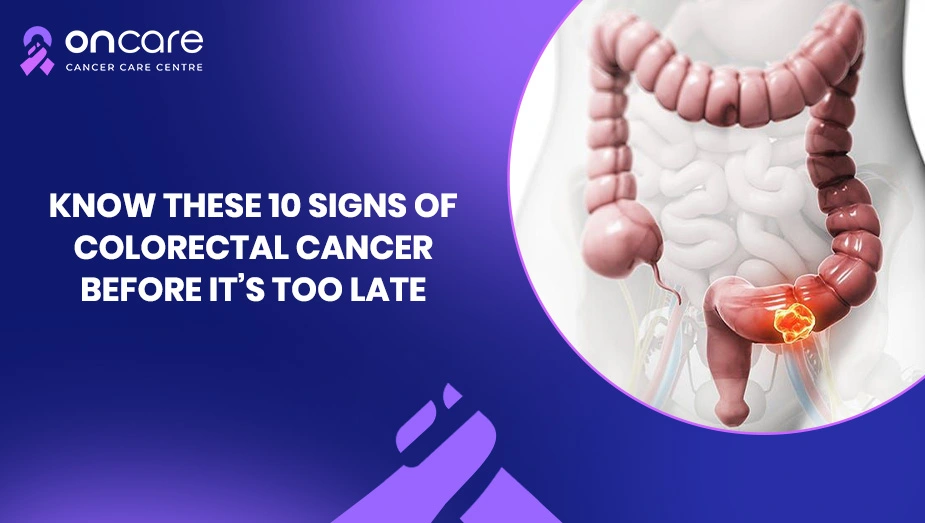
Colorectal cancer is one of those diseases that can grow without any symptoms. A lot of folks don't see the early indicators or ignore them because they assume it's just a small gastrointestinal problem. The cancer may already be advanced by the time the symptoms appear.
This is the most crucial thing to remember: your body generally sends out warning signs. You only need to see them early.
This blog will teach you the 10 most important indicators of colorectal cancer in easy-to-understand language. This way, you can act at the right moment and avoid significant problems.
You can get reliable information about colorectal cancer on the World Health Organization website.
What is cancer of the colon?
The colon and rectum are regions of your large intestine where colorectal cancer starts. Polyps, which are small growths, are usually the first sign of this disease. If they aren't treated, they can turn into cancer.
Finding the disease early is very important for successful treatment. The National Cancer Institute page has more detailed information.
10 Signs that you might have colorectal cancer
1. Changes in how you go to the bathroom
Don't ignore it if you have diarrhea, constipation, or a change in the consistency of your stool that lasts longer than a few days.
2. Blood in the stool
One of the most important symptoms that something is wrong is seeing blood in your stool, whether it is bright red or dark.
3. Pain in the stomach that won't go away
If you get cramps, gas, or stomach aches that don't go away, it could mean that something is amiss in your colon.
4. The feeling that your bowel isn't emptying all the way
If you still feel like you need to go after using the bathroom, it could be a sign.
5. Losing weight for no reason
If you lose weight without trying, it could be an indication that your body is dealing with a major problem.
6. Tiredness and Weakness
Bleeding inside the body or losing nutrients can make you feel fatigued all the time.
7. Stools that are thin or narrow
An obstruction in the colon could be the cause of your feces becoming thinner than usual.
8. Anemia due to a lack of iron
Sometimes, low iron levels without a clear cause can mean that there is bleeding elsewhere in the digestive tract.
9. Bloating or gas that doesn't get better
If bloating or pain lasts for weeks, you shouldn't dismiss it.
10. Pain or discomfort in the rectum
Pain in the rectum might potentially be an indication of something bad happening.
Why People often ignore early signs
A lot of these symptoms are common and could be mistaken for less significant issues like indigestion, piles, or infections.
That's why many put off going to the doctor. But if you don't pay attention to these indications, the cancer might spread and grow.
Who is at Greater Risk?
Some people are more likely to get colorectal cancer than others:
- People who are 45 years old or older
- People who have a family history of cancer
- People who don't eat well (low fiber, high processed food)
- People who smoke and drink
- People who are overweight or don't move around much
When should you see a doctor?
If you have any of the following, you should see a doctor:
- The symptoms linger for more than two to three weeks.
- You see blood in your poop.
- You have a persistent ache in your abdomen.
- Weight reduction that can't be explained
Getting medical advice early on can have a huge effect on how well therapy works.
Testing and Diagnosis
Regular screenings can find colorectal cancer early, even before any signs arise.
Tests that are often used:
- Colonoscopy
- Tests on stool
- Scan CT
If you are at high risk, doctors may suggest screening sooner.
Can You Treat Colorectal Cancer?
Yes, colorectal cancer can be treated, especially if it is identified early.
There are different ways to treat:
- Operation
- Chemotherapy
- Radiation treatment
- Therapy that targets certain areas
People with early-stage cancer have a far better chance of living than those with advanced-stage cancer.
Things you can do to lower your risk
- Eat foods high in fiber, like whole grains, fruits, and vegetables.
- Stay away from red meat and processed foods.
- Work out often
- Stop smoking
- Drink less alcohol
- Get frequent checkups.
You can greatly minimize your risk by making a few adjustments to your lifestyle.
Consult Today
Colorectal cancer doesn't normally show up out of the blue. It grows slowly and sends out warning signs along the way. Don't ignore those indicators; that's the key.
If you notice any strange changes in your body, especially in how you digest food or go to the bathroom, pay attention to them. Finding out early can save your life.
The best methods to keep yourself and your loved ones safe are to be informed, have regular checkups, and live a healthy lifestyle.





Frequently Asked Questions
A change in bowel habits, including constipation, diarrhea, or blood in the stool, is often the first indicator.
People over 45 are normally told to get screened, but those at higher risk may need to do so sooner.
Yes, it can be cured if it is found early and treated correctly.
If you have symptoms like blood in your stool, stomach pain, or weight loss that continue longer than 2–3 weeks, you should consult a doctor.
Written and Verified by:

Dr. Gajendra Kumar Himanshu Exp: 10 Yr
Medical Officer
Book an Appointment
Related Blogs
Uterus Cancer Symptoms: How to Identify Early Signs
Discover more about uterine cancer and its symptoms, why early detection matters, the early signs of uterine cancer, and who is at higher risk of developing these cancers!
10 Common Tongue Cancer Symptoms Often Ignored
Learn 10 tongue cancer symptoms, including non-healing sores, patches, lumps, pain, numbness, bleeding, and swallowing problems at Oncare Cancer Hospital.
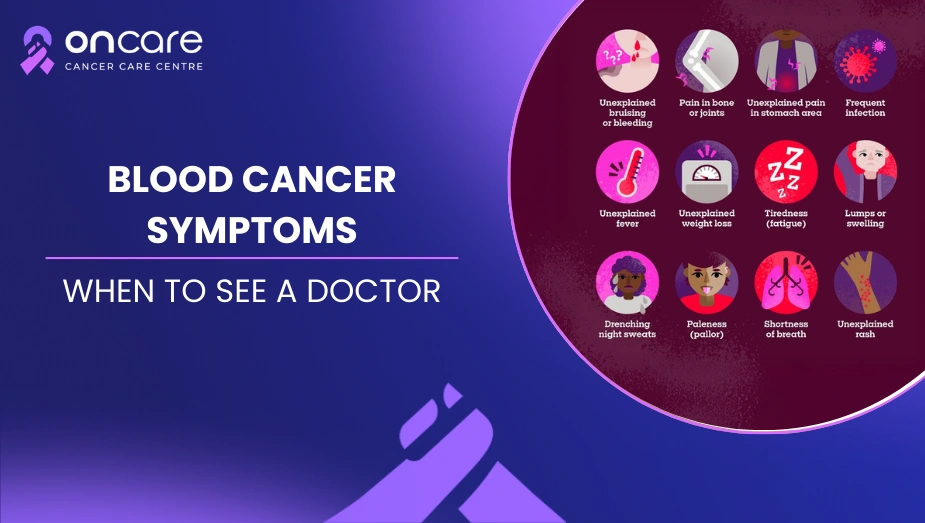
Blood Cancer Symptoms: When to See a Doctor
Discover more about Blood cancer and its common symptoms of blood cancer, importance of early detection and why it matters and when to consult a doctor?
Thyroid Cancer Symptoms: Detecting It Before It Spreads
Discover more about thyroid cancer and types of cancer, common symptoms of thyroid cancer, risk factors, why early detection is crucial, and when you should consult a doctor!