Table of Contents
Pleural Tap (Thoracentesis): Draining Fluid Around the Lungs in Cancer

By Dr. Gajendra Kumar Himanshu


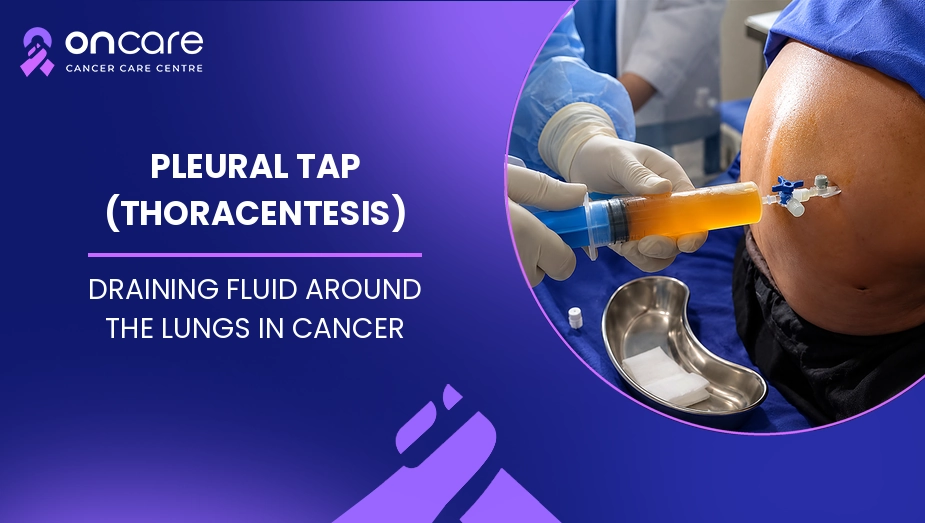
A pleural tap, also called thoracentesis, is a procedure used to remove extra fluid from the space around the lungs. In people with cancer, this fluid buildup is called a pleural effusion. It can press on the lung and cause shortness of breath, cough, or chest discomfort. During thoracentesis, a doctor uses a needle or small tube to remove some of the fluid. The fluid may also be sent to a laboratory to check for cancer cells or other causes.
Fluid around the lungs can happen for several reasons. Cancer can cause it, but infections, heart problems, blood clots, and some cancer treatments can also lead to a pleural effusion. Therefore, finding the reason for the fluid is important before deciding on further treatment.
In this blog, we explain what a pleural tap is, why it may be needed in cancer, how the procedure is done, what patients may feel, its possible risks, and what happens if the fluid comes back.
What Is a Pleural Effusion?
The lungs are covered by a thin layer of tissue called the pleura. There is normally a small amount of fluid between the layers of the pleura. This fluid helps the lungs move smoothly when you breathe.
A pleural effusion happens when too much fluid collects in this space. The extra fluid can put pressure on the lung and make it harder for the lung to expand fully. This can cause breathing problems, cough, and chest discomfort.
In people with cancer, pleural effusion may be related to cancer itself, cancer spread, treatment, or another health problem. Lung cancer, breast cancer, lymphoma, and some other cancers can cause malignant pleural effusion.
If you want to understand more about breathing problems during cancer, you can also read this blog about lung cancer symptoms.
Why Does Fluid Build Up Around the Lungs in Cancer?
Cancer can cause fluid to collect around the lungs in different ways. Cancer cells may spread to the pleura and affect the normal drainage of fluid. A tumor may also block lymphatic vessels that normally help remove fluid from the chest.
However, not every pleural effusion in a person with cancer is caused by cancer. Pneumonia, heart failure, blood clots in the lungs, low protein levels, and some cancer treatments can also cause fluid buildup.
This is why doctors may test the fluid instead of assuming that cancer is the cause.
For people going through a cancer diagnosis or treatment, this simple blog on cancer diagnosis can help explain some of the tests doctors may recommend.
What Are the Symptoms of Fluid Around the Lungs?
A small pleural effusion may not cause any noticeable symptoms. When more fluid builds up, symptoms can become easier to notice.
Common symptoms include:
- Shortness of breath
- Cough
- Chest discomfort or pain
- A feeling of pressure in the chest
- Difficulty taking a deep breath
The symptoms can depend on how much fluid has collected and how quickly it has built up.
If breathing becomes difficult or symptoms suddenly become severe, medical attention should be sought promptly.
Why Is a Pleural Tap Done in Cancer?
A pleural tap can have two main purposes: diagnosis and symptom relief.
To Find the Cause of the Fluid
Doctors may remove a sample of pleural fluid and send it to a laboratory. The fluid can be examined for cancer cells and may also be tested for infection and other conditions.
If cancer cells are found, the results can provide useful information about the cause of the effusion. However, a negative fluid test does not always rule out cancer, and doctors may recommend other tests if needed.
To Make Breathing Easier
When a large amount of fluid is pressing on the lung, removing it may reduce pressure and help the lung expand. This can make breathing easier and may reduce chest discomfort.
You can also learn more about supportive care during cancer treatment to understand how doctors manage symptoms alongside cancer treatment.
How Is a Pleural Tap Performed?
Thoracentesis is usually performed by a trained doctor in a hospital or medical setting. The exact steps can vary depending on the patient's condition and the amount and location of fluid.
Before the Procedure
The doctor may review your medical history, medicines, and previous scans. Imaging such as a chest X-ray, CT scan, or ultrasound may be used to locate the fluid.
Ultrasound can help the doctor identify the safest area for inserting the needle.
During the Procedure
The patient is usually positioned so that the doctor can reach the area of fluid safely. The skin is cleaned, and a local anaesthetic is used to numb the area.
The doctor then places a thin needle or catheter through the skin and between the ribs into the pleural space. The fluid is slowly removed and may be collected for laboratory testing.
Most patients remain awake during the procedure. The medical team monitors the patient and stops or changes the procedure if needed.
What Happens to the Fluid After It Is Removed?
The collected fluid may be sent to a laboratory for testing. Doctors may look for cancer cells and perform other tests to understand why the fluid has developed.
Purpose of testing | What doctors may learn |
|---|---|
Cancer cell testing | Whether cancer cells are present |
Infection testing | Whether an infection may be involved |
Fluid analysis | Information about the type and cause of the effusion |
Additional laboratory tests | May help identify other possible causes |
The results are considered along with scans, symptoms, medical history, and other test results. A pleural fluid test alone does not always provide the complete answer.
What Are the Benefits of Thoracentesis?
For someone with a symptomatic pleural effusion, removing the fluid can reduce pressure around the lung and may improve breathing. It can also help doctors understand what is causing the fluid buildup.
The amount of relief can vary from person to person. If the fluid keeps coming back, another treatment may be needed rather than repeatedly performing a pleural tap.
Patients can also read about lung cancer treatment options to understand how treatment of the underlying cancer may fit into the overall plan.
What Are the Possible Risks?
Thoracentesis is generally considered a useful procedure when performed by an experienced medical team, but like any medical procedure, it has possible risks.
Possible complications include:
- Bleeding
- Infection
- Air entering the space around the lung, causing a collapsed lung or pneumothorax
- Low blood pressure
- Rarely, lung problems related to rapid re-expansion after fluid removal
Doctors take precautions to reduce these risks and monitor patients during and after the procedure.
Can the Fluid Come Back After a Pleural Tap?
Yes, a pleural tap removes the fluid that is present, but it does not always stop the reason why the fluid formed. In cancer-related pleural effusion, fluid may build up again after the procedure.
If fluid repeatedly returns and causes symptoms, doctors may discuss other options.
Pleurodesis
Pleurodesis is a procedure designed to reduce the chance of fluid building up again. A substance is placed into the pleural space to make the two layers of the pleura stick together, leaving less space for fluid to collect.
Indwelling Pleural Catheter
An indwelling pleural catheter is a small tube placed into the chest that allows fluid to be drained over time. It may be considered when the fluid repeatedly returns or when pleurodesis is not suitable.
The right option depends on the patient's symptoms, overall health, cancer type, how quickly the fluid returns, and treatment goals.
What Should Patients Expect After a Pleural Tap?
After the procedure, the medical team may monitor breathing, blood pressure, and other vital signs. A follow-up chest X-ray or other imaging may be done in some situations.
Patients should contact their healthcare team if they develop increasing breathlessness, severe chest pain, fever, bleeding from the procedure site, or other concerning symptoms after going home.
A pleural tap is mainly used to remove fluid and relieve symptoms or help find the cause. It does not by itself treat the underlying cancer. Treatment of the cancer may still be needed.
If you want to read more about malignant pleural effusion, then you can visit the official website of the National Cancer Institute.
Consult Today
Fluid around the lungs can be uncomfortable and may make breathing difficult, especially in people undergoing cancer treatment. A pleural tap can help remove excess fluid, improve breathing in suitable patients, and provide a sample that doctors can test to understand the cause.
At Oncare Cancer Hospital, cancer specialists can evaluate symptoms, review imaging and test results, and help determine whether a pleural tap or another treatment may be appropriate. If you or a loved one has cancer along with increasing breathlessness, cough, or known fluid around the lungs, consult a cancer specialist to discuss the next step.
Disclaimer
This information is for educational purposes only and does not constitute medical advice, diagnosis, or treatment. The need for a pleural tap and the management of fluid around the lungs depend on each patient's condition and require individual evaluation. Always discuss decisions about procedures and treatment with a certified cancer healthcare provider.





Frequently Asked Questions
The skin is usually numbed with a local anaesthetic before the needle is inserted. You may feel pressure or some discomfort during the procedure, but the medical team works to keep you as comfortable as possible.
The time can vary depending on the amount and location of fluid and the patient's condition. The medical team will explain what to expect before the procedure.
No, a pleural tap removes fluid and may help relieve symptoms or identify cancer cells in the fluid. Treatment for the underlying cancer is managed separately.
Yes, fluid can return, particularly when the underlying cause continues. If it happens repeatedly, doctors may discuss options such as pleurodesis or an indwelling pleural catheter.
Written and Verified by:
Dr. Gajendra Kumar Himanshu Exp: 10 Yr
Medical Officer
Book an Appointment
Related Blogs

Chemotherapy-Induced Peripheral Neuropathy: Managing Numbness and Tingling
Learn about chemotherapy-induced neuropathy, including numbness, nerve pain, and weakness. Know simple ways to manage symptoms with Oncare Cancer Hospital.

Ewing Sarcoma: Symptoms, Diagnosis and Treatment Options
Learn about Ewing sarcoma symptoms, diagnosis, and treatment options, including chemotherapy, surgery, and radiation. Get expert care at Oncare Hospital.

Osteosarcoma in Teenagers: Early Warning Signs Parents Should Know
Learn the early warning signs of osteosarcoma in teenagers, including bone pain, swelling, limping, and fractures. Get expert care at Oncare Cancer Hospital.