Table of Contents
Osteosarcoma in Teenagers: Early Warning Signs Parents Should Know

By Dr. Gajendra Kumar Himanshu


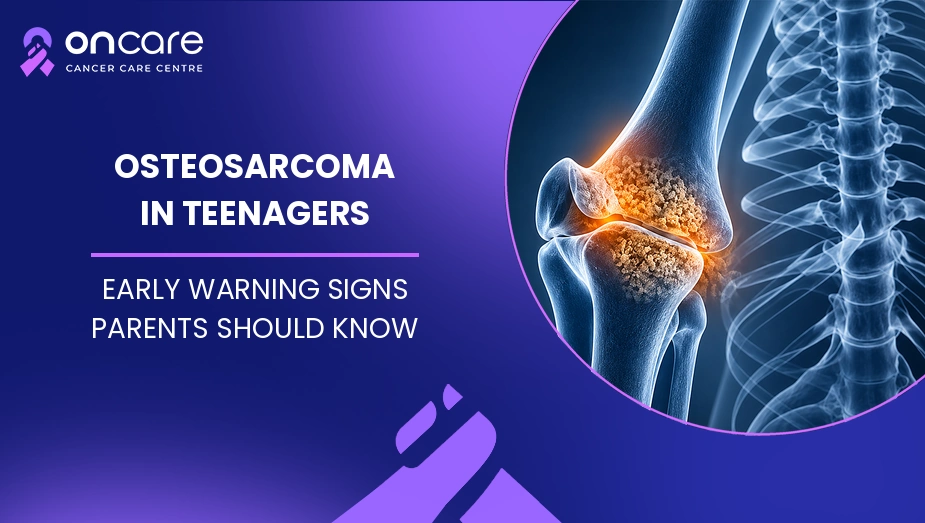
Osteosarcoma is a rare type of bone cancer that commonly develops in children, teenagers, and young adults. Persistent bone or joint pain, swelling or a lump near a bone, limping, stiffness, and a bone fracture without a clear reason can be warning signs of osteosarcoma in teenagers. These symptoms are often mistaken for sports injuries or normal growing pains, but symptoms that continue, become worse, or interfere with daily activities should be checked by a doctor.
For parents, noticing these changes does not mean that their teenager has cancer. Most cases of bone pain or swelling in active teenagers have other causes. However, knowing what is unusual and when to seek medical advice can help identify the problem and get the right diagnosis sooner.
In this blog, we discuss what osteosarcoma is, the early warning signs parents should watch for, when medical evaluation is important, and how doctors diagnose and treat this condition.
What Is Osteosarcoma?
Osteosarcoma is a cancer that starts in cells involved in forming bone. It is the most common type of primary bone cancer and is seen most often in children, teenagers, and young adults. It commonly develops in the long bones of the arms and legs, especially around the knee and shoulder.
Osteosarcoma can sometimes be difficult to notice at first because teenagers commonly experience muscle aches, sports injuries, and joint pain. A child may also continue normal activities despite mild pain. This can make it easy to overlook symptoms that continue for several weeks.
Parents should pay attention when pain or swelling does not behave like a normal injury or when symptoms gradually become more frequent or severe.
Early Warning Signs of Osteosarcoma in Teenagers
Parents should know these early warning signs so they can recognise unusual changes and seek medical advice when symptoms persist or worsen.
1. Persistent Bone or Joint Pain
Pain is one of the most common symptoms of osteosarcoma. It may begin as mild pain that comes and goes. Over time, it may become more frequent or stronger.
Some teenagers may notice pain after physical activity, while others may experience pain at night or even when resting. Pain around the knee, thigh, upper arm, or shoulder can sometimes be associated with osteosarcoma, although these areas are also commonly affected by ordinary sports injuries.
If your teenager has unexplained pain that does not improve as expected, it is worth discussing it with a doctor.
For a broader understanding of bone-related symptoms, parents can also read this guide to bone cancer symptoms.
2. Swelling or a Lump Near a Bone
A visible swelling or lump may develop near the affected bone. Sometimes the area may feel different when touched, and the swelling can become more noticeable as the tumor grows.
Swelling after an injury is common, especially in teenagers who play sports. The important point is whether it improves with time or continues to grow.
A new lump or swelling that remains unexplained should be evaluated rather than assumed to be a simple injury.
3. Limping or Difficulty Walking
If osteosarcoma affects a leg bone, pain or swelling can make walking uncomfortable. A teenager may begin limping, avoid putting weight on one leg, or stop participating in activities they previously enjoyed.
Parents may notice this before the teenager clearly explains that something is wrong. A change in walking pattern, especially when combined with ongoing pain or swelling, deserves attention.
4. Stiffness or Reduced Movement
A teenager may have difficulty moving a nearby joint normally. For example, a tumor near the knee or shoulder may cause discomfort and make certain movements harder.
Stiffness can have many causes, including injuries and inflammation. However, persistent stiffness along with pain or swelling should not be ignored.
5. A Bone Fracture Without a Major Injury
In some cases, osteosarcoma can weaken the affected bone. This may result in a fracture after a relatively minor injury or sometimes without an obvious cause.
A broken bone after a significant fall or sports injury is usually not a sign of cancer. However, a fracture that seems unusual or happens after very little force should be medically assessed.
Warning Signs Parents Should Not Ignore
Some changes are easier to act on when parents know what to look for and what the next step should be.
Warning sign | What parents may notice | What to do |
|---|---|---|
Persistent bone pain | Pain continues or becomes worse | Arrange a medical evaluation |
Night pain | Pain wakes the teenager or occurs while resting | Discuss it with a doctor |
Swelling or lump | New or growing swelling near a bone | Get it checked |
Limping | Change in walking or avoiding one leg | Seek medical advice |
Joint stiffness | Difficulty moving the nearby joint | Have the cause evaluated |
Unexplained fracture | Bone breaks with little or no injury | Seek prompt medical care |
These signs do not automatically mean osteosarcoma. They can occur with many common conditions. The concern is greater when symptoms persist, worsen, or appear together.
Why Osteosarcoma Can Be Mistaken for a Sports Injury
Teenagers are often active and may participate in running, football, basketball, gym activities, or other sports. Because of this, parents and teenagers may naturally connect bone or joint pain with an injury.
In fact, symptoms of osteosarcoma can look similar to common sports injuries, which is one reason diagnosis may take time.
A simple injury generally starts improving with appropriate rest and treatment. Pain that continues for weeks, keeps returning, becomes worse, or is accompanied by swelling should be reassessed.
The goal is not to make parents worry about every ache. Instead, it is to notice when a symptom does not follow the expected pattern of a normal injury.
When Should Parents Take a Teenager to the Doctor?
Parents should consider medical evaluation if their teenager has unexplained bone or joint pain that does not go away, persistent swelling, a growing lump, ongoing limping, reduced movement, or a fracture without a clear cause.
There is currently no routine screening test recommended for osteosarcoma in children at average risk. It is usually found when symptoms lead a child or teenager to seek medical care.
A doctor may first ask about the symptoms, how long they have been present, previous injuries, and the teenager's health history. Depending on the findings, imaging tests such as an X-ray or MRI may be recommended. If cancer is suspected, a biopsy may be needed to confirm the diagnosis.
For parents who want to understand the diagnostic process, Oncare also provides information about how cancer diagnosis is done.
How Is Osteosarcoma Treated?
Treatment depends on several factors, including the tumor's location, size, whether it has spread, and the teenager's overall health.
For many high-grade osteosarcomas, treatment commonly involves chemotherapy and surgery. Doctors may use chemotherapy before surgery to help shrink or control the tumor and after surgery to target cancer cells that may remain elsewhere in the body. Surgery is used to remove the tumor when possible.
Treatment planning is usually individualised. A team of specialists may work together to decide the most appropriate approach for the teenager.
Parents can learn more about chemotherapy and how it works before discussing treatment options with the medical team.
What Parents Can Do
Parents do not need to panic every time their teenager complains of leg, arm, or joint pain. Most such symptoms have causes other than cancer. However, parents can take a few practical steps:
- Keep track of how long the pain or swelling has been present.
- Notice whether pain is getting worse or occurring at night.
- Watch for changes in walking, movement, or sports participation.
- Get persistent or unexplained symptoms checked by a healthcare professional.
- Do not assume that ongoing pain is simply a sports injury without reassessment.
Early medical evaluation can help identify the actual cause of symptoms and ensure that appropriate treatment is started when needed.
If you want to read more about osteosarcoma treatment, then you can visit the official website of the National Cancer Institute.
Consult Today
If your teenager has persistent bone pain, unexplained swelling, a growing lump, difficulty walking, or another concerning symptom, consider speaking with a qualified doctor rather than waiting for the symptoms to become severe.
Oncare Cancer Hospital provides cancer care and diagnostic support through its oncology team. Families can discuss symptoms, diagnostic findings, and possible treatment options with cancer specialists.
Disclaimer
This information is for educational purposes only and does not constitute medical advice, diagnosis, or treatment. Bone pain, swelling, and other symptoms in teenagers can have many causes and require individual evaluation. Always discuss decisions about diagnosis and treatment with a certified cancer healthcare provider.





Frequently Asked Questions
Persistent bone or joint pain is one of the most common symptoms. It may become worse over time or occur at night.
Yes, osteosarcoma symptoms can resemble common sports injuries, especially in active teenagers. Persistent or worsening symptoms should be evaluated by a doctor.
No, lumps and swelling can have many causes. However, unexplained or persistent swelling near a bone should be checked by a healthcare professional.
Doctors may use a physical examination, imaging tests such as X-rays or MRI, and a biopsy to confirm osteosarcoma.
Written and Verified by:
Dr. Gajendra Kumar Himanshu Exp: 10 Yr
Medical Officer
Book an Appointment
Related Blogs

Hypercalcaemia of Malignancy: A Hidden but Serious Cancer Complication
Learn about hypercalcaemia of malignancy, its symptoms, causes and treatment. Get expert cancer care and guidance at Oncare Cancer Hospital.
Testicular Cancer: Self-Exam and Early Warning Signs
Learn the early signs of testicular cancer, including painless lumps, swelling, and when to see a specialist at Oncare Cancer Hospital for timely evaluation.

Immune-Related Side Effects of Immunotherapy: What to Watch For
Learn the immune-related side effects of immunotherapy, warning signs, diagnosis, treatment, and when to seek urgent care at Oncare Cancer Hospital.