Table of Contents
Ewing Sarcoma: Symptoms, Diagnosis and Treatment Options

By Dr. Gajendra Kumar Himanshu


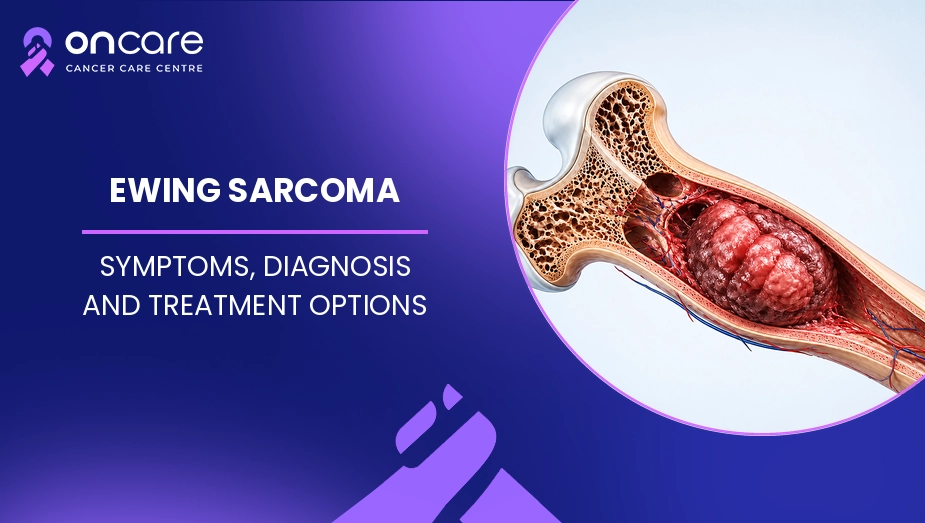
Ewing sarcoma is a rare type of cancer that usually starts in the bone or nearby soft tissue and is more common in teenagers and young adults. Common symptoms include persistent bone pain, swelling or a lump, tenderness, limping, unexplained fever, tiredness, weight loss, and sometimes a bone fracture without a major injury. Because these symptoms can look like sports injuries or other common problems, see a doctor if they continue for a few weeks or get worse.
Ewing sarcoma can affect different parts of the body, including the pelvis, legs, arms, chest, spine, and other bones. It can also begin in soft tissues. In this blog, we will explain Ewing sarcoma in simple words, including its symptoms, how doctors diagnose it, how doctors check whether it has spread, and the main treatment options available.
What Is Ewing Sarcoma?
Ewing sarcoma is a rare cancer that develops from certain cells found in bone or soft tissue. It is most often seen in teenagers and young adults, although it can occur at other ages too. The tumor may begin in a bone or in soft tissue around a bone.
Ewing sarcoma is different from other bone cancers, such as osteosarcoma. The exact cause of most Ewing sarcomas is not known. It is usually not caused by injury, food, or physical activity.
Parents and young people can also learn more about bone cancer symptoms to understand which changes may need medical attention.
What Are the Symptoms of Ewing Sarcoma?
The symptoms can depend on where the tumor develops. Some symptoms may appear slowly, while others may become more noticeable over time.
Bone or Joint Pain
Pain near the tumor is one of the most common symptoms. At first, the pain may come and go. It may become worse during physical activity or at night. As the tumor grows, the pain may become stronger or more constant.
Pain in the legs, pelvis, or other parts of the body is common in active teenagers, so it does not always mean cancer. However, pain that does not improve after a few weeks or continues to get worse should be evaluated by a doctor.
Swelling or a Lump
A lump or swelling may develop around the affected area. The area may feel tender, warm, or different from the surrounding tissue. Tumors in the arms or legs may be easier to notice, while tumors in the pelvis or chest may not be obvious until they become larger.
Limping or Difficulty Moving
If Ewing sarcoma affects a leg or another area involved in movement, pain and swelling may make walking difficult. A child or teenager may start limping or avoid using the affected limb.
Fever and Tiredness
Some people with Ewing sarcoma may develop fever, tiredness, or unexplained weight loss. These symptoms can occur with many other health problems, so they do not confirm cancer on their own.
Unexplained Bone Fracture
In some cases, Ewing sarcoma can weaken a bone. This may cause the bone to break after a small injury or sometimes without an obvious reason.
Symptoms That May Need Prompt Medical Attention
Parents or young adults should speak with a doctor when symptoms are persistent, unusual, or getting worse. Important signs include:
- Bone pain that continues for several weeks
- A new lump or swelling
- Pain that becomes worse at night
- Limping or difficulty moving
- Unexplained fever or weight loss
- A bone fracture without a clear reason
- Numbness or weakness, especially when the tumor is near the spine
These symptoms can have many causes other than cancer. A medical examination is needed to find the actual cause.
For more information about cancer symptoms that should not be ignored, you can also read common cancer warning signs.
How Is Ewing Sarcoma Diagnosed?
There is no routine screening test for Ewing sarcoma in people who have no symptoms. Doctors usually begin the diagnosis when symptoms such as ongoing bone pain, swelling, or a lump lead someone to seek medical care.
The doctor may first ask about the symptoms, how long they have been present, previous injuries, and the person's medical history. A physical examination is also done.
If a bone or soft tissue tumor is suspected, the doctor may recommend imaging tests and a biopsy.
Imaging Tests
Imaging helps doctors see the size and location of a possible tumor. Tests may include:
- X-ray: Often one of the first tests used when a bone tumor is suspected.
- MRI: Gives detailed pictures of the tumor and nearby tissues.
- CT scan: May be used to examine the tumor or check the chest for possible spread.
- PET scan or bone scan: May help doctors look for cancer in other areas of the body.
Doctors choose tests according to the location of the suspected tumor and the person's individual situation.
Why Is a Biopsy Important?
A biopsy is an important part of diagnosing Ewing sarcoma. During a biopsy, doctors take a small sample of tissue from the suspected tumor. A pathologist examines the sample in a laboratory to look for cancer cells.
A biopsy can help confirm whether the tumor is Ewing sarcoma and can provide information that helps doctors plan treatment. Because the biopsy procedure can affect later surgery, it should be carefully planned by a team experienced in treating bone and soft tissue tumors.
How Do Doctors Check If Ewing Sarcoma Has Spread?
After Ewing sarcoma is confirmed, doctors need to find out whether it has spread to other parts of the body. This is called staging.
Doctors may use imaging tests such as MRI, PET-CT, or other scans. Blood tests may also be performed. In selected cases, doctors may recommend a bone marrow examination.
Ewing sarcoma can spread to places such as the lungs, other bones, or bone marrow. Knowing whether the cancer has spread helps the medical team choose the most suitable treatment plan.
Ewing Sarcoma Treatment Options
Treatment usually involves more than one type of therapy. The treatment plan depends on the tumor's location, size, whether it has spread, the person's age and general health, and how the tumor responds to treatment.
Treatment | What it does | When it may be used |
|---|---|---|
Chemotherapy | Uses medicines to kill or control cancer cells | Usually an important first part of treatment |
Surgery | Removes the tumor from the body | When the tumor can be safely removed |
Radiation therapy | Uses high-energy radiation to destroy cancer cells | When surgery is not possible, or cancer cells may remain |
Targeted treatment | Uses medicines aimed at specific cancer-related processes | Mainly in selected cases or clinical trials |
How Each Treatment Works
Each of these treatments plays a different role, and most patients receive a combination planned by their medical team.
Chemotherapy
Chemotherapy is usually an important part of Ewing sarcoma treatment. It uses medicines that travel through the body and attack cancer cells. It is often given before surgery or radiation and may continue after local treatment.
Using chemotherapy is important because Ewing sarcoma may have very small areas of cancer that cannot be seen on scans.
You can learn more about what patients may experience during treatment in this simple guide to chemotherapy.
Surgery
When possible, surgery is used to remove the tumor. The aim is to remove the cancer while preserving as much normal tissue and body function as possible.
Depending on where the tumor is located, surgery may involve removing part of the affected bone or soft tissue. In some cases, doctors may use a bone graft or another method to help restore the affected area.
Radiation Therapy
Ewing sarcoma can respond well to radiation therapy. Radiation may be used when a tumor cannot be completely removed with surgery, when surgery could affect important body functions, or when cancer cells may remain after surgery. It can also be used in certain situations to control symptoms.
What Happens After Treatment?
Follow-up care is an important part of Ewing sarcoma treatment. Doctors may use physical examinations and imaging tests to check how well the treatment worked and to look for signs that the cancer has returned.
Follow-up also allows doctors to manage treatment side effects and support recovery. Rehabilitation or physical therapy may be helpful after treatment, particularly when surgery affects movement.
Can Ewing Sarcoma Be Treated Successfully?
Ewing sarcoma can be treated, and many factors affect the outlook. One important factor is whether the cancer has spread when it is diagnosed. The tumor's location, size, response to treatment, age, overall health, and other features can also affect the treatment plan and expected outcome.
Because Ewing sarcoma is rare and treatment can be complex, care from a medical team experienced in bone and soft tissue tumors can be important.
If you want to read more about Ewing sarcoma, then you can visit the official website of the National Cancer Institute.
Consult Today
Persistent bone pain, swelling, a lump, or unexplained difficulty walking should not be ignored, especially when symptoms continue or become worse. These symptoms do not always mean Ewing sarcoma, but a timely medical evaluation can help identify the cause.
Oncare Cancer Hospital provides cancer diagnosis and treatment services through a team of oncology specialists. If you or your child has been diagnosed with Ewing sarcoma or has symptoms that need evaluation, consulting a cancer specialist can help you understand the next steps and available treatment options.
Disclaimer
This information is for educational purposes only and does not constitute medical advice, diagnosis, or treatment. Ewing sarcoma symptoms and treatment can vary from person to person and require individual evaluation. Always discuss decisions about diagnosis and treatment with a certified cancer healthcare provider.





Frequently Asked Questions
Ewing sarcoma is rare, but it is more commonly found in teenagers and young adults.
Persistent pain near the tumor is one of the most common early symptoms. Swelling or a lump may also develop.
Yes. Bone pain and swelling are common after sports or other injuries. If symptoms do not improve within a few weeks or become worse, medical evaluation is recommended.
The main treatments include chemotherapy, surgery, and radiation therapy. The combination depends on the tumor and whether it has spread.
Written and Verified by:
Dr. Gajendra Kumar Himanshu Exp: 10 Yr
Medical Officer
Book an Appointment
Related Blogs
Osteosarcoma in Teenagers: Early Warning Signs Parents Should Know
Learn the early warning signs of osteosarcoma in teenagers, including bone pain, swelling, limping, and fractures. Get expert care at Oncare Cancer Hospital.
Hypercalcaemia of Malignancy: A Hidden but Serious Cancer Complication
Learn about hypercalcaemia of malignancy, its symptoms, causes and treatment. Get expert cancer care and guidance at Oncare Cancer Hospital.
Testicular Cancer: Self-Exam and Early Warning Signs
Learn the early signs of testicular cancer, including painless lumps, swelling, and when to see a specialist at Oncare Cancer Hospital for timely evaluation.