Table of Contents
Superior Vena Cava Syndrome: A Cancer Emergency Causing Face and Neck Swelling

By Dr. Gajendra Kumar Himanshu


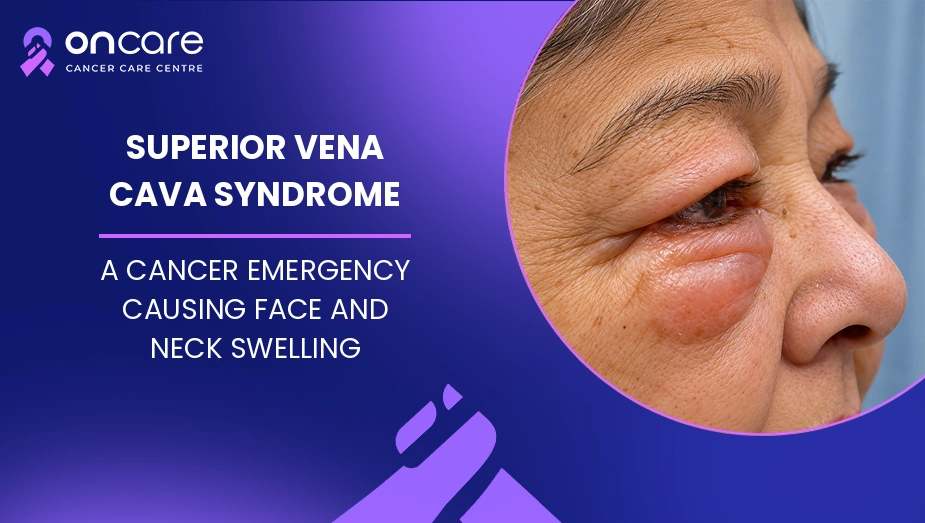
Superior vena cava syndrome (SVCS) is a condition in which the superior vena cava, a large vein that carries blood from the head, neck, arms, and upper chest back to the heart, becomes partly or completely blocked. In people with cancer, this blockage is often caused by a tumour or swollen lymph nodes in the chest. It can cause swelling of the face and neck, breathing difficulty, coughing, and visible veins in the upper body.
In this blog, we will explain superior vena cava syndrome in simple words, including why it happens, its symptoms, how doctors diagnose it, when it can become an emergency, and the treatment options available. Knowing these warning signs can help patients and families seek medical care at the right time.
What Is Superior Vena Cava Syndrome?
The superior vena cava is one of the body’s major veins. It carries blood from the upper part of the body back to the heart. If a tumour, swollen lymph node, or blood clot presses on or blocks this vein, blood may have difficulty returning to the heart. This can cause blood and fluid to build up in the face, neck, arms, and upper chest.
This condition is called superior vena cava syndrome. It is most often linked with cancer, particularly cancers that develop in or around the chest. Lung cancer and non-Hodgkin lymphoma are among the common cancer causes.
If you want to learn more about lung cancer and its warning signs, you can read this blog on lung cancer symptoms.
Why Does Superior Vena Cava Syndrome Happen in Cancer?
Cancer can cause SVCS in different ways. A tumour in the chest may directly press against the superior vena cava. Cancer may also spread to nearby lymph nodes, causing them to become enlarged and press on the vein.
A blood clot can also block the superior vena cava. Blood clots may sometimes develop around central venous catheters or other medical devices placed in large veins.
Not every person with swelling of the face or neck has SVCS. Other health conditions can cause swelling, so doctors need to identify the exact cause.
For more information about lung cancer treatment, you can read this simple blog on lung cancer treatment options in India.
Symptoms of Superior Vena Cava Syndrome
Symptoms can be mild at first or become severe when the blockage develops quickly. The most common symptoms are related to reduced blood flow from the upper body back to the heart.
Common symptoms include:
- Swelling of the face, especially around the eyes
- Swelling of the neck or arms
- Shortness of breath
- Cough
- Visible or enlarged veins in the neck and upper chest
- A feeling of fullness in the head
- Hoarse voice
- Trouble swallowing
Some people may also experience chest pain, rapid breathing, or coughing up blood.
Face and neck swelling that appears suddenly or keeps getting worse should not be ignored, particularly in someone who has cancer.
Is Superior Vena Cava Syndrome an Emergency?
SVCS can become a serious medical problem, especially when the blockage affects breathing or blood flow to the brain. Symptoms can be more severe when the vein becomes blocked quickly because the body does not have enough time to develop alternative blood vessels to carry the blood.
Seek urgent medical attention if a person with suspected SVCS develops:
- Severe difficulty breathing
- Confusion or unusual drowsiness
- Fainting
- Severe headache or sudden vision problems
- Rapid worsening of swelling
- Trouble breathing while lying down
These symptoms need prompt assessment. SVCS should not be managed at home without medical advice.
How Is Superior Vena Cava Syndrome Diagnosed?
Doctors first ask about the symptoms and perform a physical examination. They may look for swelling, enlarged veins in the neck or chest, breathing problems, and other signs.
Imaging tests are usually needed to find the blockage and understand what is causing it. A chest X-ray may provide an initial view, while a CT scan of the chest can give more detailed information about a tumour, swollen lymph nodes, or a blood clot.
If cancer has not yet been diagnosed, doctors may also need a biopsy to identify the type of cancer. Knowing the exact cancer type can help determine the most suitable treatment.
You can also read about how lung cancer is diagnosed using CT scans, biopsy, and other tests.
How Is Superior Vena Cava Syndrome Treated?
Treatment depends on what is causing the blockage, how severe the symptoms are, the type of cancer, and the person's overall health. The main aim is to improve blood flow and treat the underlying cause.
Treatment | When it may be used |
|---|---|
Chemotherapy | For cancers that are likely to respond to chemotherapy, such as some lymphomas and small cell lung cancer |
Radiation therapy | May be used when a tumour is causing the blockage and needs to be reduced |
Stent placement | A small tube may be placed inside the vein to keep it open and improve blood flow |
Treatment for blood clots | May be considered when a clot is causing the blockage |
Steroids or other supportive treatment | May help manage swelling or other symptoms in selected patients |
Surgery | Rarely needed for cancer-related SVCS but may be considered in specific situations |
The treatment is selected by the medical team after assessing the cause and severity of the condition.
Chemotherapy and Radiation Therapy
If SVCS is caused by a cancer that responds well to chemotherapy, such as some types of lymphoma or small cell lung cancer, chemotherapy may help shrink the cancer and improve the blockage.
Radiation therapy may be used when the tumour needs to be reduced, and the cancer is not expected to respond well to chemotherapy. Radiation uses high-energy beams to damage cancer cells and stop them from growing.
What Is a Stent for Superior Vena Cava Syndrome?
A stent is a small tube that can be placed inside the superior vena cava to help keep it open. It may allow blood to move through the blocked area more easily.
Stent placement can provide faster relief in some patients with significant symptoms. However, it is not suitable for everyone. Doctors consider the cause of the blockage, the patient’s condition, and the overall cancer treatment plan before recommending it.
If a blood clot is responsible for the blockage, doctors may consider treatment aimed at removing or breaking down the clot.
What Can Patients Do While Waiting for Medical Care?
SVCS should be assessed by a medical team, particularly when symptoms are new or worsening. Patients should not try to treat the swelling themselves or take medicines without medical advice.
In some situations, keeping the upper body raised may help reduce symptoms. Doctors may also use medicines such as corticosteroids or diuretics in selected patients, depending on the cause and symptoms.
The most important step is to get a medical assessment and identify what is blocking the vein.
If you want to read more about superior vena cava syndrome, you can visit the National Library of Medicine.
Can Superior Vena Cava Syndrome Be Treated?
Yes, treatment is available, but the approach depends on the underlying cause. Some patients may improve when the cancer responds to chemotherapy or radiation therapy. Others may need a stent to quickly improve blood flow. Blood-clot treatment may be needed when a clot is responsible.
The outlook also depends mainly on the type and stage of the underlying cancer and the patient’s overall health. SVCS itself is a sign of an underlying problem that needs medical attention.
Patients with advanced cancer may also receive supportive or palliative care to help control symptoms and improve comfort and quality of life.
Consult Today
Superior vena cava syndrome can cause noticeable face and neck swelling, breathing problems, coughing, and other symptoms. In a person with cancer, these symptoms should be assessed promptly because a blocked superior vena cava may require urgent treatment.
At Oncare Cancer Hospital, cancer treatment is planned according to the patient’s cancer type, stage, symptoms, and overall health. Depending on the cause of SVCS, treatment may involve chemotherapy, radiation therapy, procedures such as stent placement, or other supportive care.
Disclaimer
This information is for educational purposes only and does not constitute medical advice, diagnosis, or treatment. Always discuss decisions about swelling, breathing symptoms, or any cancer treatment with a certified cancer healthcare provider.





Frequently Asked Questions
Face and neck swelling is a common symptom. Breathing difficulty, coughing, and swollen veins in the neck or chest can also occur.
It is usually caused by cancer, especially lung cancer and non-Hodgkin lymphoma, but blood clots and some non-cancer conditions can also cause it.
Treatment depends on the cause. It may include chemotherapy, radiation therapy, treatment for blood clots, or placement of a stent to keep the vein open.
It can become an emergency when it causes severe breathing problems, brain-related symptoms, or rapidly worsening symptoms. Prompt medical assessment is important.
Written and Verified by:
Dr. Gajendra Kumar Himanshu Exp: 10 Yr
Medical Officer
Book an Appointment
Related Blogs

Neutropenic Diet: Safe Eating When Your Immunity Is Low During Chemotherapy
Learn about the neutropenic diet during chemotherapy, including safe foods, food safety, nutrition, and infection prevention at Oncare Cancer Hospital.
Small Bowel (Small Intestine) Cancer: A Rare Digestive Tract Malignancy
Learn about small bowel cancer, including its types, symptoms, risk factors, diagnosis, surgery, chemotherapy, and other treatments at Oncare Cancer Hospital.
Vaginal Cancer: Symptoms, Causes and Treatment Options
Learn about vaginal cancer, its symptoms, causes, HPV risk, diagnosis, stages, treatment options, and follow-up care at Oncare Cancer Hospital.