Table of Contents
Scalp Cooling (Cold Caps): Can It Reduce Chemotherapy Hair Loss?

By Dr. Gajendra Kumar Himanshu


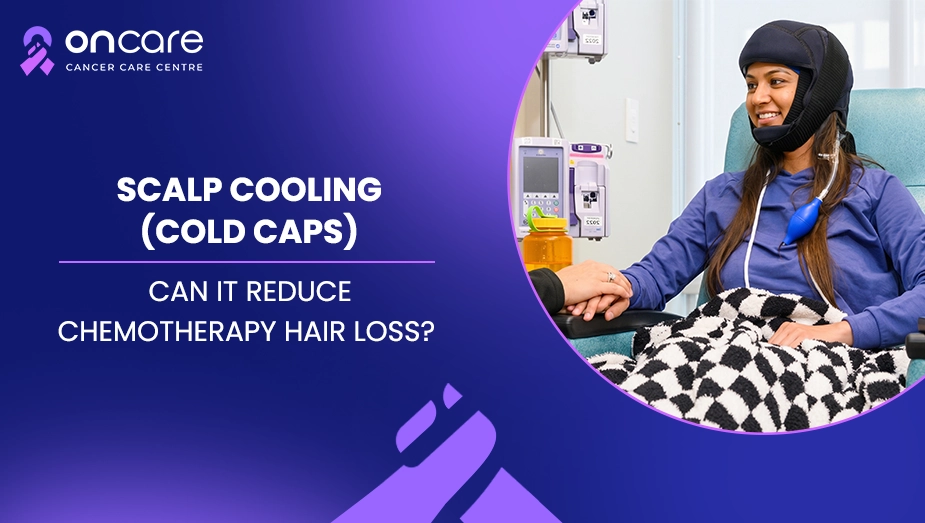
Some individuals may benefit from a method called scalp cooling, or cold cap therapy, which may help minimise hair loss after chemotherapy. It works by chilling the scalp before, during, and after chemotherapy treatment. This may minimise the amount of chemotherapy drug that gets to the hair follicles. Scalp cooling won’t stop everyone from losing hair, but many people find they have less thinning and maintain more hair during therapy. Efficacy depends on various aspects, including the type of chemotherapy being used, the treatment plan, the nature of the malignancy, and specific patient circumstances.
Learning how scalp cooling works, what kind of outcomes you should expect, and how to care for your hair throughout treatment will help patients and families make informed decisions. The optimal strategy relies on the individual’s risk, family history, findings of genetic testing, overall health, and the doctor’s advice.
In this blog, we’ll look at how scalp cooling works, who it can help, what to expect during treatment, any restrictions and practical hair care suggestions.
What Causes Chemotherapy to Make Your Hair Fall Out?
Chemo drugs are meant to target fast-growing cancer cells. But some healthy cells grow swiftly too. For example, hair follicles grow fast.
Because of this, chemotherapy can sometimes cause:
- Thinning hair
- Partial hair loss
- Alopecia totalis
- Variations in hair texture
Different types of chemotherapy can produce different degrees of hair loss. The risk will depend on the treatment plan.
What Is Scalp Cooling (Cold Cap Treatment)?
Scalp cooling is a procedure that requires wearing a particular cooling cap during chemotherapy treatment. The cap cools the scalp, which may temporarily restrict blood flow to the hair follicles.
The aim is to give the hair follicles fewer chemotherapy drugs, helping to safeguard them during treatment.
How Does Scalp Cooling Work?
The cooling process may assist in:
- Decreasing blood flow to the scalp
- Suppression of hair follicle cell activity
- Reducing exposure of chemotherapeutic drugs to hair follicles
- Helping to decrease hair loss in some patients
Results vary from individual to individual.
Do Cold Caps Stop Hair Loss Altogether?
A frequent question patients ask is whether scalp cooling would entirely stop hair loss. The answer is that it may help reduce hair loss, but it won’t necessarily keep all your hair intact.
Some people preserve most of their hair, while others may still have:
- Thinning hair
- Patchy alopecia
- Additional hair loss
This depends on numerous things, including which chemotherapy medications are used and how the individual responds.
Who Should Consider Scalp Cooling?
Some people receiving chemotherapy may have the option of scalp cooling. Doctors may evaluate such things as:
- Cancer type
- Chemotherapy schedule
- General health
- Goals of treatment
- Personal medical history
Not everyone is a candidate, hence it is vital to address this with the health care team.
What Happens During a Scalp Cooling Session
Cooling caps are frequently worn before you start chemotherapy.
It stays in place often:
- Pre-treatment
- During chemotherapy
- For a while after the treatment finishes
The first few minutes are often described by patients as the coldest aspect of the encounter.
Common transient feelings can include:
- Cold
- Slight headache
- Scalp irritation
- Chills
In fact, many individuals report that with time, these symptoms grow less difficult to deal with.
Scalp Cooling - A Practical Guide
Aspect | What to Anticipate |
|---|---|
Pre Chemotherapy | Cooling cap equipped |
In Treatment | A cooled scalp stays |
Post Treatment | The cooling continues for some time |
Potential Value | Less hair loss in certain cases |
Follow up | Continuous hair care and inspection |
Taking Care of Your Hair During Chemotherapy
Scalp cooling is not an excuse for bad hair care. Some helpful behaviours may be:
- Washing with gentle shampoos
- Limiting excessive heat styling
- Gentle brushing
- Avoiding tight hairstyles
- Following discussions with the healthcare team
Many patients find it helpful to be careful with their hair to help minimise unwanted breakage.
Knowing the Limitations of Scalp Cooling
Scalp cooling can be useful for some people, but it’s crucial to have reasonable expectations.
Scalp cooling:
- Does not work the same for everyone
- May not be suitable for all chemotherapy therapies
- Can lessen but not prevent hair loss
- Requires more time in therapy sessions
Always customise treatment and consult with your doctor.
Discussing Your Options with Your Health Care Team
Being transparent with your healthcare providers before you decide to do scalp cooling can be helpful.
You may want to discuss questions such as:
- Am I a good candidate for scalp cooling?
- What sort of results do I expect?
- What is the length of each session?
- Any dangers or drawbacks?
Each treatment scenario is different.
How to Learn More From Trusted Sources
Reliable information makes it easier for patients and families to comprehend chemotherapy and supportive care options.
For reliable educational resources on cancer therapy and supportive care based on the best available evidence, readers can visit the National Cancer Institute for patients and caregivers.
Hair Changes and Emotional Well-Being
For many people, hair loss is an emotional side of cancer treatment.
Some patients may experience:
- Worry about their looks
- Worry about therapy
- Anger at physical transformations
- Uncertainty about what to anticipate
These feelings are normal.
Support could be from:
- Family members
- Friends
- Cancer support groups
- Therapists
- Medical professionals
Open talks are more likely to make people feel more supported in treatment.
Looking Ahead With Confidence
Many individuals complete chemotherapy with the help of scalp cooling as part of their treatment experience. Results fluctuate from person to person, but knowing what to expect and having realistic expectations can make the process feel more manageable.
The decision regarding scalp cooling must always consider individual risk factors, family history, genetic testing, overall health, treatment plans and the advice of the health care team.
Consult Today
Scalp cooling, or cold cap therapy, may help some patients lose less hair during chemotherapy by cooling the scalp and reducing the amount of chemotherapy drug that reaches the hair follicles. While not a guarantee of hair preservation, many patients see less hair thinning during treatment. Knowing how scalp cooling works, treating the hair carefully, and having realistic expectations might help patients feel more prepared along the way.
The best way to make any decision about using scalp cooling and treating cancer is to consider the person’s own risk, family history, genetic test results, overall health, and the health care provider's recommendations. Oncare Cancer Hospital is a trusted name for expert guidance, comprehensive cancer care, and compassionate patient support through diagnosis, treatment, recovery, and survivorship.





Frequently Asked Questions
Scalp cooling is a therapy that involves wearing a chilly cap during chemotherapy to assist prevent hair loss.
No. It might slow down hair loss in some people, but it won't ensure you won't lose any hair.
Some people have moderate side effects at the beginning of treatment, such as feeling chilly, headache, or discomfort, but many become accustomed to this as the treatment continues.
Not exactly. Whether it’s appropriate depends on the type of cancer, treatment strategy, overall health and doctor’s recommendation.
Written and Verified by:
Dr. Gajendra Kumar Himanshu Exp: 10 Yr
Medical Officer
Book an Appointment
Related Blogs

Probiotics and Gut Health for Cancer Patients on Chemotherapy
Learn how probiotics may support gut health during Chemotherapy, their potential benefits, safety considerations, and when Cancer patients should use them.
Chemotherapy vs Immunotherapy vs Radiation Therapy: Understanding the Differences
Compare chemotherapy, immunotherapy, and radiation therapy, including benefits, side effects, and treatment options at Oncare Hospital with expert cancer care.
Heart Health During Chemotherapy: Cardio-Oncology Explained
Learn how chemotherapy may affect heart health, common warning signs, and the role of cardio-oncology in cancer care with expert support from Oncare Cancer Hospital.
Dental and oral Care after Starting Chemotherapy: Treatment Checklist
Learn important dental and oral care tips after starting chemotherapy. Discover ways to manage mouth sores, gum care, and recovery support at Oncare Hospital.