
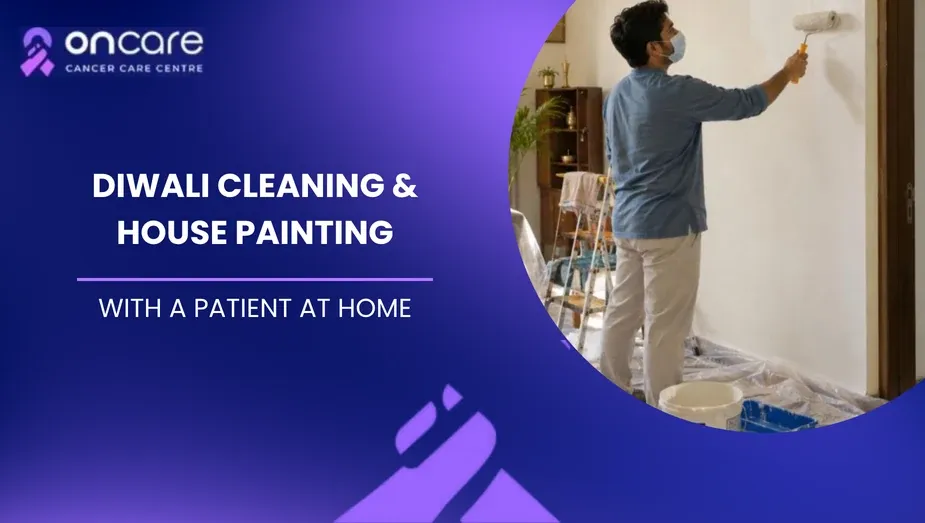
If a cancer patient lives at home, keep them away from dust, paint fumes and strong cleaning products during Diwali cleaning, as these can irritate their airways and trigger breathing discomfort. Use wet cleaning, low-VOC paint and a separate clean, well-ventilated room for the patient. Some of the activities that might increase the levels of dust and other substances in the indoor air include dry sweeping, moving around furniture, wall scraping, and painting the walls. This may pose some risks to patients under treatment for cancer due to weak immune systems and sensitive lungs.
In the following blog post, we will discuss how Diwali cleaning and cancer patients relate to each other, the dangers of dust and paint fumes, household safety considerations, how to keep your surroundings clean, and when you should see a doctor.
Why Does Diwali Cleaning Require Extra Care Around Cancer Patients?
In deep cleaning, dust which is stored in areas like behind furniture, in cabinets, and around curtains, ceiling fans, etc., is often stirred up, which can include dust containing fibres, allergens and microorganisms that might affect the indoor air quality. Chemotherapy patients may also find themselves more prone to getting infections since the treatment can reduce white blood cells whose role is to protect the body from infections. Cleaning products can also lead to such problems as nausea, headaches and sore throats. Thus, family members will need to plan their cleaning sessions in such a way that the patient is not exposed to dust and strong smells and fumes. For more information, you can read the CDC’s guidance on preventing infections during chemotherapy.
How Can Household Dust Affect Cancer Patients?
Household dust becomes a factor to consider in cancer patients as it could harbour irritating particles in the airways and microorganisms. The impact would depend on the type of treatment as well as their immunological condition and preexisting health condition.
Higher Risk of Infection: Household dust can carry mould spores and germs, which are harder to fight for patients after chemotherapy or radiation therapy. It is particularly difficult for the patient when they have a low count of white blood cells.
Irritation to Airways: Particles in the dust can cause irritation to the air passages resulting in sneezing, coughing and throat irritation. It would be a major problem for patients suffering from lung cancer.
Allergic Reactions: When the cancer patient comes into contact with the dust and the mould spores, they might experience allergic reactions like sneezing, a runny nose and irritation.
Breathing Problem: Cancer patients who experience breathing difficulties due to cancer or treatment will feel more breathing difficulties in a dusty indoor environment.
Therefore, having an indoor environment free from dust is critical when taking care of cancer patients.
Can Fresh Paint Fumes Affect Someone Undergoing Cancer Treatment?
Fresh paint can emit volatile organic compounds (VOCs) that can lead to headaches, dizziness, nausea, irritated eyes, and breathing problems. Paints that use solvents create more fumes than water-based paints. Painting using low-VOC paints still emits some emissions.
It is critical that the patient does not stay in a newly painted room, especially when they are receiving chemotherapy treatments or already have respiratory disorders. Family members should plan the painting process in such a way that the patient could be moved to some other ventilated room where there is no exposure to paint fumes. Also, it would be helpful to keep windows and doors open during the process to ensure proper ventilation.
Which Cleaning Activities Should Patients Avoid?
There are several Diwali cleaning tasks that might generate dust in large quantities or require the use of harsh chemicals around cancer patients. These chores should be done by family members or cleaning experts with proper care and safety measures.
- Dry sweeping and rigorous dusting.
- Shaking old curtains, rugs, and bedding.
- Dusting the ceiling fans and other dust-laden storage places.
- Removing old paint and sanding the walls.
- Using harsh chemicals or aerosols for cleaning.
- Moving old furniture laden with dust.
- Cleaning damp areas with mould growth.
How Should Families Plan House Painting?
House painting should be scheduled for a time when the patient can be away from the work area. This could include the following:
Use suitable paints: It is advisable to use water-based paints that emit low levels of VOCs for indoor use.
Avoid painting in the patient’s bedroom: Make sure that the sleeping area of the patient remains free of any painting work.
Isolation of the working area: Close the door and create barriers to prevent the spread of dust and vapours.
Ensure proper ventilation: Ventilate the area using windows and exhaust fans while preventing polluted air from entering the patient's room.
Ensure enough drying and ventilation time: Do not allow the patient to go back just because the walls feel dry. Follow the instructions provided by the product as well as the medical advice of the doctor.
Which Products Can Help Reduce Dust and Paint Fume Exposure Around Cancer Patients?
Selecting appropriate products during Diwali cleaning and house painting could assist families to minimise the presence of dust and paint fumes in their houses. However, it is important to note that these products are not substitutes for good ventilation and isolation of cancer patients from ongoing renovation.
Low-VOC Interior Wall Paint: Some water-based paint products contain fewer volatile organic compounds than conventional solvent-based paints. The family needs to read the labels and ensure the patients do not get exposed during and after painting.
Activated Carbon Air Filters: The EPA guide on Air cleaners says that air purifiers with an activated carbon filter will assist in reducing some gases and VOCs, including those emitted by paint. Select an air purifier with adequate amounts of activated carbon and make sure it is compatible with the size of the room.
Low Splatter Paint Roller: Proper use of a paint roller and tray will help reduce splatter and make cleaning easier after painting.
HEPA Air Scrubber: When undertaking heavy-duty sanding or renovations, one can use professional HEPA air scrubbers to filter dust and particles in the air but they cannot filter out paint odours and VOCs.
Low Odour Water-Based Cleaner: After painting is done, a proper cleaner can help clean up dirt and other residues from the surfaces. Families should read the instructions carefully and choose products without fumes.
Important: None of these cleaning or painting materials can provide a fully safe environment for patients undergoing cancer treatment. People with weakened immunity or those suffering from respiratory problems should seek advice from their oncologist before entering renovated rooms.
What Are the Best Ways to Reduce Dust During Deep Cleaning?
This can be done by employing techniques that will create less dust in the air, such as:
- Avoid using dry dusters; use microfibre cloths dipped in water.
- Mop the floors using water in order to get rid of any dirt that has settled on them.
- Clean each room separately.
- Use a vacuum cleaner that has a well-functioning HEPA filter.
- Ensure that the patient stays far away from the areas where the cleaning is taking place.
- Debris created during renovations should be put in plastic bags and then taken outside of the house.
Are Strong Cleaning Chemicals Safe for Cancer Patients?
There might be some risks associated with cleaning supplies that can lead to irritation of the eyes, nose, mouth, and respiratory tract because strong cleaning supplies might produce some fumes that might pose a risk to the patient’s health. Some strong cleaning supplies that might cause irritation include bleach, ammonia-containing supplies, toilet cleaners, and perfumed disinfectants. In addition, mixing different types of cleaning supplies together might produce toxic gases that can put anyone at risk. To avoid those risks, families should keep in mind several simple rules:
- Use mild, fragrance-free cleaning products where possible.
- Avoid aerosol sprays because they spread chemicals in the air.
- There should never be any mixture of bleach, ammonia and other cleaning supplies.
- All the supplies should be stored properly away from the patient's room and living space.
- Patients should not be nearby during the cleaning process.
Should Cancer Patients Stay Elsewhere During House Painting?
The cancer patient may be required to avoid being at home temporarily due to painting, sanding, drilling and renovation activities going on within the house. This could adversely affect the air quality in the house and the comfort of the patient especially if the patient has breathing problems or compromised immune system. This may be needed if the patient has very low white blood cell counts or has undergone a stem cell transplant. In such cases, doctors may recommend a Neutropenic diet during chemotherapy along with specific food safety precautions to help reduce the risk of foodborne infections.
In case it becomes impossible to move away from home, it would be advisable for the family to provide a separate clean room which is well ventilated and far away from the area where the renovation is going on. It is also necessary to protect the patient's living environment from the activity. However, before making this decision, the family must seek advice from the oncologist.
How Can Families Prepare a Clean Room for the Patient?
The patient’s bedroom must not contain any freshly painted substances, renovation dust, and strong cleaning odours. This could be achieved by:
- Regular washing of bed sheets and pillowcases.
- Wiping the bedside table and commonly used surfaces using a wet towel.
- Discarding all items that are not necessary and contain dust.
- Checking for any presence of moisture, leaks, or visible mould.
- Keeping all medications and other supplies nearby and protected from dust.
- Maintaining comfortable ventilation but without smoke or paint odours.
- A HEPA filter may help reduce airborne particles but cannot eliminate all chemicals and gases in the air.
What Precautions Should Families Take During Diwali Celebrations?
Fireworks, incense sticks, candles and other decorative objects used during Diwali may be problematic for patients suffering from cancer. Smoke and strong odours are irritating to air passages and may affect patients who already have respiratory issues and are sensitive to environmental pollutants. The following steps can help to ensure that the celebration is safe and pleasant for the patient:
- Do not burn incense sticks, dhoop or strong smelling candles in proximity to the room of the patient.
- Keep the doors and windows shut while there is too much outdoor pollution or smoke from fireworks. Make sure you provide proper ventilation indoors once the outdoor air gets cleaner.
- Go for simple decorations that don’t gather dust and don’t need handling.
- Make sure you keep the diyas and candles away from curtains, sheets, paper decorations and any other flammable substances.
- Keep the candles and fire away from oxygen tanks and devices.
- Avoid taking the patient to noisy crowds and polluted areas.
- Let the patient participate in celebration depending on their energy level.
When Is the Right Time to Schedule Cleaning and Painting?
In order to determine the time to clean and paint your house, you need to consider the patient's treatment schedule and health status. In some cases, after the use of chemotherapy, people may have a short period of decreased ability of the immune system to resist various infections. This phase depends on the medications and the reaction of the person to the therapy process. Therefore, being exposed to an unsanitary environment or harsh chemical substances can become another problem at this stage.
Family members should discuss the plans with the oncology team before performing cleaning or renovation of the house if the patient recently had intensive treatment. EPA’s home remodelling guidelines also explain how families can reduce indoor air pollution during renovation procedure.
When Should Cancer Patients Contact Their Doctor?
The following symptoms observed while or after engaging in home maintenance work, painting or home renovation must not be overlooked by cancer patients because they may be signs of irritation or medical conditions that require immediate medical intervention. These include:
- Unexplained cough and wheezing.
- Breathing problems.
- Dizziness or unexplained nausea.
- Throat irritation and chest pains.
If the body temperature is 38°C (100.4°F) or more during neutropenia, there may be an indication of infection. Cancer patients need to report immediately to their oncologists and follow the instructions given by the hospital.
Consult Today
Are you planning to clean and paint your house during the time when any of your family members are getting treated for cancer? It would be better to seek advice from the doctor treating your family member for cancer before doing anything about household activities. Get emergency help right away for severe breathing difficulty, chest pain or fainting as these may indicate a serious medical emergency that requires immediate attention.
The patients who have just been through chemotherapy, those who have low levels of neutrophils or those who have problems breathing might require extra caution while renovating their homes. You could ask the medical staff if there are any possibilities that the patients need to stay away from home temporarily.
Oncare Cancer Hospital has oncologists who can provide you with all the necessary information regarding precautionary measures for home safety while going through cancer treatment.
Disclaimer
This blog is intended for general educational purposes and should not replace professional medical advice, diagnosis or treatment. Precautions during household cleaning and painting may vary according to the type of cancer, treatment plan, immune status and existing health conditions. Patients and caregivers should consult the treating oncologist before making changes to the home environment. A fever of 38°C (100.4°F) or higher during chemotherapy-related neutropenia may indicate febrile neutropenia, a medical emergency that requires immediate medical attention.
Frequently Asked Questions
Which paint should be used in the house of the cancer patient?
Water-based paints that are low in VOCs emit less than some of the solvent paints, but it does not mean that they do not emit at all. The patients should be kept away from the process till ventilation takes place after painting.
Would a HEPA air purifier safeguard the cancer patients against paint fume inhalation?
The HEPA filter helps to filter out certain kinds of particles in the air, including dust, but it cannot filter out the VOC gases. It should not be regarded as an alternative to ventilation or staying away from the painting process.
What are some ways for caregivers to clean rooms of cancer patients safely?
Employ damp cloths and wet mopping to remove dust deposits. Stay away from dry dusting and perfumes or other chemicals. Don’t expose patients to any renovations and follow any other infection prevention guidelines offered by the oncology staff.