Table of Contents
Cholangiocarcinoma (Bile Duct Cancer): Symptoms, Diagnosis and Treatment

By Dr. Gajendra Kumar Himanshu


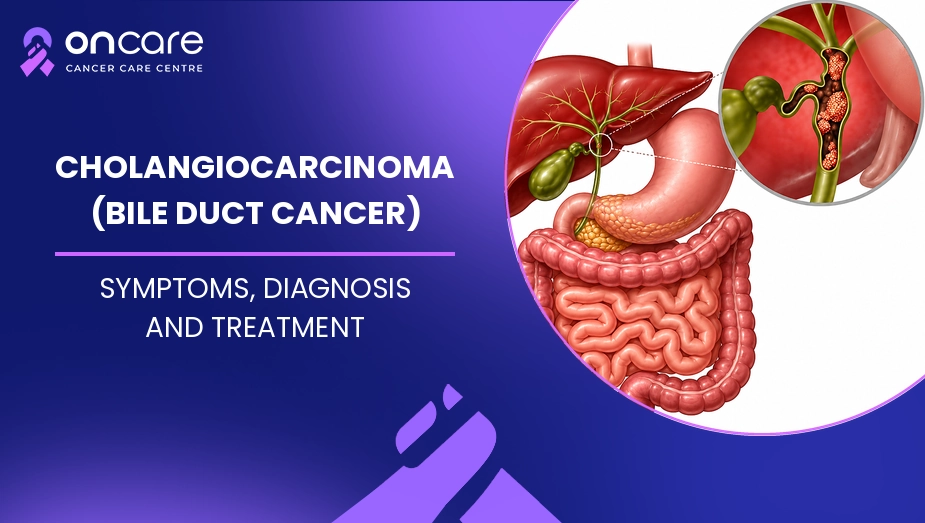
Cholangiocarcinoma or bile duct cancer is a rare cancer that forms in the bile ducts, the small tubes that convey bile from the liver to the small intestine. Bile assists the body in digesting lipids and eliminating waste materials from the liver. Cancer that grows in these ducts can restrict the normal flow of bile and cause several symptoms, such as jaundice, itching, and pain in the abdomen.
Sometimes, its progression can be slow, and clear symptoms may not be visible in the early stages. Many patients are diagnosed after the cancer has already grown. But improvements in imaging, surgery, targeted treatments, and supportive care have improved treatment options and results for many patients.
Understanding symptoms, how they’re diagnosed, and what treatments are available can help patients and families make informed decisions and seek medical care on time.
In this blog, we will tell you the symptoms, causes, diagnosis, treatment choices, and crucial facts regarding cholangiocarcinoma in simple and easy-to-understand language.
Understanding How Cholangiocarcinoma Develops
Cholangiocarcinoma begins in the cells that line the bile ducts. Doctors may describe the location of the tumour as:
- Intrahepatic (inside the liver)
- Perihilar (at the junction of the liver and the bile ducts)
- Distal (further down the bile duct, closer to the small intestine)
Sometimes the specific reason is not understood, but some factors may raise the risk of acquiring bile duct cancer.
These include:
- Chronic inflammation of the bile ducts
- Liver illness
- Bile duct anomalies
- Certain infections
- A family history of associated disorders
Keep in mind that a risk factor doesn’t mean someone will get cancer. There are many people diagnosed with cholangiocarcinoma who have no obvious risk factors at all.
Bile Duct Cancer Symptoms: Common Symptoms
Symptoms depend on the location of the malignancy and whether it is impeding the passage of bile.
Early Warning Signs Not To Be Ignored
In some people, no symptoms appear initially. As the condition progresses, they may observe the following symptoms:
- Yellow skin and eyes (jaundice)
- Dark urine
- Pale or clay-colored stool
- Constant itching
- Decreased appetite
- Unexplained weight loss
- Tiredness and weakness
Symptoms That May Appear Later
When the tumor grows, other symptoms may appear, such as:
- Upper abdominal pain or discomfort
- Nausea and vomiting
- Fever in some instances
- Enlarged liver
- Feeling full after eating small amounts of food
These symptoms can also be caused by various non-cancerous illnesses. That’s why it’s crucial to get a medical assessment if symptoms continue.
Diagnosing Cholangiocarcinoma: How Do Doctors Diagnose Cholangiocarcinoma
Medical history, physical exam, imaging tests, and lab testing are typically used together to help diagnose bile duct cancer.
Blood Tests
Doctors could request blood tests to examine liver function and look for evidence of bile duct obstruction.
Tumour marker tests can sometimes be carried out, although they cannot be used to confirm the diagnosis.
Medical Imaging
Imaging helps determine the location and size of the tumor. The most common imaging tests are:
- Ultrasound (sonography)
- CT scan
- MRI scans
- MRCP (Magnetic Resonance Cholangio-Pancreatography)
- PET scan in selected instances
Biopsy and Tissue Testing
A biopsy is a small piece of tissue removed from the area in question. The sample is looked at under a microscope to see whether there are any cancer cells.
Doctors may also do genetic or molecular testing of the tumor. These tests can help to detect specific mutations that may inform treatment options.
The National Library of Medicine is a reputable source of information on cancer and cancer research, where patients can find current, evidence-based information about bile duct cancer.
Treatment Choices for Cholangiocarcinoma
Choice of Treatment | Purpose |
|---|---|
Surgery | Remove the tumour when it is possible |
Chemotherapy | Stop or slow the development of cancer cells |
Radiation Treatment | Target cancer cells with high-energy radiation |
Targeted Treatments | Target genetic alterations in cancer cells |
Immunotherapies | Help the immune system identify and attack cancer |
Palliative Care | Improve the quality and comfort of life |
Available Treatment Options
Surgery for Selected Patients
If cancer is detected at an early stage and can be safely removed, surgery may be an option. The type of surgery performed depends on the location of the tumor.
Surgery may be an important therapy option, but it is not a sure cure for all patients. The long-term prognosis depends on the stage of the malignancy and other health conditions.
Chemo and Radiation Therapy
Chemotherapy employs drugs to kill or slow the growth of cancer cells. It can be administered before surgery, after surgery, or as the main treatment when surgery is not possible.
Radiation therapy employs high doses of radiation to kill cancer cells. It may help relieve symptoms or slow tumor development.
Targeted Therapy and Immunotherapies
Targeted treatment and immunotherapy have become crucial choices for some patients with recent breakthroughs.
- Targeted therapy: A treatment that targets specific genetic abnormalities in cancer cells.
- Immunotherapy helps your immune system find and fight cancer cells more efficiently.
Genetic testing is often recommended, as not all treatments are suitable for all.
Life with Cholangiocarcinoma
Getting a diagnosis of bile duct cancer can be overwhelming. Many patients get support from their health care team, family and friends, and cancer support groups.
Some helpful steps may be:
- Following the treatment plan closely
- Eating healthy when you can
- Physical activity within your own limits
- Attending follow-up visits
- Talking frankly with doctors about symptoms
- Requesting the emotional assistance you need
Addressing physical and mental health combined can enhance quality of life.
Consult Today
Cholangiocarcinoma is an uncommon but aggressive malignancy of the bile duct. Early symptom assessment, prompt diagnosis, and individualized treatment planning can make a difference.
Treatment decisions should always be based on individual risk factors, family history, genetic testing results, overall health, and advice from experienced medical professionals.
There are new treatments for cancer, and research is ongoing. Many patients still have more alternatives than ever before.
Oncare Cancer Hospital is a renowned name in specialized cancer care, delivering comprehensive cancer diagnosis, treatment, and patient support services for anyone seeking professional cancer care.





Frequently Asked Questions
Cholangiocarcinoma is a malignancy of the bile ducts, the tubes that convey bile from the liver to the small intestine.
Yellowing of the skin and eyes, or jaundice, is one of the most prevalent symptoms.
You may be treated with surgery, chemotherapy, radiation therapy, targeted therapy, immunotherapy, or a combination of these treatments.
Yes, in many circumstances. Genetic testing can help doctors find better treatments for a person’s particular type of cancer.
Written and Verified by:
Dr. Gajendra Kumar Himanshu Exp: 10 Yr
Medical Officer
Book an Appointment
Related Blogs

Indoor Air Pollution and Cancer Risk: Practical Steps for Indian Households
Learn how indoor air pollution from cooking smoke, tobacco, and household chemicals affects health and discover ways to improve air quality at Oncare Cancer Hospital.
Workplace Cancer Awareness Programs: A Guide for HR Teams
Discover how workplace cancer awareness programs help HR teams promote prevention, employee wellness, and supportive work environments at Oncare Cancer Hospital.
Stomach Cancer in India: Why Diagnosis Comes Late
Learn why stomach cancer is often diagnosed late in India, common warning signs, risk factors, and the importance of early medical evaluation at Oncare Hospital.

Cancer Treatment During Pregnancy: Balancing Mother and Baby's Safety
Learn how cancer is managed during pregnancy, including treatment options, safety considerations, and coordinated care for mother and baby at Oncare Hospital.