Table of Contents
Workplace Cancer Awareness Programs: A Guide for HR Teams

By Dr. Gajendra Kumar Himanshu


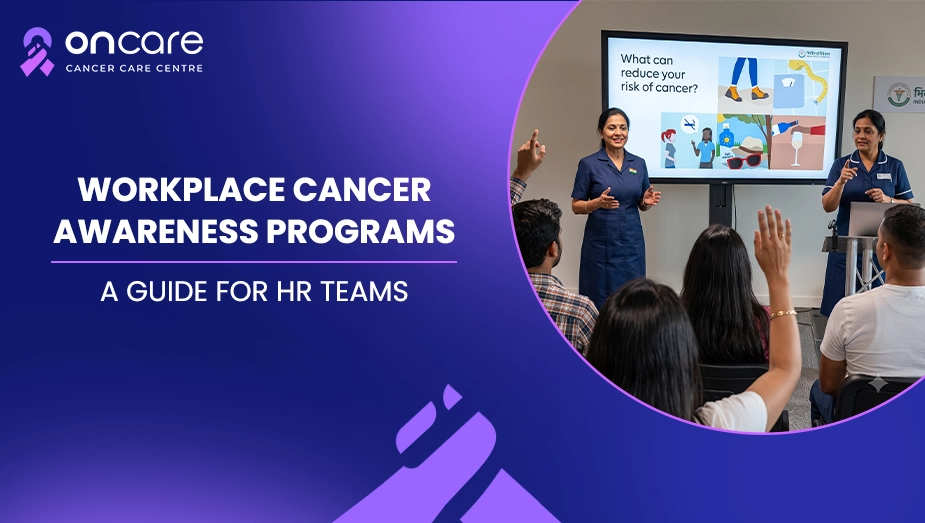
Workplace cancer awareness programs provide education to employees on cancer prevention, early detection, healthy lifestyle habits, and support resources available. These initiatives can foster a more knowledgeable and supportive work environment, encouraging people to look after their health and seek medical advice when required. Cancer awareness campaigns targeting HR teams are not merely about disseminating information; they also focus on fostering employee well-being, diminishing the stigma associated with major illnesses, and providing support to those employees receiving treatment or looking after a loved one with cancer.
Every person’s health condition is different, and decisions for screening, testing, treatment and prevention should always be based on a person’s risk factors, family history, results of genetic testing, overall health and the opinion of a skilled doctor.
In this blog, we’ll discuss the importance of workplace cancer awareness, how HR teams can develop successful programs, what common activities might be included, and how to help employees along their health journey.
Why It Matters: Workplace Cancer Awareness
Cancer is a disease that affects millions of people and their families worldwide. Since people spend a substantial part of their lives at work, the workplace may be an important environment for health education and awareness.
Cancer awareness initiatives can help employees:
- Recognise cancer warning signals to look out for
- Know the need for regular medical checkups
- Practise healthy lifestyle behaviours
- Find trustworthy health information
- Feel supported if they or a family member receives a cancer diagnosis
Raising awareness is not about scaring people. The aim is to provide accurate information and to support active health care choices.
Important Role of the HR Team
HR professionals regularly manage employee wellness programs and workplace health initiatives. A good cancer awareness program can help HR teams:
- Foster employee well-being
- Boost employee engagement
- Promote preventive health care
- Create a positive workplace culture
- Connect employees with the health resources available
The programs are flexible and may be adapted to many enterprises, regardless of size or industry.
How to Develop a Successful Cancer Awareness Program
Education is usually the basis of every awareness campaign. Subjects could include:
- Common types of cancer
- Early warning signals
- Lifestyle factors associated with the risk of cancer
- Why frequent screenings matter
- Available health care resources
Information that is simple and easy to understand is generally the best.
Consult Healthcare Professionals
Many organizations run instructional classes with doctors, nurses, nutritionists, or cancer specialists. These give staff opportunities to:
- Ask health-related questions
- Learn from professionals you trust
- Learn about screening guidelines
- Talk about preventive health measures
Expert involvement helps ensure that the content is accurate and trustworthy.
Encourage Healthy Lifestyle Choices
Healthy workplace programs can promote overall wellness. Examples are:
- Promoting physical activity
- Advocating for balanced nutrition
- Supporting tobacco-free places
- Offering stress management programs
- Promoting regular health checkups
Good behaviours can promote general well-being and may help reduce specific health risks.
Activities that HR Teams Can Organize
Many awareness initiatives include a mix of educational and wellness activities. Examples of awareness activities:
- Health awareness workshops
- Educational newsletters
- Health workshops
- Health screening camps
- Wellness challenges for employees
- Digital campaigns and awareness posters
- Question-and-answer sessions with health care experts
Generally, consistency will drive more engagement than one-off activities.
Workplace Cancer Awareness Program Activities and Their Benefits
Program Activities | Possible Benefit |
|---|---|
Training seminars | Increases health awareness |
Health screenings | Facilitates early medical assessment |
Wellness programs | Helps with healthy habits |
Expert conversations | Gives reliable information |
Employee support resources | Helps affected employees |
Awareness resources | Reinforces important health concepts |
Supporting Employees Affected by Cancer
Cancer awareness isn’t just about prevention. It’s also about assisting employees who may be managing treatment, recovery or caregiving duties. Helpful workplace support could be:
- Flexible working arrangements
- Medical leave support
- Workplace support programs
- Emotional support resources
- Open communication with the management
- Return-to-work planning post-treatment
Supportive workplaces can make a meaningful difference during challenging times.
Creating a Culture of Understanding
Some workers are reluctant to talk about health problems for fear of being judged or jeopardizing their jobs. HR teams can encourage:
- Respectful communication
- Privacy
- Inclusion
- Caring working methods
Employees who feel supported are more likely to feel safe in communicating their requirements.
Encourage Open Conversations
Many people benefit from open and respectful discussions about health matters. Employees may be more at ease seeking help when they know that:
- Their privacy will be protected
- Help is available
- They are free to ask questions
- Health concerns matter
Building trust is an essential feature of successful workplace health programs.
Reliable Learning Resources
Accurate information is critical to any health awareness campaign. HR teams and employees can learn about instructional tools from the National Institutes of Health. Trusted information helps employees make informed healthcare decisions and better understand prevention, screening, treatment, and survivorship.
How to Gauge Program Success
Workplace awareness programs have to evolve. Success can be measured by HR teams against:
- Rates of employee participation
- Evaluation forms
- Attendance at educational events
- Attendance at wellness activities
- Awareness levels pre- and post-programs
Regular assessment helps to develop future projects and to guarantee that employees' needs are being satisfied.
Looking Forward with Confidence
Cancer awareness programs are one of the workplace wellness measures. Access to high-quality information, tools that support health, and a culture that supports health can help people feel more secure in making informed choices.
A person’s health journey is unique, and screening, preventive, testing and treatment decisions should be based on an individual’s risk factors, family history, results of genetic testing, health and the recommendation of a health care expert.
Consult Today
Workplace cancer awareness initiatives offer a chance for HR teams to enhance employee health through education, awareness, and compassionate workplace behaviours. These activities assist employees in understanding the dangers of cancer, appreciating the significance of seeking early medical attention, and accessing reliable health information. They can also provide a nurturing environment for people and families dealing with cancer.
Decisions concerning screening, diagnosis, and treatment for cancer should always be made based on a person’s specific risk factors, family history, genetic testing findings, overall health, and the recommendation of their doctor. Oncare Cancer Hospital is a trusted name for expert guidance, comprehensive cancer care, and compassionate patient support through diagnosis, treatment, recovery, and survivorship.





Frequently Asked Questions
They assist in educating employees on cancer prevention, early detection, and services available for support.
HR staff can provide educational programmes, wellness activities, and employee support initiatives.
Yes. They can offer knowledge, support tools, and a more understanding workplace.
Trusted organisations such as the National Cancer Institute provide evidence-based educational resources for patients, families, and caregivers.
Written and Verified by:
Dr. Gajendra Kumar Himanshu Exp: 10 Yr
Medical Officer
Book an Appointment
Related Blogs
Stage 3 Lung Cancer Symptoms: Complete Awareness Guide
Learn the symptoms of Stage 3 lung cancer including chronic cough, chest pain, shortness of breath, and weight loss and importance of awareness and early detection.

Cervical Cancer Awareness Month: Know the Facts, Save Lives
Learn more about cervical cancer and its signs and symptoms and the importance of World Cervical Cancer Awareness Month and its key facts and why cervical awareness matters!
What is Prostate Cancer: A Complete Guide for Men’s Health Awareness
Learn what prostate cancer is, its symptoms, risk factors, and how early detection helps. Understand treatment choices and steps to protect your prostate health.

What is Breast Cancer: A Complete Guide for Awareness and Care
Learn what breast cancer is, how it starts, early signs, causes, and diagnosis methods. Understand symptoms and risk factors to support early detection and awareness.