Table of Contents
Indoor Air Pollution and Cancer Risk: Practical Steps for Indian Households

By Dr. Gajendra Kumar Himanshu


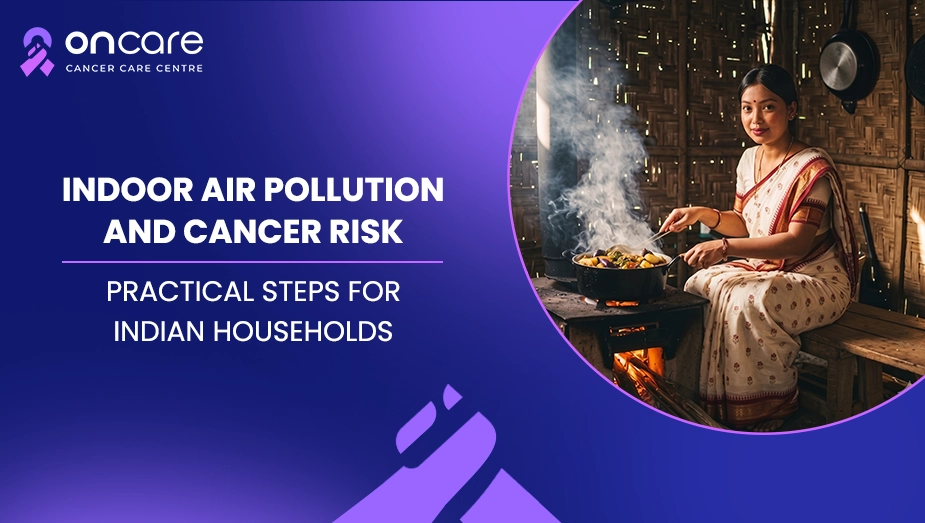
Indoor air pollution is a major health problem, but a largely neglected one in many houses in India. While people normally think of air pollution as happening outside, the air within houses can also have dangerous particles and gases coming from cooking smoke, tobacco smoke, poor ventilation, incense, mosquito coils, cleaning agents, and other domestic sources. Long-term exposure to indoor air pollution can also lead to an increased risk of health concerns such as respiratory diseases and some malignancies.
The good news is that numerous practical measures can be taken to improve indoor air quality and decrease exposure to dangerous contaminants. Everyone’s risk is different, and decisions on screening, testing, treatment and prevention should always be based on individual risk factors, family history, genetic testing results, overall health and the advice of a knowledgeable healthcare professional.
In this blog, we will talk about what indoor air pollution is, why it matters, typical sources in Indian homes, practical measures to limit exposure, and how families may build a healthier home environment.
Understanding Indoor Air Pollution
Indoor air pollution is the presence of toxic pollutants in the house and other structures. Sources of these contaminants include cooking, heating, smoking, home goods, and improper ventilation.
A lot of people spend a lot of time indoors. Thus, exposure for long periods to dirty indoor air can influence overall health. Indoor air pollution may include:
- Smoke and fine particles
- Toxic fumes
- Chemical vapors
- Dust and allergens
- Combustion products
The amount of exposure is not the same for each family.
Why Indoor Air Pollution Matters to Health
Everyone needs clean air to breathe. Long-term exposure to indoor pollution may be associated with:
- Continuing cough
- Difficulty breathing
- Irritation of the eyes
- Headache
- Respiratory diseases
- Poor lung health
Other studies have also connected long-term exposure to some air contaminants with a greater risk of cancer. However, risk is affected by several factors, including overall health, lifestyle, family history, environmental exposures, genetic test results, and medical advice.
Common Sources of Indoor Air Pollution in Indian Homes
Solid Fuels and Cooking Smoke
Some households may still cook using fuels such as wood, coal, agricultural leftovers, or dung cakes. These fuels may emit:
- Smoke
- PM2.5
- Toxic gases
Poor kitchen ventilation may increase family members' exposure.
Indoor Tobacco Smoke
Smoking in the house affects not just the smoker, but also other people living in the same house. Secondhand smoke contains numerous hazardous elements and can linger indoors for a long time.
Mosquito Coils and Incense Products
Mosquito coils, incense sticks, and the like are widely utilized in many households. They are widely used due to practical considerations but can discharge smoke and particles into indoor air, particularly in spaces with poor ventilation.
Household Chemicals
Certain cleaning products, paints, air fresheners, and solvents can emit chemical vapors. You can lower exposure by using these products cautiously and providing good airflow.
5 Signs Your Indoor Air Quality May Be in Trouble
Indoor air pollution might be hard to detect, but there are several indications that you could have a problem. Possible signs could be:
- Stuffy rooms
- Persistent smells
- Too much dust
- Eye discomfort
- Repeated coughing indoors
These indications are not necessarily a sign of major health problems, but may signal that ventilation may be improved.
Practical Steps to Improve Indoor Air Quality
One of the simplest things you can do to improve indoor air quality starts with good ventilation. Helpful practices are:
- Regularly opening windows
- Using exhaust fans while cooking
- Allowing the flow of fresh air
- Keeping ventilation openings clear
Better air movement can help lower the amount of pollution indoors.
Build a Smoke-Free House
One of the best methods to improve the quality of the air is not to smoke indoors. Benefits could include:
- Improved indoor air
- Less exposure for family members
- Better lung health
- Better living circumstances for children and the elderly
Use Better Cooking Techniques
Where possible, cleaner cooking fuels and improved cooking equipment may help to limit smoke exposure. Families may consider:
- Cooking with LPG
- Electric cookers
- Adequate kitchen ventilation
- Chimneys or flues
The best choice depends on the household's conditions and resources.
Simple Ways to Reduce Indoor Air Pollution at Home
Household Source | What You Can Do |
|---|---|
Smoke from cooking | Add kitchen ventilation |
Smoke from tobacco | Keep a smoke-free house |
Mosquito coil | Use with good ventilation |
Cleaning products | Follow product directions closely |
Dust build-up | Clean regularly and safely |
Poor ventilation | Open windows and enhance ventilation |
Safeguarding Children and the Elderly
Children and older adults may spend more time indoors and may be more vulnerable to poor air quality. Useful measures are to:
- Ensure good ventilation of indoor environments
- Not allow smoking inside
- Minimise sources of unneeded smoke
- Keep living spaces tidy
- Follow health care guidance when respiratory problems develop
A healthy climate indoors benefits the whole family.
Learn More From Trusted Sources
Good knowledge helps families make informed decisions about health and environmental risks. Readers are referred to the National Library of Medicine for information on environmental health and cancer prevention. Reliable information helps people to recognize risk factors and effective ways to prevent disease.
Building Healthier Homes for Tomorrow
You don’t necessarily have to make big adjustments to improve indoor air quality. Several basic measures may be taken to help improve health in homes, such as greater ventilation, healthier cooking techniques, limiting smoke exposure, and being conscious of household goods.
But then, every family is different. When making decisions about your health, always consider your unique risk factors, family history, genetic testing findings, overall health, and recommendations from healthcare professionals.
Moving Forward With Confidence
Usually, awareness is the first step toward a healthy life. Indoor air pollution can be a major health hazard, but there are practical steps you can take to limit exposure and enhance your general well-being. Over time, with steady, small modifications, your home environment can become healthier for the whole family.
Consult Today
Indoor air pollution is a significant health hazard for families throughout India. Long-term exposure to dangerous pollutants can be caused by sources such as kitchen smoke, tobacco smoke, home chemicals, mosquito coils, and poor ventilation. You may help support your overall health by taking practical efforts to improve the flow of air, decrease exposure to smoking, and create cleaner indoor surroundings.
Decisions about prevention, screening, testing, and treatment should always be based on individual risk factors, family history, genetic testing findings, overall health, and the advice of the doctor. Oncare Cancer Hospital is a trusted name for expert guidance, comprehensive cancer care, and compassionate patient support through diagnosis, treatment, recovery, and survivorship.





Frequently Asked Questions
Indoor air pollution is the presence of toxic particles, smoke, gases, and chemicals in houses and buildings.
Yes. Over time, breathing and health may be affected.
Cooking smoke, tobacco smoke, mosquito coils, incense items, household chemicals, and poor ventilation are frequent contributors to indoor air pollution.
Improve ventilation, don’t smoke indoors, cook using cleaner methods, and cut down on excessive smoke and chemical exposure wherever you can.
Written and Verified by:
Dr. Gajendra Kumar Himanshu Exp: 10 Yr
Medical Officer
Book an Appointment
Related Blogs

Scalp Cooling (Cold Caps): Can It Reduce Chemotherapy Hair Loss?
Learn how scalp cooling may help reduce chemotherapy-related hair loss, what to expect, benefits, limitations, and support at Oncare Cancer Hospital.

Can Air Pollution Cause Cancer? What Science Really Says
Learn how air pollution may increase cancer risk, its causes, and prevention tips. Get expert guidance at Oncare Cancer Hospital today for better health awareness.

Does Breast Cancer Cause Hair Loss? Understanding the Facts
Discover more about how breast cancer causes hair loss in patients, which cancer treatments affect hair loss in patients, and how to manage and cope with hair loss!

Hair Loss from Chemotherapy: How Long Does It Take to Regrow Hair?
Hair loss from chemotherapy—Is it permanent? Learn causes, recovery timeline, regrowth chances, and ways to manage it. Get expert support at Oncare today.