

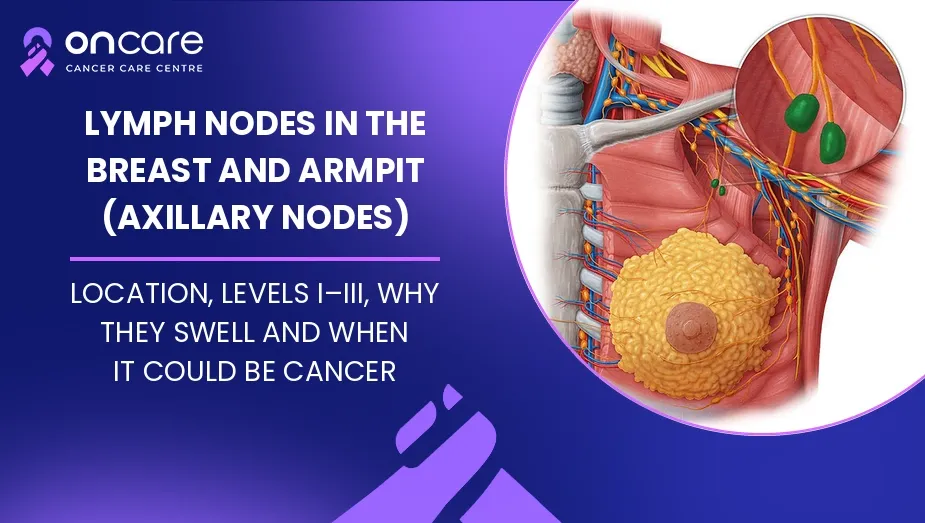
The breast and armpit lymph nodes are small organs in the body which play an important role in protecting the body from any infectious diseases and also filter the lymph fluid in the body. These nodes play an important role in women’s breasts because most of the lymph fluid from the breasts is drained to the lymph nodes located in the armpit. In cases where doctors conduct a breast examination to find breast cancer, these nodes are always examined.
Axillary lymph nodes are classified into three main anatomical zones as Level I, II, and III nodes. Their placement concerning a chest muscle known as pectoralis minor assists physicians in localizing the nodes during the treatment of breast cancer cases. While enlarged lymph nodes may sometimes be a sign of cancer, there are other non-cancer-related reasons for their enlargement, such as an infection, skin irritation or a recent vaccine.
This knowledge about the locations of the lymph nodes, the reasons for their swelling and the way the doctors examine them helps patients understand their condition without fearing the worst.
What Are Lymph Nodes and Why Are They Important?
Lymph nodes are small, bean-shaped organs that are located all over the body. There are usually about 20 to 40 lymph nodes in each armpit. These lymph nodes are an important part of the lymphatic system which is a system of organs, vessels and tissues involved in the functioning of the immune system.
The lymphatic system collects a clear fluid known as lymph that comes from the body tissues. Lymph contains immune cells, proteins and wastes. As this fluid moves through the lymph nodes, it filters out any undesirable components like germs or cells.
There are white blood cells, like lymphocytes, present in the lymph nodes, which aid in identifying infections. On finding infections or other immune stimuli in the body, these cells become activated. As a result, swelling of lymph nodes near the area may occur.
Armpit lymph nodes drain the breast, so checking them helps doctors assess breast problems.
Where Are Lymph Nodes Located in the Breast and Armpit?
Breast-draining lymph nodes are not restricted to one particular region. They are located near and around the breast, axilla, and chest regions. There are various types, which include:
Axillary lymph nodes: These are present in the axilla (armpit), which drains a major portion of breast tissue along with the arm and the chest wall.
Intramammary lymph nodes: These are present in the breast tissue. Sometimes, these can be visualized on imaging of the breast tissue.
Internal mammary lymph nodes: These are present inside the thorax, near the breast bone. They drain some parts of the breast tissue.
Supraclavicular lymph nodes: These are present above the clavicle (collarbone).
However, the lymphatic drainage pattern varies slightly from one individual to another. In addition to draining to the axillary nodes, the breast lymph drains towards the internal mammary nodes and other lymph node clusters. That is why physicians do not only look into the axillary region when assessing breast cancer.
What Do Breast and Axillary Lymph Nodes Do?
The following are some of the roles played by these structures in maintaining the body’s defense mechanism.
1. Filtering lymph fluid
As lymph moves within the lymph node, it may trap any foreign bodies such as bacteria, injured cells among others. It acts as a safeguard against any foreign substance circulating in the lymphatic system.
2. Enhancing immune response
Lymph nodes have specialized immune cells whose function is to detect any harmful substance. They get activated when needed.
3. Drainage from adjacent structures
The axillary nodes receive the lymph from the breast, upper arm, and adjacent parts of the chest wall. Their position renders them useful in situations where there is any pathology in the above-mentioned regions.
4. Diagnosis in case of cancer
In case breast cancer cells get into the adjacent lymph vessels, then they may end up in the local lymph nodes. This helps in the diagnosis and the selection of the treatment method.
What Are Axillary Lymph Node Levels I, II and III?
Axillary lymph nodes can be classified in three groups based on the position of these nodes in regard to the pectoralis minor muscle, which is the smaller muscle under the large muscle of the chest wall.
Level I: What Nodes are Found Here?
Level I consists of lymph nodes located in an external location from the lateral border of the pectoralis minor muscle. They are otherwise referred to as low axillary nodes.
These nodes consist of various nodes that receive lymph from the breast and its surrounding tissues. It is a frequently used location for lymph drainage from the breast, and hence it is usually considered in breast cancer studies.
Level II: Where Are Level II Axillary Nodes Found?
Nodes in Level II are located deep to the pectoralis minor muscle, lying between the lateral and medial borders of this muscle. In addition, it contains the interpectoral nodes, also called the Rotter's nodes, which are located between the pectoralis major and pectoralis minor muscles. This area is considered in the evaluation of axillary disease spread. The importance of this area lies especially in some surgical operations.
Level III: What Makes These Nodes Different?
Nodes in Level III are found in a position close to the inside of the medial margin of the pectoralis minor muscle. They are referred to as apical or infraclavicular axillary nodes.
Due to their position, these nodes become crucial during the examination of a wider involvement of the axillary area by the physician. Further investigation and treatment of these nodes depend on the clinical findings.
Why are these levels significant? It helps the surgeon or radiologist to pinpoint exactly the location of the abnormal lymph node. These levels do not necessarily indicate whether the disease is cancerous or what stage it has reached. There are other factors that the doctors need to consider as well.
Why Do Lymph Nodes in the Breast or Armpit Swell?
Lymph node swelling does not necessarily indicate breast cancer. Often, there are other causes of the swollen lymph nodes such as an immune response to an irritant or infection. Other possible causes include:
1. Local infections
Infection of the breast, arm or adjacent skin may lead to regional lymph node enlargement. For instance, infections of the skin, wounds, or the breast itself may lead to swelling of the armpit.
2. Inflammation of the breast
Illnesses like mastitis may be associated with pain, warmth, reddening, and swelling of the breast. Adjacent lymph nodes may swell up as well.
3. Recent immunization
Certain immunizations are known to stimulate the body’s immune response and lead to swelling of the lymph nodes, especially those located in the armpit area on the side of the body where the vaccine was administered. For example, the COVID-19 vaccine can cause swollen nodes in the armpit on the side of the injection. This usually settles within a few weeks. However, this does not necessarily indicate cancer.
4. Skin trauma or injury
Lacerations, insect stings, shaving injuries, and infected hair follicles around the arms or armpits can result in swollen nodes.
5. Other illnesses
Some infections and autoimmune disorders can lead to swollen lymph nodes in various areas of the body. Some medications are associated with lymph node enlargement as well.
6. Breast cancer or any other type of cancer
It is possible for cancer cells to enter lymphatic vessels and accumulate in lymph nodes. Breast cancer is just one of many possible causes of an enlarged axillary node, but there are some others.
Feeling a lump alone cannot tell the cause. Tests are needed.
What Do Normal and Swollen Lymph Nodes Feel Like?
Normal lymph nodes tend to be small, you usually cannot feel them. There are people who may experience small lymph nodes without suffering from any disease. In case of enlargement, the lymph node appears as a bump under the skin, and it can vary in terms of how it feels and movement. A normal armpit lymph node is usually smaller than 1 cm. A node that is larger, round, hard or fixed, or that has not gone down in 2 to 4 weeks, should be checked.
Feature | What you may notice | What it could indicate |
|---|---|---|
Tender lump | Pain when touched | Sometimes infection or inflammation |
Soft, movable lump | Moves slightly under the skin | Can occur with reactive swelling |
Firm or hard lump | Feels less compressible | Needs medical assessment |
Enlarging lump | Gradually increases in size | Requires investigation |
Persistent swelling | Does not settle over time | Needs evaluation to identify the cause |
These statements are not criteria for diagnosis. A node associated with a cancer will not necessarily feel hard and fixed, while an infected node might sometimes feel hard. Likewise, a palpable mass should not necessarily be ignored just because it is painless.
Remember: The size, texture, and tenderness of the lymph nodes do not establish whether there is cancer. Testing can give a more accurate assessment.
When Could a Swollen Axillary Lymph Node Be a Sign of Breast Cancer?
Breast cancer can also metastasize from the breast tissue into adjacent lymph nodes. In some cases, an enlarged lymph node under the arm may be one of the signs that trigger further investigation. Men can get breast cancer too, so a new armpit lump in a man also needs a check. Some factors warrant closer attention, especially when multiple risk factors are present together.
- A new lump in the armpit which does not disappear on its own.
- A breast lump or thickening that feels different from the rest of the breast.
- Unexplained changes in breast shape or size.
- Dimpling or puckering of the breast skin along with abnormal redness.
- Abnormalities in nipple appearance with the presence of inversion or discharge.
- Enlarged lymph nodes near the collarbone.
These symptoms are not present in all patients suffering from breast cancer. In some cases, breast cancer is discovered via screening tests or imaging without the patient having felt anything unusual. An armpit lump can be caused by factors other than breast cancer. Nevertheless, any new or recurrent lump, especially when coupled with a change in the breast, should not be ignored and should be checked out.
How Does Breast Cancer Reach the Axillary Lymph Nodes?
Breast cancer mostly occurs within breast tissue cells. The developing tumour allows cancer cells to spread into nearby lymph vessels. Lymph vessels transport the lymph fluid into regional lymph nodes, which include lymph nodes within the armpit region.
The first lymph node or group of lymph nodes that receive lymph fluid from a tumour is called the sentinel lymph node. Cancer cells can reach the sentinel lymph node before other regional lymph nodes.
When the progression of the disease occurs, other nodes in the axilla can get affected. But cancer does not necessarily follow a sequential order. The order in which the cancer spreads will depend on the location of the tumor as well as lymph drainage.
The presence of cancer in an axillary lymph node implies that the cancer has moved to a regional lymph node. It does not imply that there is metastasis of cancer to distant organs and that the patient is suffering from Stage IV disease.
How Are Breast and Axillary Lymph Nodes Examined?
For patients with an armpit lump or with abnormalities in the breast region, the physician will advise carrying out both the physical and diagnostic tests.
1. Physical Examination
The doctor examines the two breasts, armpit area, and regions around the collar bone. The doctor checks whether the lump is painful, mobile, enlarged, or related to the abnormalities in the breast.
This test only helps to detect the areas requiring further analysis and not for confirming cancer.
2. Breast Ultrasound
Ultrasound imaging makes use of sound waves to create images of the breast tissues as well as the adjacent lymph nodes. This modality enables physicians to assess the morphology, internal architecture, and appearance of the enlarged lymph nodes.
In a normal lymph node, one would find an oval shape and a visible fatty hilum. A cortex thicker than about 3 mm, or a node where the fatty hilum is missing, is more likely to need a biopsy. None is a proof of malignancy on its own.
3. Mammography
Mammography involves the use of X-rays to look at the breasts. The procedure can detect abnormalities such as masses, suspicious calcifications, and architectural distortion. In some cases, the scan can show the status of the adjacent lymph nodes.
4. Needle Biopsy
In case a suspicious lymph node is detected, a biopsy will be suggested by the physician. Fine needle aspiration biopsy involves using a thin needle to extract samples from the lymph node. Core needle biopsy involves extracting a small amount of tissue from the lymph node.
The pathologist analyzes the obtained samples under the microscope to look for signs of cancer. A biopsy is required to confirm the presence of cancer in a suspicious lymph node.
5. Additional Investigations
In certain patients, additional imaging studies such as MRI, CT scan, PET-CT or others may be required depending upon the patients' diagnoses, physical examination and requirements of treatment planning.
What Is the Difference Between Sentinel and Axillary Lymph Nodes?
The concepts are similar, but their meanings are not the same. Axillary lymph nodes denote the cluster of nodes found in the armpit region. Sentinel lymph node represents the first node to be drained by a tumour's lymph drainage.
Sentinel nodes are identified during a breast cancer operation with the help of a radioactive substance or blue dye, or both substances together. The identified node is excised and examined for any cancer cells. A sentinel node biopsy usually removes only 1 to 4 nodes.
However, where there is no sign of cancerous cells, there is no need to remove additional lymph nodes often. In case the cancer cells have been found, then depending on how many lymph nodes have been affected by cancerous disease, as well as the patient's overall treatment plan, decisions are made.
This procedure helps reduce unnecessary surgery involving the removal of several lymph nodes.
What Is Axillary Lymph Node Dissection?
This is a type of surgery in which one or more lymph nodes are taken out of the armpit and tested to see whether there is any cancer in the nodes. When there is any sign of cancer in the lymph nodes or in selected cases with other clinical features, it can be considered. The number of lymph nodes removed will depend on the disease and the operation planned. The risk of lymphoedema is lower after a sentinel lymph node biopsy (about 5 in 100) than after a full axillary lymph node dissection (about 20 in 100). Since lymph nodes play a role in draining fluid from the arm, their removal can cause complications such as:
Lymphedema: A condition characterized by swelling in the arm resulting from alteration of the lymph flow process.
Sensory alterations: Some people may experience some form of numbness or sensory changes in areas like the armpit and upper arm region.
Shoulder stiffness: Some difficulty in moving the shoulder region.
Seroma formation: This is where fluid tends to collect temporarily in the operated part.
Some of the pros and cons of this procedure are explained to the patients before undertaking the procedure. Sentinel lymph node biopsy and other options can be considered by the doctor depending on the patient's condition.
What Happens If Breast Cancer Is Found in the Lymph Nodes?
The presence of cancer in an axillary lymph node through a biopsy is useful information when determining how far breast cancer has spread. This information is taken into account along with the size and features of the breast tumor, as well as any metastasis that might be present. Lymph node involvement can affect:
Stage of cancer: The quantity and sites of involved regional lymph nodes influence the N classification in the TNM staging system. For example, cancer in 1 to 3 armpit nodes is usually N1, in 4 to 9 nodes N2, and in 10 or more nodes, or in nodes near the collarbone, N3. In addition, the final stage considers the primary tumor and distant metastasis, along with other factors.
Surgical approach: The surgical team decides whether it is necessary to carry out sentinel node biopsy, axillary dissection or some other approach.
Radiotherapy: It may be used for treatment of the breast, chest wall or selected regional nodes, depending on the disease.
Systemic therapy: It may include chemotherapy, hormonal therapy, targeted or immune therapy, depending on tumor features, biomarker status and other factors.
Involvement of lymph nodes influences prognosis. However, it is not the only factor influencing the prognosis.
When Should You See a Doctor?
Do not overlook the development of a new lump just because it is non-painful or small. Schedule a medical evaluation if you detect:
- A new or unexplained lump in the breast or armpit.
- Swelling that persists, worsens or recurs after subsiding.
- A breast lump together with nipple or skin alterations.
- A lump in the area above or below the collarbone.
- Prolonged breast redness, warmth, or swelling.
- Unexplained alterations in shape or appearance of one breast.
When swelling is associated with fever, considerable pain, expanding redness, or general malaise, see your doctor soon since an infection can require treatment. Your doctor can decide on further action through observation, imaging, or biopsy of the lump. Getting a lump evaluated does not mean you have cancer; it is to determine the true cause.
Consult Today
There could be various reasons behind any changes occurring in your breasts or armpit areas, and the identification of the reason is key to the right treatment. In case you have noticed any persistent lump formation, any abnormal swelling or any other changes associated with breasts, you should consider contacting an expert.
Oncare Cancer Hospital can provide you assistance in matters of diagnosis, lymph node evaluation and treatment related to breast cancer.
Disclaimer
The information in this article is provided for educational use only, and does not constitute professional medical advice, diagnosis, or treatment. Not all enlarged lymph nodes mean that cancer is present. In the case of any unexplained or persistent lumps in the breast or underarm area, one should visit a doctor.
Frequently Asked Questions
Do lymph nodes exist naturally in the breast and axillary area?
Yes, there are natural lymph nodes located in the breast region as well as axilla.
What are Level I, II and III axillary lymph nodes?
These are three different groups of lymph nodes based on their anatomical location relative to the pectoralis minor muscle. Level I is located outside its lateral edge, Level II is located behind the muscle, while Level III is located medially to the muscle.
Does an enlarged lymph node in the axillary region indicate breast cancer?
No, it doesn't necessarily do that. Infection, inflammation, dermatitis and vaccination can cause lymphadenopathy as well.
How big is a cancerous lymph node?
There may be different sizes of a cancerous lymph node, with some being below 1 centimeter and others being bigger. However, a cancer diagnosis cannot be made based on size because swelling of the lymph nodes can also be caused by infection or inflammation. Other tests will need to be performed to determine the exact cause of the swelling.
Is It Normal to Feel Lymph Nodes in the Armpit?
Small lymph nodes are also palpable in the area of the axilla, especially in people who have little fat. Lymph nodes are normally small, soft, and movable. However, any new firm and immovable growth should be checked by a doctor.
How Long Can a Swollen Armpit Node Last Before I See a Doctor?
Lymph nodes that become swollen due to mild infections or injections can normalize after a period of 1-2 weeks. However, sometimes it might take longer than that. If there is no improvement in your condition after 2 weeks, or the size of the swollen lymph nodes becomes larger or it is accompanied by fever or night sweats, you should see a doctor immediately.
Can Men Get Swollen Armpit Nodes From Breast Cancer?
Yes. Men are also susceptible to breast cancer and it can even metastasize into the lymph nodes near the armpits. Swelling in the armpit lymph nodes is not always associated with breast cancer in men since there may be other causes for the swelling. If you have a lump in your breast area or changes in your nipples, see a doctor.