Table of Contents
Sentinel Lymph Node Biopsy: Why It Matters in Cancer Surgery

By Dr. Gajendra Kumar Himanshu


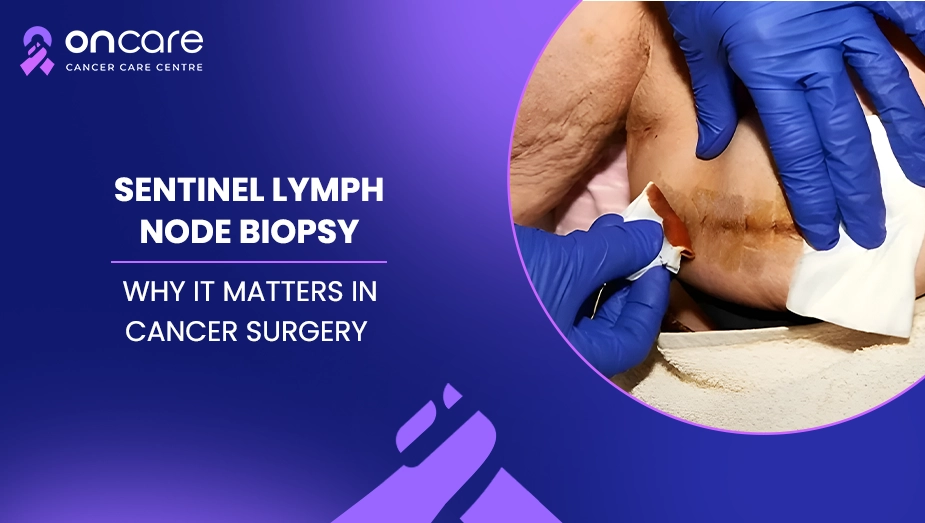
Sentinel lymph node biopsy is a surgical procedure often performed during cancer surgery to help doctors assess if cancer has spread outside the primary tumor. The sentinel lymph node is the lymph node or group of lymph nodes that is most likely to be the first to receive cancer cells if they start to spread through the lymphatic system. Examining these nodes helps doctors to gain critical information about the stage of cancer and determine the most appropriate treatment. In many circumstances, a sentinel lymph node biopsy can prevent the need to remove a larger number of lymph nodes, which helps to lower the risk of some side effects.
Knowing why this operation is taking place, what happens during the biopsy, and how the results can impact treatment options can help patients and their families feel more educated and prepared. The optimal treatment option will always depend on the individual risk, family history, findings of genetic testing, overall health, and the advice of the doctor.
In this blog, we’ll discuss what a sentinel lymph node biopsy is, why it is performed following cancer surgery, what the patient might expect, and how the results may assist in guiding future treatment.
What Is Sentinel Lymph Node Biopsy?
The lymphatic system is a network of vessels and lymph nodes that can assist the body in fighting illness and removing waste materials. Cancer commonly moves through the body via the lymph system.
A sentinel lymph node biopsy is a procedure that helps clinicians find and test the first lymph node or nodes that might get cancer cells from the original tumor.
These lymph nodes are called sentinel lymph nodes because they are the first stop in the drainage pathway from the region of the tumor.
Why Is It Important in Cancer Surgery?
The findings from a sentinel lymph node biopsy can help doctors determine whether the cancer has spread from its original site. This could be useful for:
- Staging of cancer
- Treatment planning
- Decision-making in surgery
- Determining the need for other therapy
- Assessing the extent of disease
The procedure is routinely performed in some diseases, such as breast cancer and melanoma, but recommendations differ on a case-by-case basis.
How Doctors Find the Sentinel Lymph Node
Doctors utilize a particular dye, a radioactive tracer, or sometimes both before or during surgery. These compounds are carried by the lymphatic system and are used to locate the first lymph node that drains the region around the tumor. Then the surgeon takes out the specified lymph node to examine it.
When the Node Is Removed, What Happens?
The lymph node is taken to a laboratory where specialists look at it under a microscope. They search for:
- Cancer cells
- Signs of spread
- Other key properties of the tissue
The findings point the way to next steps in care.
What the Results Could Mean
The results are often read as positive or negative for cancer cells.
If the Sentinel Node Is Negative
If the result is negative, it means no cancer cells were discovered in the lymph node tested. Sometimes this can be a sign that the cancer has not spread via the local lymphatic system.
If the Sentinel Node Is Positive
A positive result indicates that cancer cells were detected in the lymph node. This information helps doctors determine whether further assessment or extra treatment may be required.
Every case is unique, and treatment recommendations will fluctuate according to a variety of individual characteristics.
The Advantages of Sentinel Lymph Node Biopsy
This operation gives useful information and often means that more extensive lymph node resection is not required. Potential benefits may include:
- More precise cancer staging
- Less intensive surgery for selected patients
- Useful treatment planning
- Lower risk for some problems
- A better knowledge of cancer metastasis
The decision to perform the surgery is personalized in all cases.
Practical Guide: Sentinel Lymph Node Biopsy
Aspect | What it’s good for |
|---|---|
First lymph node identification | Helps find the possible spread of cancer |
Staging cancer | Provides information about the disease extent |
Planning of treatment | Helps guide future treatment decisions |
Surgical planning | Aids in determining the following surgical stages |
Follow up | Customizable monitoring provided |
Post-Procedure Recovery
The recovery will depend on the type of cancer surgery. Most people experience:
- A little pain
- Transient swelling
- Bruising around a cut
- A little discomfort during healing
Patients will progressively return to normal activity as directed by their surgeon.
When Should You Call Your Doctor?
Tell your healthcare provider if you see:
- Growing pain or fever
- Redness around the cut
- Excessive swelling
- Drainage of the operative site
Timely communication allows healthcare staff to quickly examine concerns.
Are There Dangers?
Like most medical treatments, a sentinel lymph node biopsy may include some hazards.
Possible risks may be:
- Infections
- Bleeding
- Transient swelling
- Loss of sensation in the area
- Lymphedema, rarely
However, the risk of lymphedema is generally less than with more extensive lymph node dissection. Your healthcare provider can tell you about the unique risks and advantages for your case.
Learning More From Reliable Sources
Good knowledge allows patients and families to make better decisions about cancer surgery and therapy.
You may choose to visit the National Cancer Institute for reliable, evidence-based information about cancer diagnosis and treatment. This site has educational tools for patients and caregivers.
Deciding on Treatment With Confidence
Cancer treatment decisions are generally made by integrating numerous kinds of information. Sentinel lymph node biopsy is one method that helps clinicians get a clearer picture of the disease.
The results are discussed in the context of:
- Individual risk factors
- Family history
- Genetic test findings
- General health
- Tumor features
- Medical advice
Each care plan is tailored to you, and being open with your healthcare team can help you feel more educated throughout the process.
Consult Today
The sentinel lymph node biopsy is an important operation that tells the doctors whether the cancer has possibly progressed through the lymphatic system. This is important in cancer staging and treatment planning because it allows examination of the first lymph node most likely to contain cancer cells. The treatment might also help certain patients avoid more extensive lymph node resection.
Decisions concerning surgery, treatment, and follow-up care should always be made based on individual risk, family history, genetic test findings, overall health, and the recommendation of the doctor. Oncare Cancer Hospital is a name you can trust for expert guidance, comprehensive cancer care, and compassionate support every step of the way, from diagnosis and treatment to recovery and survivorship.





Frequently Asked Questions
It is a way to see the first lymph node that is most likely to be reached by cancer cells if they spread from the initial tumour.
It helps doctors see if the cancer has spread and helps them make a treatment plan.
No. That indicates there are cancer cells in the lymph node that was checked, and doctors utilise that knowledge to help guide further care.
Recovery is different for everyone, although many patients have very minimal discomfort and eventually resume normal activities as recommended by their healthcare team.
Written and Verified by:
Dr. Gajendra Kumar Himanshu Exp: 10 Yr
Medical Officer
Book an Appointment
Related Blogs
Where to Get a Biopsy Test in Bengaluru? Cost & Hospital Guide
Get a Biopsy Test in Bengaluru at Oncare Cancer Hospital for precise results, expert doctors, and safe procedures to detect cancer and other serious health issues.
Skin Biopsy Test Price: How Much Does It Cost in India?
Learn about the skin biopsy test price in India, factors affecting cost, and why it is important for diagnosis. Get expert care at Oncare Cancer Hospital.

Types of Biopsy Used for Cancer Diagnosis
Learn about different types of biopsy used for cancer diagnosis, including needle biopsy, surgical biopsy, and liquid biopsy. Get expert care at Oncare Hospital.
Where to Get a Biopsy Test in Delhi? Cost and Best Hospital Guide
Looking for a biopsy test in Delhi? Learn costs and the best hospitals, and get accurate results and why Oncare is a choice for patients who want to get a biopsy.