Table of Contents
Breast Cancer Symptoms: How to Recognize the Warning Signs Early

By Dr. Gajendra Kumar Himanshu


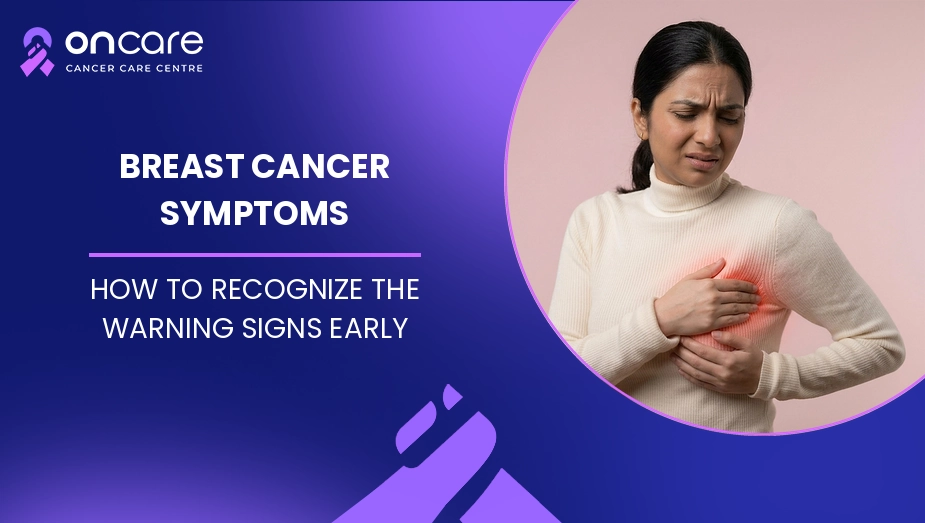
Breast cancer symptoms can include a new lump in the breast or underarm, a change in breast size or shape, nipple changes, unusual nipple discharge, skin changes such as dimpling, or persistent breast pain. Not every breast change means cancer, but a new or unusual change that does not go away should be checked by a doctor. Finding breast cancer early can make treatment easier and may improve treatment outcomes.
Breast changes can happen for many reasons, including hormonal changes, infections, cysts, or other non-cancerous conditions. However, some changes may be early warning signs of breast cancer. Knowing what to look for can help you seek medical advice without unnecessary delay.
In this blog, we will discuss the common breast cancer symptoms, early warning signs you should not ignore, risk factors, and how breast health can be monitored through self-awareness and recommended medical tests.
What Is Breast Cancer?
Breast cancer develops when abnormal cells in the breast grow and divide in an uncontrolled way. These cells can form a lump or tumour and, in some cases, can spread to nearby tissues or other parts of the body.
Breast cancer can develop in different parts of the breast, including the milk ducts and lobules. The type and stage of cancer help doctors decide which treatment may be most suitable.
You can also learn more about breast cancer treatment to understand the different approaches doctors may consider after diagnosis.
Common Breast Cancer Symptoms
Breast cancer does not always cause noticeable symptoms in the early stages. When symptoms do occur, they can vary from person to person.
1. A New Lump in the Breast or Underarm
A new lump or thickened area in the breast or underarm is one of the symptoms people often notice first. A cancerous lump may feel harder or different from the surrounding breast tissue.
However, most breast lumps are not cancer. A new lump should still be examined by a healthcare professional, especially if it remains or changes over time.
2. Change in Breast Size or Shape
A noticeable change in the size or shape of one breast may need medical evaluation. This can include unexplained swelling, shrinking, or a change in the overall appearance of the breast.
3. Changes in the Nipple
Changes in the nipple can sometimes be an early warning sign. These may include:
- A nipple turning inward when this is new
- Redness, scaling, or irritation around the nipple
- Unusual discharge, particularly bloody discharge
- A change in the appearance of the nipple
These changes do not automatically mean cancer, but they should not be ignored.
4. Changes in Breast Skin
Breast cancer can sometimes cause visible changes in the skin. The skin may become red, swollen, thicker, or develop dimpling or puckering.
In some cases, the skin may develop a texture that looks similar to an orange peel. This type of change needs medical assessment.
5. Persistent Breast Pain
Breast pain is common and can occur because of hormonal changes, particularly around the menstrual cycle. However, pain that is persistent, unusual for you, or limited to one specific area should be discussed with a doctor.
Pain alone does not usually mean breast cancer, but ongoing unexplained symptoms deserve attention.
Breast Cancer Symptoms at a Glance
Warning Sign | What You May Notice |
|---|---|
Breast or underarm lump | A new lump or thickened area |
Breast changes | Unexplained change in size or shape |
Nipple changes | Inversion, redness, scaling, or unusual discharge |
Skin changes | Dimpling, puckering, redness, or thickening |
Breast pain | Persistent or unusual pain |
Having one of these symptoms does not mean that you have breast cancer. A medical examination is needed to understand the actual cause.
What Increases the Risk of Breast Cancer?
Some factors can increase the likelihood of developing breast cancer. Having a risk factor does not mean that someone will definitely develop cancer.
Common risk factors include:
- Increasing age
- A family history of breast or ovarian cancer
- Inherited gene changes such as BRCA1 or BRCA2
- Dense breast tissue
- Starting menstruation at a younger age
- Going through menopause at an older age
- Previous exposure to chest radiation
- Being overweight or obese, particularly after menopause
- Alcohol consumption
- Lack of regular physical activity
Some risk factors cannot be changed, such as age or family history. However, maintaining a healthy lifestyle can help reduce some preventable risks.
How to Check Your Breast Health
Knowing how your breasts normally look and feel makes it easier to notice when something changes. This does not mean checking your breasts over and over again or trying to diagnose yourself.
If you notice a new or unusual change, speak to a healthcare professional.
Examining Your Own Breasts
Paying regular attention to your breasts can help you spot something unusual. Watch for changes in size, shape, skin or nipple appearance, or a new lump.
Clinical Breast Exam
A healthcare professional may examine the breasts and underarm area for lumps, swelling, or other abnormalities. They may also recommend further testing, depending on your symptoms and risk factors.
Mammogram
A mammogram is a low-dose breast X-ray. It is widely used for breast cancer screening and can sometimes find abnormalities in the breast before symptoms appear.
Your doctor can advise you on the best screening plan based on your age, risk factors, and personal health history.
When to Consult a Doctor?
If you notice a breast change that is new, unusual, or does not go away on its own, it is worth speaking to a doctor.
Pay special attention to:
- A new lump in the breast or underarm
- Spontaneous or bloody nipple discharge
- Inversion of the nipple
- Persistent skin changes
- A noticeable change in the size or contour of the breast
- Ongoing or unusual breast pain
Remember that many conditions other than cancer can cause similar symptoms. Being checked does not mean you have cancer. It simply helps identify the cause and start the right care if needed.
For more information regarding breast cancer, visit the National Cancer Institute.
Consult Today
Recognizing breast cancer symptoms early can help you take the right step at the right time. A breast lump or other breast change does not always mean cancer, but delaying an unusual or persistent symptom is not recommended.
If you or someone close to you has noticed a breast change or has been diagnosed with breast cancer, consult an experienced cancer specialist for proper evaluation and treatment guidance.
At Oncare Cancer Hospital, patients can access experienced cancer specialists, diagnostic support, and treatment options based on their individual condition. Book a consultation with Oncare Cancer Hospital to discuss your symptoms and understand the next steps.
Disclaimer
This blog is for educational purposes only and does not replace professional medical advice, diagnosis, or treatment. Any persistent breast change requires individual evaluation to determine its cause. Consult a qualified doctor for personalized advice.





Frequently Asked Questions
A new lump or thickened area in the breast or underarm is one of the most common symptoms people notice.
Not usually. Breast pain can have many causes, including hormonal changes. Persistent or unusual pain should still be evaluated by a doctor.
Yes. Breast cancer can sometimes cause skin or nipple changes without an obvious lump, and some cancers may have no noticeable symptoms at first.
See a doctor if you notice a new, unusual, or persistent lump, nipple change, discharge, skin change, breast shape change, or other unexplained symptom.
Written and Verified by:
Dr. Gajendra Kumar Himanshu Exp: 10 Yr
Medical Officer
Book an Appointment
Related Blogs
Breast Cancer Staging: TNM and Stages 0–IV
Learn about Breast Cancer staging, the TNM system, stages 0–IV, diagnosis, treatment planning, and why accurate staging is important for personalized care.
Managing Hot Flashes After Hormone Therapy for Breast Cancer
Learn how to manage hot flashes after hormone therapy for breast cancer with simple lifestyle tips, emotional support, and expert care guidance for recovery.
Breast Cancer Signs Women Shouldn't Ignore
Know breast cancer warning signs women shouldn't ignore. Oncare Cancer Hospital shares early symptoms, risks, and when to consult a doctor for care.