Table of Contents
Tracheostomy in Head and Neck Cancer: Breathing, Speech and Home Care

By Dr. Gajendra Kumar Himanshu


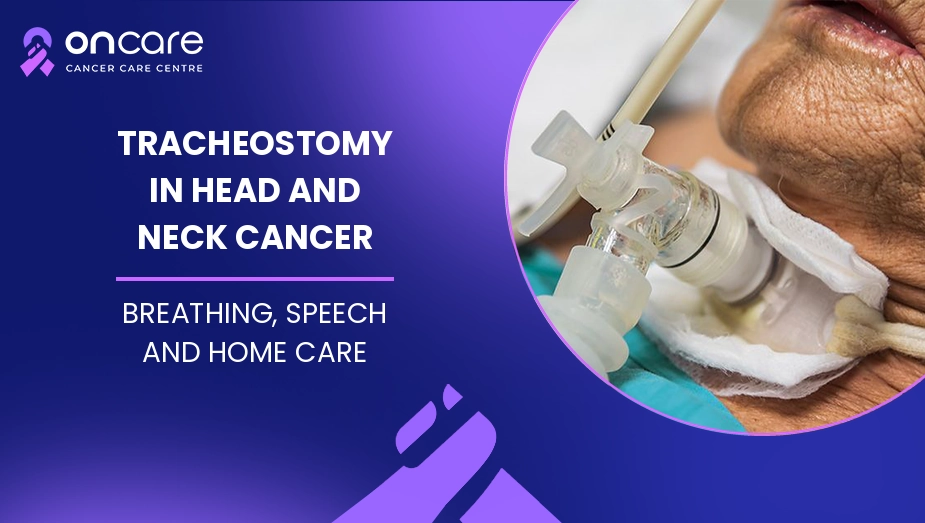
A tracheostomy is a procedure in which doctors make a small opening in the front of the neck and place a tube into the windpipe to help a person breathe. In head and neck cancer, a tracheostomy may be needed when a tumour, swelling, surgery, or other treatment makes normal breathing difficult. It may be temporary or, in some situations, needed for a longer time.
Having a tracheostomy can feel difficult at first, especially when it changes the way a person breathes, speaks, and manages daily activities. However, patients and caregivers can learn how to care for the tube safely. In this blog, we will explain why a tracheostomy may be needed during head and neck cancer treatment, how it affects breathing and speech, what home care involves, and which warning signs need medical attention.
What Is a Tracheostomy?
A tracheostomy creates an opening, called a stoma, in the front of the neck. A tracheostomy tube is placed through this opening and into the windpipe, also called the trachea. The patient then breathes through the tube instead of breathing normally through the nose and mouth.
In head and neck cancer, the airway can sometimes become narrow because of the tumour or swelling. Surgery may also affect the normal airway. In such cases, a tracheostomy can provide a safer way for air to reach the lungs.
Why Is a Tracheostomy Needed in Head and Neck Cancer?
A tracheostomy is not required for every person with head and neck cancer. The decision depends on the location of the cancer, the size of the tumour, breathing problems, and the type of surgery or other treatment planned.
Doctors may recommend it when:
- The tumour is blocking or narrowing the airway.
- Swelling makes normal breathing difficult.
- Major surgery around the throat or voice box may temporarily affect breathing.
- The patient needs help clearing mucus or secretions.
- A safe airway is needed during or after certain operations.
Some tracheostomies are temporary. Once the airway is safe and the patient can breathe properly without the tube, doctors may remove it. Others may be needed for a longer period depending on the patient's condition.
How Does a Tracheostomy Affect Breathing?
After a tracheostomy, air enters the lungs directly through the tube. Because the air no longer passes normally through the nose and mouth, patients may need time to get used to the new way of breathing.
Air entering through a tracheostomy can be drier than normal air. This can cause mucus to thicken and become difficult to clear. Doctors may recommend humidification or a device to add moisture to keep the airway comfortable.
It is essential to keep the tube clean. A blockage in the tracheostomy tube can cause severe breathing difficulties; therefore, patients and their caregivers should learn the cleaning and suctioning techniques recommended by their healthcare team.
If head and neck cancer treatment includes radiation, patients may also experience side effects affecting the mouth and throat. This blog on radiation therapy side effects explains some common treatment-related problems.
Can a Person Speak With a Tracheostomy?
Speech can be affected because normal speech requires air to pass through the vocal cords. With some types of tracheostomy tubes, especially when the cuff is inflated, air may not pass through the vocal cords, making normal speech difficult or temporarily impossible.
At first, a patient may communicate using writing, hand gestures, a phone, or a communication board. As the patient recovers, the healthcare team may assess whether speaking can be safely restarted.
A speech and language therapist can help patients learn safer and easier ways to communicate. Depending on the patient's condition, a speaking valve or other communication method may be considered by the medical team. It should only be used according to professional advice.
Head and neck cancer treatment can also affect swallowing and speaking, which is why rehabilitation is an important part of recovery.
Tracheostomy and Eating
Having a tracheostomy does not automatically mean that a person cannot eat or drink. However, some head and neck cancer patients have swallowing problems because of the cancer, surgery, radiation or other treatment.
A speech and language therapist may assess swallowing and advise whether certain foods, drinks or swallowing techniques are safe. Some patients may temporarily need a feeding tube if swallowing is not safe or they cannot eat enough.
Patients should not change their diet or start eating normally again after surgery without following their medical team's advice.
Home Care After a Tracheostomy
Going home with a tracheostomy may seem challenging, but patients and caregivers are normally taught how to care for the tube before discharge. They may also receive follow-up support.
Keep the Stoma Clean and Dry
The skin around the stoma should be checked regularly. Keeping it clean and dry can help prevent irritation and infection. A dressing may be used to protect the skin from mucus or secretions.
Keep the Tube Clear
Mucus can build up inside the tube. Patients and caregivers should follow the exact cleaning and suction instructions given by their healthcare team. Do not try to remove or change the tube unless you have been trained to do so.
Protect the Tracheostomy From Water
Water should not enter the tracheostomy because it can reach the lungs. Patients should follow the healthcare team's instructions when showering and should never deliberately allow water to flow into the tube.
Tracheostomy Home-Care Checklist
The key points of tracheostomy care at home are summarised below:
Home-care area | What to remember |
|---|---|
Stoma | Keep the area clean and dry |
Tube | Follow instructions for cleaning and suction |
Humidification | Use the recommended moisture device |
Showering | Prevent water from entering the tube |
Communication | Use the method advised by the speech therapist |
Emergency care | Know what to do if the tube becomes blocked or comes out |
Warning Signs That Need Medical Help
Patients with a tracheostomy should know the signs of a possible problem. Contact the healthcare team if there is increasing redness, swelling, pain, unusual discharge, or bleeding around the stoma.
Breathing difficulty is an emergency. If the patient suddenly cannot breathe properly, the tube appears blocked or has come out, seek urgent medical help and follow the emergency instructions provided by the treating team.
Regular follow-up is also important after head and neck cancer treatment. Doctors may examine the stoma, mouth, neck, and throat and may use scans or other tests depending on the patient's condition.
How Long Is a Tracheostomy Needed?
There is no fixed time for every patient. Some people need a tracheostomy for only a few days, while others may need it for weeks or longer. The decision to remove the tube depends on whether the airway is safe, breathing is stable, and the patient can manage secretions.
Doctors may gradually reduce support from the tube when appropriate. The patient should never remove or stop using the tracheostomy on their own.
If you want to read more about tracheostomy, you can visit the National Library of Medicine.
Consult Today
A tracheostomy can be an important part of care for some people with head and neck cancer. Although it changes normal breathing and may temporarily affect speech, proper training and follow-up can help patients and families manage it safely at home.
At Oncare Cancer Hospital, patients can discuss head and neck cancer treatment, airway problems, surgery, radiation therapy, and supportive care with a cancer care team. If you or your loved one has been advised to have a tracheostomy, understanding the procedure and home-care plan can make the treatment journey easier.
Disclaimer
This information is for educational purposes only and does not constitute medical advice, diagnosis, or treatment. Tracheostomy care depends on each patient's condition and the instructions of their treating team. Always discuss airway care, speech, eating, and treatment decisions with a certified cancer healthcare provider.





Frequently Asked Questions
Not always. Some tracheostomies are temporary and can be removed when the airway becomes safe and the patient can breathe normally.
Speech may be difficult at first, but some patients can speak after appropriate assessment and support from a speech therapist.
Some people can eat normally, but swallowing must be assessed when cancer or its treatment affects swallowing. Follow your healthcare team's advice.
Breathing difficulty from a blocked tube can be an emergency. Follow the emergency instructions provided by your healthcare team and seek urgent medical help.
Written and Verified by:
Dr. Gajendra Kumar Himanshu Exp: 10 Yr
Medical Officer
Book an Appointment
Related Blogs

Blood Transfusions in Cancer Care: When and Why They Are Needed
Learn why cancer patients may need blood transfusions, including red cells and platelets, the procedure, risks, and safety at Oncare Cancer Hospital.
Male Breast Cancer: Warning Signs Men Should Not Ignore
Learn about male breast cancer, including warning signs, risk factors, diagnosis, and treatment options, with expert guidance from Oncare Cancer Hospital.

Low Platelet Count (Thrombocytopenia) During Chemotherapy: Precautions That Matter
Learn about low platelets during chemotherapy, including causes, symptoms, monitoring, precautions, and treatment options for safer care at Oncare Cancer Hospital.