Table of Contents
Thermography vs Mammography: Can a Heat Scan Really Detect Breast Cancer?

By Dr. Gajendra Kumar Himanshu


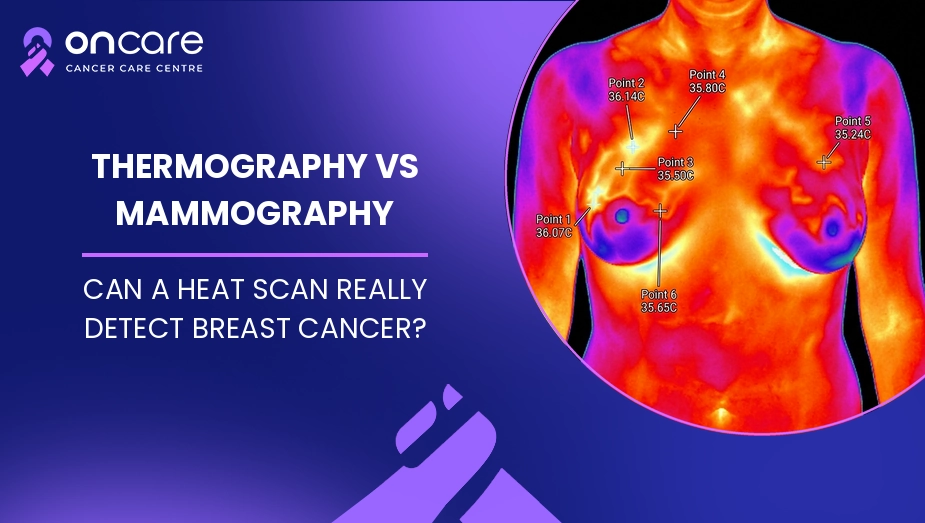
Thermography can show changes in heat patterns on the surface of the breast, but it cannot reliably detect or rule out breast cancer on its own. A mammogram uses low-dose X-rays to look for abnormal changes inside the breast and remains an established primary screening method. The FDA specifically warns that thermography should not be used as a replacement for mammography because there is not enough evidence that a thermogram can detect early-stage breast cancer by itself.
In this blog, we will explain the difference between thermography and mammography, how each test works, whether a heat scan can really find cancer, and why choosing the right breast screening test matters. We will also look at when a doctor may recommend additional tests and what you should do if you notice a change in your breast.
What Is Thermography?
Thermography (also known as a thermal scan or heat scan) involves using an infrared camera to take pictures of heat patterns on or near the surface of the body. This test does not employ X-rays and usually does not involve any physical touch of the breast.
Breast thermography is based on the fact that some aberrant areas may have altered temperature or blood flow. In a thermal picture, these changes appear as diverse heat patterns.
However, a fluctuation in breast temperature does not necessarily signify malignancy. Many causes can impact heat patterns, such as normal changes in the body, inflammation and other illnesses that are not cancer.
That’s why thermography shouldn’t be used as a breast cancer screening method by itself. The FDA says thermography alone is not effective for screening or early detection of breast cancer.
What Is Mammography?
Mammography is an imaging test that uses low-dose X-rays to create pictures of the breast tissue. It can show masses, calcifications and other changes that may be linked to breast cancer.
One important advantage of mammography is that it can sometimes find breast cancer before a lump can be felt or symptoms appear. This makes it an important tool for early detection.
Thermography vs Mammography: Key Difference
The table below sets the two tests side by side on how they work, what they look at and the role each one plays in breast screening.
Feature | Thermography | Mammography |
|---|---|---|
How it works | Measures heat patterns | Uses low-dose X-rays |
Looks at | Surface heat patterns | Internal breast tissue |
Radiation | No X-ray radiation | Uses a small amount of radiation |
Can detect small breast changes | Not reliably proven as a stand-alone test | Yes, it can detect some early abnormalities |
Main role | May be used as an additional tool in some settings | Established breast cancer screening method |
Replaces mammography? | No | Primary screening tool |
The biggest difference is simple: thermography looks at heat, while mammography looks at the structure of breast tissue.
Can a Heat Scan Really Detect Breast Cancer?
This is where a lot of people get confused. A thermogram can show an abnormal heat pattern; however, an abnormal heat pattern is not a cancer diagnosis. A normal thermogram does not prove that there is no breast cancer.
Some cancer cells can modify the blood flow surrounding a tumour, which can cause temperature variations. But not all breast cancer creates a clear or noticeable heat signature. This is one of the reasons that thermography cannot replace tests that look directly at breast tissue.
The FDA has also cautioned that relying on thermography instead of mammography could delay the diagnosis of breast cancer at a stage when it is small and more easily treated.
Why Mammography Is Still Important
Mammography has an important role because it can identify certain breast changes that may not be visible from the outside and may not be felt during a physical examination.
It is used both for screening in people without symptoms and for further evaluation when a person has a breast concern. If a mammogram shows something unusual, a doctor may recommend other tests such as an ultrasound, MRI or biopsy depending on the finding.
For a simple explanation of different screening options, you can also read the blog on Breast Cancer Screening Tests.
Is Thermography Completely Useless?
Not necessarily. Thermography can provide information about heat patterns and may be used as an additional or adjunctive tool in some medical settings. Certain thermography devices have been cleared for use alongside primary screening methods, rather than as replacements for them.
The important point is not to confuse an additional test with a proven screening replacement.
If someone tells you that a heat scan can detect breast cancer years before a mammogram or that a normal thermogram means you do not need a mammogram, be careful. The FDA says it is not aware of scientific evidence supporting such claims.
What If You Have Breast Symptoms?
You should not wait for a thermogram or routine screening if you notice a new or unusual breast change.
Common changes that deserve medical attention include:
- A new lump in the breast or underarm
- Change in breast size or shape
- Nipple discharge, especially if unusual
- Nipple turning inward
- Skin thickening, dimpling or redness
- A persistent change that feels different from normal
Not every breast change means cancer. Many breast problems are benign. But a doctor should evaluate a new or unusual change rather than relying on a heat scan alone. You can learn more in our blog on Breast Cancer Signs Women Shouldn’t Ignore.
When Should You Get a Mammogram?
The right screening schedule depends on your age, personal health history, family history and other risk factors. Different medical organisations may have slightly different recommendations.
For example, the U.S. Preventive Services Task Force recommends screening mammography every two years for women aged 40 to 74 who are at average risk.
Women with a strong family history, known genetic risk or previous breast problems may need a different screening plan. Your doctor can help decide which tests are appropriate for you.
The Bottom Line: Thermography vs Mammography
Thermography is interesting because it is painless and does not use X-ray radiation, but it should not replace mammography for breast cancer screening.
A heat scan can show temperature patterns on the surface of the breast, but it cannot reliably confirm that cancer is present or absent. Mammography has a much more established role in finding breast abnormalities early.
If you are concerned about radiation, discomfort or the right age to start screening, speak with a doctor instead of skipping mammography. The goal of screening is to find breast cancer early, when treatment options are generally better.
If you want to learn more about thermography, then you can visit the official website of the National Library of Medicine.
Consult Today
If you have a breast lump, unusual breast change, family history of breast cancer, or questions about which screening test is right for you, timely medical advice can help you make a clear decision. Oncare Cancer Hospital provides breast cancer screening, diagnosis and cancer care with guidance from experienced specialists.
Disclaimer
This information is for educational purposes only and does not constitute medical advice, diagnosis, or treatment. Always discuss decisions about breast screening tests, reports or treatment with a certified cancer healthcare provider.





Frequently Asked Questions
No, thermography should not be used as a replacement for mammography for breast cancer screening.
Thermography does not use X-ray radiation. However, its safety does not mean it is accurate enough to replace established breast cancer screening methods.
Yes, mammography can detect some breast cancers and abnormal changes before they can be felt as a lump.
Do not panic, because many breast lumps are not cancer. However, you should have a new or unusual lump evaluated by a healthcare professional.
Written and Verified by:
Dr. Gajendra Kumar Himanshu Exp: 10 Yr
Medical Officer
Book an Appointment
Related Blogs
3D Mammography (Tomosynthesis) vs 2D Mammogram: Which One Do You Need?
Learn how 2D and 3D mammograms differ, what to expect, and which test may suit you based on breast density and risk. Get expert guidance from Oncare Hospital.

Small Bowel (Small Intestine) Cancer: A Rare Digestive Tract Malignancy
Learn about small bowel cancer, including its types, symptoms, risk factors, diagnosis, surgery, chemotherapy, and other treatments at Oncare Cancer Hospital.

Vaginal Cancer: Symptoms, Causes and Treatment Options
Learn about vaginal cancer, its symptoms, causes, HPV risk, diagnosis, stages, treatment options, and follow-up care at Oncare Cancer Hospital.