Table of Contents
Sarcopenia in Cancer Patients: Why Muscle Loss Matters and How to Fight It

By Dr. Gajendra Kumar Himanshu


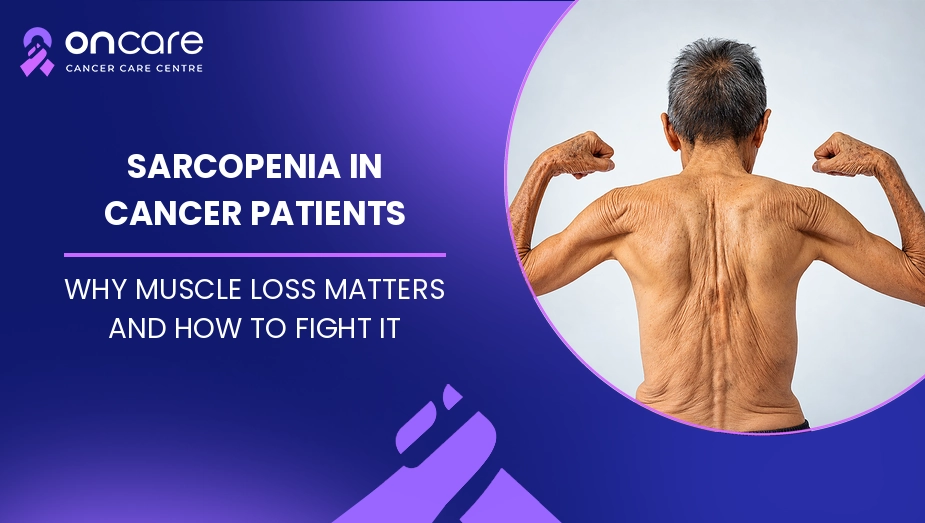
Sarcopenia is the loss of muscle mass, muscle strength, and physical function. In people with cancer, it can develop because of the cancer itself, poor food intake, treatment side effects, inflammation, or reduced physical activity. Muscle loss can lead to weakness, tiredness, balance problems, difficulty walking, and reduced ability to perform everyday activities. Nutrition support and appropriate exercise, especially strength exercises, can help patients maintain or rebuild muscle when medically suitable.
Cancer treatment can affect the body in many ways, and weight changes do not always tell the full story. A person may lose muscle even when their body weight does not change much. This is especially important because low muscle mass has been linked with poorer outcomes and greater treatment-related problems in some people with cancer.
In this blog, we explain why sarcopenia happens, how to recognise it, how doctors assess muscle loss, and what patients can do to protect their strength during cancer treatment.
What Is Sarcopenia?
Sarcopenia means losing muscle mass and muscle strength. It can make simple activities such as standing from a chair, walking, climbing stairs, or carrying a small object more difficult.
Although sarcopenia is often associated with ageing, it can also occur in people with cancer. Cancer-related inflammation, poor appetite, reduced activity, treatment side effects, and changes in the body’s metabolism can all contribute to muscle loss.
This is different from simply losing weight. A person can lose both fat and muscle, but losing too much muscle is particularly concerning because muscles are important for movement, strength, and everyday independence.
For more information about staying active during cancer treatment, you can read our blog on safe exercises during cancer treatment.
Why Does Cancer Cause Muscle Loss?
Cancer can affect muscle in several ways. Some cancers increase inflammation and change how the body uses energy and protein. At the same time, a patient may eat less because of nausea, pain, mouth sores, changes in taste, swallowing problems, or loss of appetite.
Cancer treatment can add to the problem. Chemotherapy, radiation therapy, surgery, and long periods of inactivity may make it harder to eat normally or stay physically active.
Some patients may also develop cancer cachexia, a condition involving ongoing loss of muscle and fat that cannot be fully reversed simply by eating more. Cachexia is different from ordinary malnutrition and needs medical management.
What Are the Signs of Sarcopenia?
Muscle loss can develop slowly, so patients and families may not notice it at first. Some warning signs include:
- Increasing weakness or tiredness
- Difficulty getting up from a chair
- Trouble walking or climbing stairs
- Reduced ability to perform daily activities
- Poor balance or more frequent falls
- Loss of strength in the arms or legs
- Unplanned weight loss
These symptoms can have other causes, so they do not automatically mean that a person has sarcopenia. A healthcare professional can assess muscle strength, physical function, nutrition, and other factors.
You can also read our blog on cancer treatment side effects to understand how treatment-related problems can affect daily life and recovery.
Why Does Muscle Loss Matter During Cancer Treatment?
Strong muscles help a person move, stay independent, and recover from illness and treatment. When muscle mass and strength fall significantly, everyday activities can become harder.
Research summarised by the National Library of Medicine shows that sarcopenia in people with cancer is associated with poorer outcomes in several settings. Studies have also linked low muscle mass with increased treatment toxicity in some cancer patients.
This does not mean that every patient with low muscle mass will have treatment problems. However, identifying muscle loss early allows the healthcare team to address nutrition, physical activity, and other factors.
How Is Sarcopenia Diagnosed?
Doctors do not diagnose sarcopenia simply by looking at a person’s weight. They may assess several things together.
Muscle Strength
A doctor, physiotherapist, or other healthcare professional may check grip strength or ask the patient to perform simple movements such as standing from a chair.
Physical Performance
Walking speed, balance, and the ability to perform everyday activities can provide useful information about physical function.
Muscle Mass
In some cancer patients, CT scans already taken as part of cancer care can provide information about muscle mass. Other methods may also be used depending on the patient’s condition and available facilities.
Blood tests and nutritional assessment may also help doctors understand whether other problems are contributing to weakness.
Sarcopenia in Cancer: Key Problems and Possible Support
The table below summarises the main problems linked with muscle loss and the type of support that may help.
Problem | How it may affect the patient | What may help |
|---|---|---|
Loss of muscle mass | Less strength and physical ability | Nutrition and appropriate exercise |
Reduced muscle strength | Difficulty walking or standing | Resistance exercises under guidance |
Poor appetite | Lower protein and calorie intake | Dietitian-guided nutrition support |
Treatment-related fatigue | Less physical activity | Gradual, personalised activity |
Weight loss | Loss of both fat and muscle | Early nutrition assessment |
Poor balance | Higher risk of falls | Balance and strength training |
Cachexia | Ongoing muscle and fat loss | Medical, nutrition, and supportive care |
The right approach depends on the cancer, treatment, nutritional condition, and overall health of the patient.
Can Exercise Help Prevent Muscle Loss?
Exercise is an important part of maintaining physical strength during cancer treatment when it is safe for the patient. Regular aerobic and resistance exercise during active cancer treatment is generally encouraged where medically appropriate, because research shows benefits for strength, physical function, fitness, and treatment-related fatigue.
Strength or resistance exercises are particularly useful for muscles. These can include simple movements using body weight, resistance bands, light weights, or other methods recommended by a physiotherapist.
Exercise should not be the same for everyone. A patient recovering from major surgery will have different needs from someone who is still working and receiving chemotherapy.
What Should Cancer Patients Eat to Protect Muscle?
Good nutrition is another important part of managing muscle loss. People with cancer may sometimes need more protein and calories than usual, especially when they are losing weight or struggling to eat enough.
Good protein sources may include eggs, milk and dairy products, pulses, beans, lentils, fish, chicken, soy, nuts, and other foods suitable for the person’s diet and medical condition.
However, simply increasing protein is not always enough. A patient with cachexia, swallowing problems, kidney disease, severe digestive symptoms, or another medical issue may need a specially planned diet.
A cancer dietitian can help decide how much food and protein is appropriate and suggest easier ways to meet nutritional needs.
Managing Appetite and Eating Problems
Cancer treatment can make eating difficult. Nausea, vomiting, mouth sores, dry mouth, taste changes, constipation, diarrhoea, swallowing problems, and pain may reduce food intake.
Instead of waiting until significant weight or muscle loss occurs, tell your cancer team early if you are struggling to eat.
Depending on the problem, your healthcare team may suggest smaller frequent meals, high-protein foods, nutritional drinks, medicines for specific symptoms, or other nutrition support.
Why Early Action Matters
Muscle loss is easier to address when it is identified early. Waiting until a person becomes very weak can make physical activity and nutrition support more difficult.
A useful approach is to monitor more than body weight. Changes in strength, walking ability, appetite, daily activity, and body composition can also provide important information.
In some patients, muscle loss can occur even when body weight appears stable. This is one reason nutritional and physical assessments can be valuable during cancer care.
Can Sarcopenia Be Completely Reversed?
It depends on the cause and the patient’s overall condition. Muscle loss related to inactivity or inadequate nutrition may improve when the underlying problem is addressed, and appropriate exercise and nutrition are introduced.
Consult Today
Sarcopenia is more than simply losing weight. Loss of muscle can affect strength, movement, independence, and the ability to manage everyday activities during cancer treatment. Early attention to nutrition, physical activity, symptoms, and overall health may help patients maintain function and quality of life.
At Oncare Cancer Hospital, cancer specialists can assess changes in weight, strength, appetite, physical function, and treatment-related symptoms. When needed, patients can be guided toward appropriate nutrition support, physiotherapy, exercise, and other supportive care based on their individual condition.
If you or a family member is losing strength or weight during cancer treatment, do not wait until the weakness becomes severe. Discuss these changes with your cancer care team.
Disclaimer
This information is for educational purposes only and does not constitute medical advice, diagnosis, or treatment. Always discuss decisions about diet, protein intake, exercise, or any cancer treatment with a certified cancer healthcare provider.





Frequently Asked Questions
Sarcopenia is the loss of muscle mass, strength, and physical function. It can occur because of cancer, treatment, poor nutrition, or reduced physical activity.
In some patients, muscle strength and mass can improve with appropriate nutrition and exercise. The plan should be based on the person's cancer, treatment, and overall health.
No. Weight loss can involve fat, muscle, fluid, or a combination of these. Muscle strength and muscle mass need separate assessment.
Adequate protein can support muscle maintenance, but the right amount depends on the patient's condition. A cancer dietitian can help create an appropriate nutrition plan.
Written and Verified by:
Dr. Gajendra Kumar Himanshu Exp: 10 Yr
Medical Officer
Book an Appointment
Related Blogs
Extravasation During Chemotherapy: When a Drip Leaks and What to Do
Learn about chemotherapy extravasation, its warning signs, risks, immediate response, treatment, and prevention tips for safer chemotherapy at Oncare Hospital.
Bone-Strengthening Drugs in Cancer: Bisphosphonates and Denosumab Explained
Learn about bone-strengthening drugs in cancer, including bisphosphonates and denosumab, side effects, dental precautions, and monitoring at Oncare Cancer Hospital.
Myelofibrosis: A Bone Marrow Disorder That Thickens With Scar Tissue
Learn about myelofibrosis, its causes, symptoms, diagnosis, bone marrow fibrosis, treatment options, and stem cell transplant at Oncare Cancer Hospital.