Table of Contents
Your First Radiotherapy Planning Session: What Actually Happens

By Dr. Gajendra Kumar Himanshu


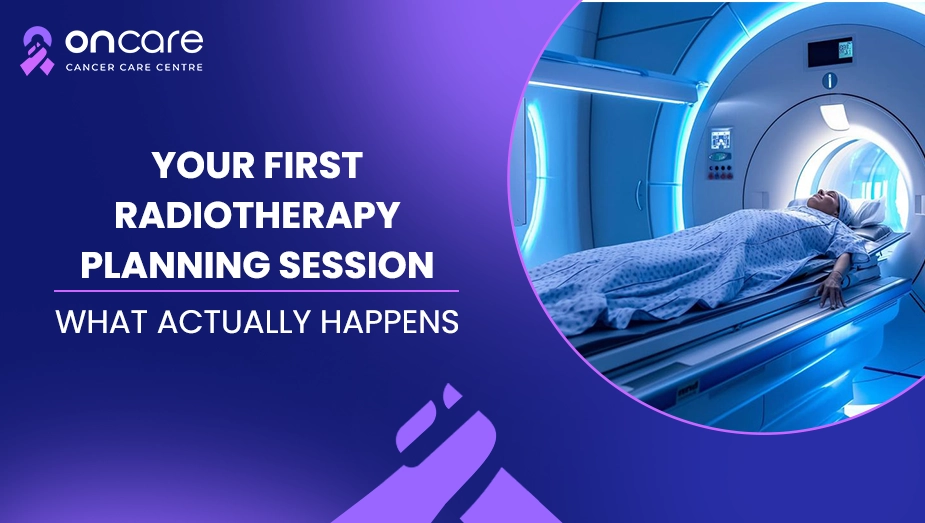
Radiotherapy planning is one of the most critical steps before cancer treatment. Many patients feel frightened when they are told they require radiotherapy, especially if they have no idea what to anticipate at the planning appointment. The good news is that the first radiation planning meeting is not the treatment itself. Rather, it's a thorough preparatory consultation when doctors may map out a therapy meticulously, one that attacks the cancer but leaves as much healthy tissue as possible.
During this session, your healthcare specialists can carry out scans, collect measurements, discuss your plan of treatment, and create positioning guides to ensure you receive each radiotherapy session as accurately as possible. Knowing what to expect at this appointment can enable patients and families to feel more educated, prepared, and confident before treatment starts. The optimal course of treatment will always rely on the individual risk, family history, findings of genetic testing, overall health, and the recommendation of the doctor.
In this blog, we will describe what happens in a radiation planning session, why it is necessary, what tests may be involved, and how patients can prepare for the experience.
The Importance of Radiotherapy Planning
Radiotherapy employs carefully targeted radiation to treat cancer. But doctors have to come up with an individual plan for each patient before they can begin treating them.
The planning session assists healthcare teams in:
- Determining the exact treatment area
- Preserving the surrounding healthy tissue
- Calculating the dose of radiation
- Improving treatment precision
- Creating a therapy plan for each person
This planning helps to guarantee that future radiotherapy sessions are performed as safely and precisely as feasible.
What Happens During the Planning Appointment?
Before the planning session, your health care team may review the following:
- Medical history
- Previous therapy
- Imaging reports
- Biopsy findings
- General health status
Before your consultation, you may receive advice regarding eating, drinking, medications, or clothing. The preparation instructions may be slightly different for each patient.
Arrival in the Radiotherapy Department
On arrival, the radiation staff will explain the procedure and answer any queries you may have. The team you meet may include:
- Radiation oncologists
- Radiotherapy technologists
- Nurses
- Treatment planners
The purpose is to make you comfortable and to explain what will happen throughout the appointment.
The Simulation Scan: A Critical Part of Planning
A simulation scan is required before starting Radiation Therapy. This allows the treatment team to obtain thorough images and measurements to accurately arrange your treatment, while sparing as much healthy tissue as possible.
Why You Need a Simulation Scan
A simulation scan is one of the most significant parts of the planning appointment. This scan can enable clinicians to:
- Identify the treatment site
- Check surrounding organs
- Design the radiation scheme
- Measure the angle of treatment
This process is done by a CT scan in several centers. The scan is painless and usually just takes a few minutes.
Keeping the Right Position
You may be requested to lie quite still during the scan. Your body is gently placed by the healthcare staff so that the same posture can be reproduced each time you come in for treatment. This constancy improves the precision of treatment.
May Use Special Positioning Device
Special devices may be employed to help maintain the correct position depending on the area being treated. These may be:
- Mask for the head and neck
- Rest for arms
- Cushions for legs
- Body forms
They are designed for comfort and precision. They are not for treatment but rather for support in maintaining positioning.
Causes of Small Skin Blemishes and Treatment
Some patients will have minor markings on the skin to assist in the treatment position. These markers assist the radiation team to:
- Repeat the same position every day
- Improve treatment precision
- Minimize setup differences
If you have them, your health care provider will tell you how to care for these marks.
A Practical Guide to Your First Planning Meeting
Stage | What Occurs |
|---|---|
Register | Check appointment details |
Medical review | Treatment history |
Positioning | Body set in treatment posture |
CT scan for simulation | Planning images taken |
References or markings | Guidance on treatment setup |
Development plan | Doctors tailor treatment |
Is Treatment Included in the Initial Planning Session?
A common question from patients is whether they will receive radiotherapy at the planning visit. Most of the time, the answer is no.
The planning visit usually focuses on:
- Scanning measurements
- Placement
- Design of treatment
Once the doctors have finished the treatment plan, the real radiation sessions usually start.
What is the average length of an appointment?
The time varies according to the type of cancer and the complexity of the planning. Some appointments may be less than one hour; some may be longer.
Timing is affected by factors such as:
- Treated area
- Number of scans required
- Placement requirements
- Other planning processes
Your health care team will walk you through each stage.
Getting Ready for Your Appointment
Many people feel better when they know what to expect. Some useful preparatory tips include:
- Wear something comfortable
- Don’t be late
- Bring medical info as requested
- Ask questions openly
- Follow any instructions given beforehand
The more we know, the less uncertain we tend to be.
Normal Emotional Feelings Before Treatment
It is fairly normal to have a range of feelings before your radiation starts. Some patients may feel:
- Anxious
- Doubtful
- Uncertain
- Overwhelmed
Support may be provided by:
- Relatives
- Friends
- Medical professionals
- Cancer support groups
- Advisors
Patients generally find it helpful to be able to talk about concerns openly.
Trusted Sources to Learn More
Reliable information may contribute to a better understanding of radiotherapy and cancer treatment by patients and their families.
For patients and caregivers, authoritative educational material on radiotherapy, cancer treatment, and supportive care is available from the National Cancer Institute.
Looking Ahead With Confidence
A radiotherapy planning appointment is a critical step on the treatment journey. The goal of the session is to help healthcare providers develop the safest and most successful treatment plan that they can – even if it doesn’t feel familiar at first.
Each patient’s circumstances are different. Radiotherapy decisions are made on the basis of individual risk factors, family history, genetic testing results, overall health, cancer features, and recommendations from the healthcare team.
Consult Today
Your first meeting for radiotherapy planning is a preparation appointment. This gives doctors the chance to build a treatment plan just for you before you start radiotherapy. At this appointment, the healthcare team may take scans, make positioning instructions, and gather information needed to accurately give treatment. Knowing how the process works may help make the experience seem less daunting, and it can help patients approach therapy with more confidence.
Decisions about radiotherapy should always be made on a case-by-case basis, depending on individual risk, family history, genetic testing findings, overall health, and specialist advice. Oncare Cancer Hospital is a name you can trust for expert guidance, advanced cancer treatment, and compassionate patient support from diagnosis to treatment, recovery, and survivorship.





Frequently Asked Questions
Not usually. The planning session is primarily for scanning, positioning and setting up for treatment.
No. The scan is not painful, although you may need to stay still for a little while.
These markers are there to avoid the use of different treatment positions during each radiotherapy session.
Length varies, but many appointments are between one and several hours depending on the treatment plan.
Written and Verified by:
Dr. Gajendra Kumar Himanshu Exp: 10 Yr
Medical Officer
Book an Appointment
Related Blogs

Scalp Cooling (Cold Caps): Can It Reduce Chemotherapy Hair Loss?
Learn how scalp cooling may help reduce chemotherapy-related hair loss, what to expect, benefits, limitations, and support at Oncare Cancer Hospital.

Probiotics and Gut Health for Cancer Patients on Chemotherapy
Learn how probiotics may support gut health during Chemotherapy, their potential benefits, safety considerations, and when Cancer patients should use them.

Counselling and Therapy Options for Cancer Patients in India
Explore counselling and therapy options for cancer patients in India. Learn how emotional support improves recovery with Oncare Cancer Hospital.
How Radiology Confirms Hepatoblastoma: A Detailed Overview
Learn how hepatoblastoma radiology helps detect and monitor liver cancer in children. Get expert care and early diagnosis at Oncare Cancer Hospital.