
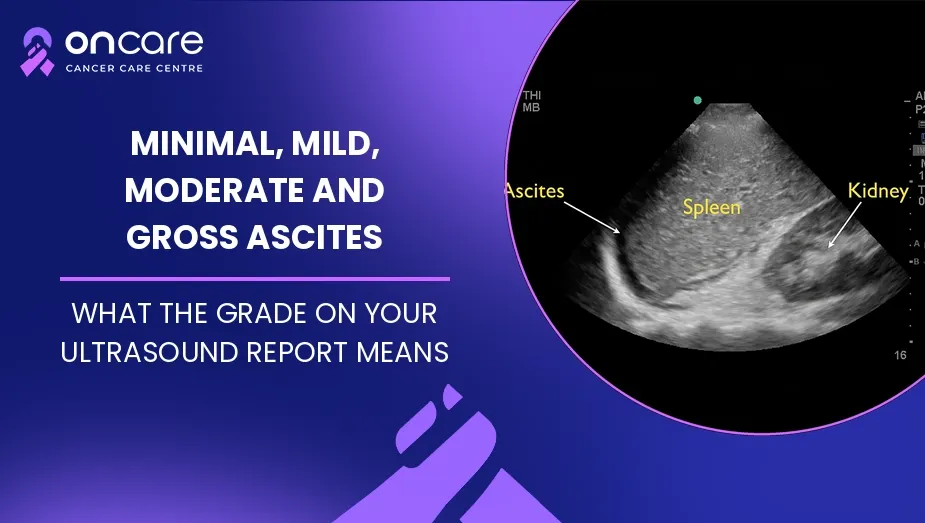
Mild, minimal, moderate, and gross ascites refer to the level of excessive fluid collected in the abdominal cavity. In case your ultrasound report uses any of these descriptions, it means the ultrasound has found extra fluid in the abdominal cavity (the space around the organs), not inside the organs. The levels can range from very minimal to very excessive, causing distension of the abdomen.
Knowledge about these terms will help you to understand the outcome of your ultrasound scan and plan for the next course of action. But it must be noted that the grade tells you how much fluid there is, but not why it was collected — the cause decides how serious it is.
What Is Ascites and Why Does Fluid Accumulate in the Abdomen?
Ascites is the abnormal accumulation of fluid in the peritoneal cavity, the space between the abdominal organs and the inner lining of the abdomen. Normally, this space contains a small amount of lubricating fluid that allows organs to move smoothly. When the balance between fluid production, circulation and drainage changes, excess fluid can collect in this area. Several medical conditions can contribute to this process:
Liver cirrhosis: Portal hypertension and alterations in liver functioning can contribute to fluid retention.
Cancer: Some types of cancer located in the abdominal area might affect the peritoneum or hinder proper fluid elimination from the body.
Heart failure: Ineffective pumping might lead to excess fluid accumulation in various body areas, including the abdomen.
Kidney disease: Certain types of kidney disease cause fluid accumulation or decreased protein level.
Infection: Certain infections like abdominal tuberculosis can cause inflammation and accumulation of fluids.
Ascites can occur slowly or be detected within a short span of time, depending upon the disease causing it.
How Is Ascites Identified on an Ultrasound?
Ultrasound of the abdomen is frequently employed to detect fluid within the abdominal cavity. Ultrasound utilizes sound waves for creating images of internal body structures without the use of any ionising radiation.
Fluid collections in the abdomen are evaluated during the exam by looking at various sections of the abdomen. They may be found near the liver, spleen, between loops of the bowel, and in the pelvis. An ultrasound helps the doctors diagnose:
- The presence and pattern of free fluid in the abdomen.
- Whether the collection is localized or widespread.
- Changes in the liver, spleen, and other organs in the abdomen.
- Any other abnormality which needs further evaluation.
One significant benefit is that ultrasounds can detect fluid accumulation even when there is no noticeable swelling in the abdomen.
Does an ultrasound give an exact fluid measurement?
Not always. The ascites are classified in terms like minimal, mild, moderate or gross ascites. This classification will give you an idea about the degree of accumulation of the fluid; however, these are not according to any universally accepted volume classification system.
What Do Different Grades of Ascites Mean?
There are three grades of ascites based on the classification by the International Ascites Club. This classification is based on the volume of fluid collection and the effect that it has on the abdominal distention. However, there is another phrase used in the ultrasound reports, which is 'minimal ascites,' though it is not a distinct grade.
Ultrasound can identify fluid collections as small as 100 mL in the abdominal cavity. On the other hand, on physical examination, clinical signs such as shifting dullness generally become detectable when around 1.5 litres of fluid have accumulated.
1. Minimal Ascites
Minimal ascites is defined as a very small amount of fluid within the abdominal cavity. Minimal ascites can be seen through an ultrasound even when the patient is not having any physical manifestations. In this case:
- The abdomen may still be normal.
- The patient may not be experiencing any pain or discomfort.
- The fluid may be observed only in an imaging test.
A very small amount of free fluid, especially in the pelvis of women around ovulation, can be normal. Doctors look at it together with your symptoms and other findings before deciding if any test is needed. In some cases, doctors have suggested getting tests done on liver function.
2. Grade 1: Mild Ascites
Mild ascites refers to the presence of a small amount of fluid without any abdominal distension. While some people do not experience discomfort, others might have a feeling of abdominal fullness. Possible observations include:
- Mild abdominal tension.
- Occasional abdominal pain.
- Mild change in the feeling of abdominal fullness.
The further approach is based on the cause. For instance, patients suffering from liver disease should be regularly checked for liver dysfunction and edema. If the cause of the fluid is not known, more tests are needed.
3. Grade 2: Moderate Ascites
Moderate ascites means there is more fluid than in mild ascites. This may be accompanied by an enlargement of the abdomen. The symptoms that patients might experience are:
- Visible distention of the abdomen.
- Heavy feeling.
- Lack of appetite due to premature satiety.
- Pain on movement.
Further tests such as analyzing fluid may be performed to establish the root cause. In the case of cirrhosis, the treatment could involve use of medication such as diuretics and reduced intake of sodium.
4. Grade 3: Gross Ascites
Gross ascites refers to significant fluid buildup and can lead to considerable distension of the abdomen. Distention of the abdomen can be uncomfortable and affect the normal activities of daily life. Common problems include:
- Abdominal distension.
- Stretched out skin of the abdomen.
- Problems finishing a whole meal.
- Trouble breathing especially in a lying position.
- Decreased movement due to pressure on the abdomen.
In case the fluid buildup leads to considerable pain, paracentesis is the recommended treatment. This entails draining of the excess fluid through a needle or catheter.
Important: Presence of gross ascites does not necessarily indicate an advanced stage of cancer. Accumulation of large amounts of fluid can also take place due to liver disease and other diseases.
How Do the Four Ascites Grades Differ?
This is the comparison that shows the differences generally felt by the patients.
Grade | Fluid accumulation | Possible physical changes |
|---|---|---|
Minimal | Very small | Usually no visible change |
Mild | Small | Slight fullness or no symptoms |
Moderate | More noticeable | Abdominal enlargement and pressure |
Gross | Substantial | Marked swelling and possible breathing discomfort |
The information provided is helpful in appreciating a written report, although one cannot use it for precise measurement. Clinical grading systems usually classify ascites as mild, moderate, and severe. Terminology utilized by individual radiologists might vary.
What Symptoms Can Develop as Ascites Increase?
They will vary according to the amount of fluid accumulated, the speed at which it has occurred, and the existence of any underlying disease. Individuals suffering from small amounts of ascites do not experience any symptoms. Those who have larger amounts of fluid may exhibit various signs:
Distention of abdomen: The abdomen progressively expands.
Early satiety: The feeling of being full arises even after consumption of a little amount of food.
Difficulty breathing: Excessive abdominal pressure may hinder the movement of diaphragm.
Swelling of the leg: Swelling of the leg can be attributed to fluid buildup in the ankles and legs.
Increase in weight: The accumulation of fluid causes weight gain and not body fat.
Discomfort in the abdomen: Pressure in the abdomen makes movement uncomfortable.
An unexpected onset of abdominal pain, fever, or difficulty breathing requires immediate medical attention. They should not be considered typical reactions to the buildup of fluid.
What Causes Different Grades of Ascites?
Ascites can have several causes. It is more critical to identify the cause of ascites than simply considering the volume of fluid.
Liver Cirrhosis and Portal Hypertension
Cirrhosis causes damage to the liver cells, hence altering the usual blood flow through the organ. This may result in high pressure in the portal venous system, promoting the transfer of fluids to the abdomen. Decreased production of albumin by the injured liver may contribute to fluid retention.
Cancer and Peritoneal Involvement
It is possible for certain cancers to produce fluids in the abdomen. This occurs due to cancer cells spreading to the peritoneum and affecting its ability to drain the lymphatic system. Some of the types of cancers that can lead to ascites include ovarian, stomach, pancreatic, and colorectal cancer.
Heart Failure
In instances when the heart fails to pump the blood effectively, increased pressure is likely to occur in the venous system, resulting in fluid retention, particularly ascites.
Kidney Disorders
Specific kidney disorders lead to an accumulation of salt and water retention in the body or loss of large amounts of protein through the kidneys. This might result in swelling or ascites.
Abdominal Infections
Tuberculosis of the peritoneum (abdominal TB) — this is a common cause of ascites in India, results in inflammation and formation of fluid. Infection of the peritoneal cavity with other diseases must be treated accordingly.
Does the Grade of Ascites Indicate Cancer?
Not necessarily. Minimal, mild, moderate, or gross ascites detected by ultrasonography cannot be used for diagnosing cancer. While some cancers may lead to ascites, there are other, non-cancerous disorders that can cause ascites. One such disorder is liver cirrhosis. Doctors can also consider the following symptoms in the case of malignancy:
- Unexplained weight loss.
- Appetite loss.
- Presence of a lump in the abdominal or pelvic region.
- Altered bowel habits.
- Abnormal imaging results.
- A history of cancer.
Should there be any suspicion of malignant ascites, medical professionals can suggest doing the analysis of fluid. Such procedure is known as ascitic fluid cytology. A negative cytology result does not always rule out cancer, so doctors read it with the scans and other tests. They should be considered together with other diagnostic data.
What Happens After Ascites Are Found on an Ultrasound?
The ultrasound will reveal that there is an excess of fluid; however, it will not be able to determine why the fluid has accumulated in the first place.
1. Blood Tests
Blood investigations help assess whether the liver, kidneys or other organs are functioning properly. Common tests include:
- Tests to detect Liver function.
- Albumin to test for presence of protein in the body.
- Tests for kidney function to detect waste elimination from the body.
- Electrolytes to diagnose sodium and potassium deficiencies.
- Complete blood test for any infections in the body.
2. Diagnostic Paracentesis
In cases where ascites occur for the first time, paracentesis is advised when the ascitic fluid can be safely withdrawn. A tiny amount of ascitic fluid is withdrawn using a thin needle. The fluid is then analyzed in the laboratory. The study may consist of the following tests:
White cell count: Determines whether there are too many white blood cells, indicating an infection.
Albumin in the fluid: Helps determine the cause of ascites.
Total protein content: Adds more information to the fluid composition.
Culturing: Helps identify bacteria if infection is suspected.
Cytology: Helps look for malignant cells when cancer is suspected.
3. What Is the SAAG Test and Why Is It Important?
SAAG stands for the abbreviation of Serum-Acites Albumin Gradient. It determines the albumin concentration of blood compared to the albumin concentration of ascites fluid.
SAAG test is used by physicians to determine whether portal hypertension is responsible for causing ascites.
SAAG result | General interpretation |
|---|---|
1.1 g/dL or higher | Suggests portal hypertension |
Below 1.1 g/dL | Suggests a cause unrelated to portal hypertension |
An elevated SAAG test would indicate cirrhosis or some form of heart disease. Conversely, a low SAAG test result can indicate cancer in the abdomen, tuberculosis, and also some forms of pancreatic disease. SAAG is not a solitary diagnosis, but an additional test result that must be interpreted in conjunction with others.
If the first ultrasound indicates something that seems to be suspicious or if it is not sufficiently informative, a doctor may prescribe a CT scan or MRI. Such investigations may be helpful for examining the internal organs of the abdomen, detecting any abnormalities or even diseases.
How Is Ascites Treated?
The treatment is determined by the illness that causes the fluid retention, the general health status of the patient, and the level of pain experienced.
Treatment of the Underlying Condition
The management of ascites is important. For instance, cirrhotic patients require liver management, whereas patients who suffer from cancer will require cancer-related therapy. Ascites caused by infection must be managed with the use of antimicrobial drugs.
Dietary Sodium Restriction
Patients who suffer from ascites due to liver cirrhosis might be recommended to limit the amount of sodium consumed, since sodium increases water retention. Doctors or dietitians may advise patients to avoid salty foods like papad, namkeen, achaar, packaged snacks and instant noodles, as these foods can contribute to fluid retention.
Diuretic Medicines
Diuretics are useful in the removal of excessive amounts of sodium and fluid from the body by means of urine production. Medications like spironolactone and furosemide can be taken by selected patients suffering from cirrhosis-related ascites. It is essential to regularly monitor kidney function and blood levels of sodium and potassium.
Therapeutic Paracentesis
If there is fluid buildup leading to severe discomfort and difficulty breathing, then therapeutic paracentesis is performed. In cases where large volumes of fluid are being removed from patients with cirrhosis, albumin might have to be given intravenously to prevent circulatory problems.
How Is Ascites Treated When It Is Caused by Cancer?
In cases where ascites is caused by cancer, the treatment centers around managing the cancer itself and dealing with the symptoms that arise from the fluid build-up. Possible treatments include:
Cancer-directed therapy: Cancer-directed therapy can be achieved by chemotherapy or any other form of therapy directed at the cancer itself.
Fluid Removal (Paracentesis): The removal of extra fluid from the body through the use of a needle or tube may alleviate the symptoms of abdominal distention, pain, and difficulty breathing. This procedure may have to be done repeatedly.
Indwelling catheter for drainage: In cases where the fluid persists, a small tube can be inserted into the abdomen to provide drainage periodically at home.
HIPEC for suitable patients: In certain patients with tumors affecting the lining of the abdomen, an operation to surgically remove tumor deposits from the abdomen followed by heating the chemotherapy inside the abdomen is done. This process is termed hyperthermic intraperitoneal chemotherapy (HIPEC).
Diuretics are not usually effective in treating ascites associated with cancer, especially cancer affecting the abdomen lining. However, diuretics can be effective in certain cases where fluid accumulation is caused by other causes besides cancer.
When Should You Consult a Doctor?
Do not neglect unexplained fluid in the abdomen just because the ultrasound states that the fluid is minimal or mild. Seek medical advice regarding what may have caused this and whether any tests are needed. Seek medical help immediately if you have:
- Pain in the abdomen that is sudden or severe.
- Fever or chills.
- An abdomen that gets rapidly swollen.
- Problems breathing.
- Unusual confusion or drowsiness or fainting.
- Continuous vomiting or problems eating or drinking.
These symptoms can be signs of other problems needing urgent treatment.
Consult Today
The detection of ascites through an ultrasound should receive adequate medical attention especially if the fluid accumulation continues to increase or the cause is not known. In the Oncare Cancer Hospital, one is able to seek advice from the specialists on any issues related to cancer, including the diagnosis and advice on the proper treatment. In case your report shows ascites, and you want to know if it is related to cancer, then talk to a qualified physician.
Disclaimer
This blog serves as an educational resource only and should not be taken as a substitute for proper medical guidance. The evaluation and management of ascites depend on the individual case history. It is always advisable to seek medical attention from a qualified practitioner to interpret your ultrasound report.
Frequently Asked Questions
Is minimal ascites dangerous?
Minimal ascites does not necessarily mean a serious health problem. However, it can be the first indication that one may have a disease affecting the liver, the heart, the kidneys, or the abdomen.
Is it possible that mild ascites will resolve itself?
In some instances, the fluid collection will decrease if the cause is effectively treated. Nevertheless, the persistence of ascites is a reason to seek professional help. Self-treatment is highly discouraged.
Is moderate ascites a serious disease?
A moderate amount of ascites is a condition that needs to be addressed as it shows the accumulation of a significant amount of fluid.
Can Minimal Free Fluid in the Abdomen Be Normal?
Yes, indeed, a tiny bit of free fluid in the abdominal cavity may also be normal in certain healthy people, especially women who are of reproductive age during ovulation or menstrual periods. However, the importance lies in the volume of the fluid, where it is located, and any accompanying signs or history.
How Much Fluid Are Minimal Ascites?
Minimal ascites is when there is a small amount of fluid within the abdomen, and this can be identified only with imaging techniques like ultrasonography. Ultrasonography is able to pick up about 100 ml of fluid, although it is not the same amount always, as it varies according to the machine and the test.
Is Gross Ascites a Sign of End-Stage Cancer?
No. The term gross ascites means an excess fluid buildup in the abdominal area, but it does not necessarily mean that the individual is suffering from end-stage cancer. This may be caused by many different diseases such as liver cirrhosis, heart failure and cancers. If cancer causes the patient’s condition, then the physician considers the nature of the cancer and its stages.