Table of Contents
Managing Malignant Pleural Effusion in Lung Cancer Patients

By Dr. Gajendra Kumar Himanshu


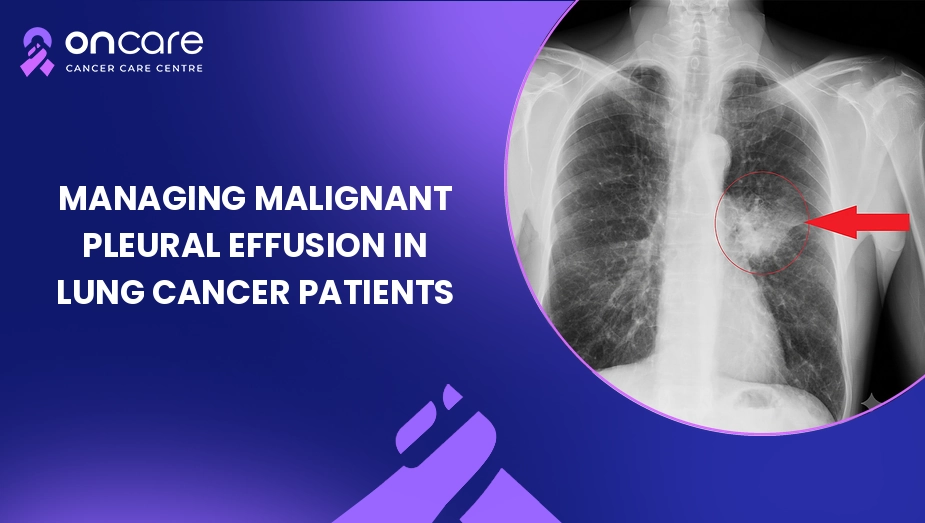
The treatment of malignant pleural effusion in patients with lung cancer aims to relieve symptoms, improve breathing, and enhance quality of life. Treatment may include drainage of the fluid, pleurodesis, indwelling pleural catheters, and continued treatment of the lung cancer itself. The best approach depends on the volume of fluid, the patient's symptoms, and the overall stage of the cancer.
In this blog, we discuss malignant pleural effusion in lung cancer patients, covering the causes, symptoms, diagnosis, treatment choices, home care, and when to seek medical assistance promptly.
Why Malignant Pleural Effusion Matters in Lung Cancer
Malignant pleural effusion is a common complication of advanced lung cancer. It occurs when cancer causes fluid to accumulate in the pleural space, the thin gap between the lungs and the chest wall. As the fluid builds up, it presses on the lung and makes breathing difficult.
While the condition can be distressing, modern treatments can substantially reduce symptoms and help patients maintain a better quality of life. Early diagnosis and appropriate treatment are crucial for improving comfort.
What Causes Malignant Pleural Effusion?
Normally there is a tiny amount of fluid in the pleura, which allows the lungs to move smoothly as you breathe. In lung cancer, tumour cells may block lymphatic drainage or irritate the lining of the pleura, leading to a build-up of extra fluid.
This fluid is termed a malignant pleural effusion when cancer cells are present or when the effusion is caused by the cancer. It is most often seen in advanced lung cancer, but can also occur with breast cancer and other tumours that have spread to the chest.
Typical Signs to Look For
Symptoms normally appear gradually. In some people, shortness of breath develops quickly when fluid accumulates rapidly.
Sign | How It Could Feel |
|---|---|
Breathlessness | Shortness of breath with exertion or at rest |
Chest tightness | Chest pain or a sensation of pressure |
Constant coughing | Dry and persistent cough |
Tiredness | Less energy due to reduced oxygen levels |
Trouble lying flat | Breathing may feel worse when lying flat |
If you develop any new or worsening breathlessness, get assessed by a healthcare professional soon.
What Tests Are Done to Diagnose Malignant Pleural Effusion?
Doctors start with a medical history and physical examination, and often follow this with imaging tests such as a chest X-ray, ultrasound, or CT scan. These tests help identify how much fluid is present and where it is located.
A procedure called thoracentesis is often done to remove some of the fluid. The sample is sent to the laboratory to determine whether cancer cells, infection, or another cause is behind the effusion.
Treatment Options for Symptom Relief
The main aim of treatment is to restore comfortable breathing and to treat the lung cancer itself where possible.
Thoracentesis
Thoracentesis is generally the first step. Fluid is removed from the pleural space using a needle, which usually gives rapid relief from shortness of breath. However, the fluid may return over time.
Pleurodesis
For patients with recurrent pleural effusion, pleurodesis may be recommended. A medicine is placed into the pleural space to seal the lining around the lung, which reduces the chance of fluid building up again.
Indwelling Pleural Catheters
If fluid returns regularly, an indwelling pleural catheter can be used to drain the fluid safely at home. This often means fewer trips to hospital and more comfort in day-to-day life.
Treatment of the Primary Lung Cancer
Chemotherapy, targeted therapy, immunotherapy, or radiation therapy can help control the cancer itself, which in selected patients can also reduce the chance of the pleural effusion returning.
Day-to-Day Management at Home
Managing symptoms at home is an important part of care. Many patients find it helps to stay active within their limits, sleep with the upper body slightly elevated, and report any increase in breathlessness to their medical team.
Regular follow-up is useful for monitoring the return of fluid and making sure the treatment continues to suit the patient's needs and general health.
When to Seek Urgent Medical Care
Call your doctor immediately if you have any of the following:
- Sudden or severe difficulty breathing
- Sudden worsening of chest pain
- Blue lips or fingertips
- High fever with difficulty breathing
- Severe weakness or confusion
Seek medical help straight away if you develop any of these symptoms. Do not ignore them.
If you want to read more about malignant pleural effusion, then you can visit the official website of the National Library of Medicine.
Consult Today
If you or a loved one is living with lung cancer and malignant pleural effusion, the multidisciplinary oncology team at Oncare Cancer Hospital provides individualised assessment, advanced management of pleural fluid, and supportive care to improve breathing and quality of life during treatment.
Disclaimer
This text is for educational purposes only and is not a substitute for professional medical advice, diagnosis, or treatment. Seek immediate medical attention if you develop prolonged shortness of breath, chest pain, or signs of a pleural effusion.





Frequently Asked Questions
Malignant pleural effusion can be managed, though not usually cured. The goal is to relieve symptoms, prevent fluid from building up again, and improve quality of life while treating the underlying cancer.
Yes. Fluid may reaccumulate after thoracentesis. Pleurodesis or an indwelling pleural catheter may help some patients with longer-term management.
Thoracentesis is typically done under local anaesthetic. Most patients report a sensation of pressure rather than severe pain, and the procedure usually gives rapid relief from breathlessness.
Chemotherapy, targeted therapy, or immunotherapy for the underlying lung cancer can help reduce the recurrence of malignant pleural effusion in many cases.
Written and Verified by:
Dr. Gajendra Kumar Himanshu Exp: 10 Yr
Medical Officer
Book an Appointment
Related Blogs

Prostate Cancer Surgery Cost in India 2026: Options and Price Factors
Know the 2026 cost of prostate cancer surgery in India, compare open, laparoscopic & robotic options, and consult experts at Oncare Cancer Hospital.

Blood in Stool: When It Could Mean Colon Cancer
Learn the causes of blood in stool, its possible link to colon cancer, warning signs, diagnosis, and when to seek expert care at Oncare Cancer Hospital.

Unexplained Weight Loss: When Should You Worry About Cancer?
Learn when unexplained weight loss may be a sign of cancer, its causes, warning symptoms, diagnosis, and when to seek expert care at Oncare Cancer Hospital.