Table of Contents
Generic vs Branded Cancer Drugs: Are They Equally Effective?

By Dr. Gajendra Kumar Himanshu


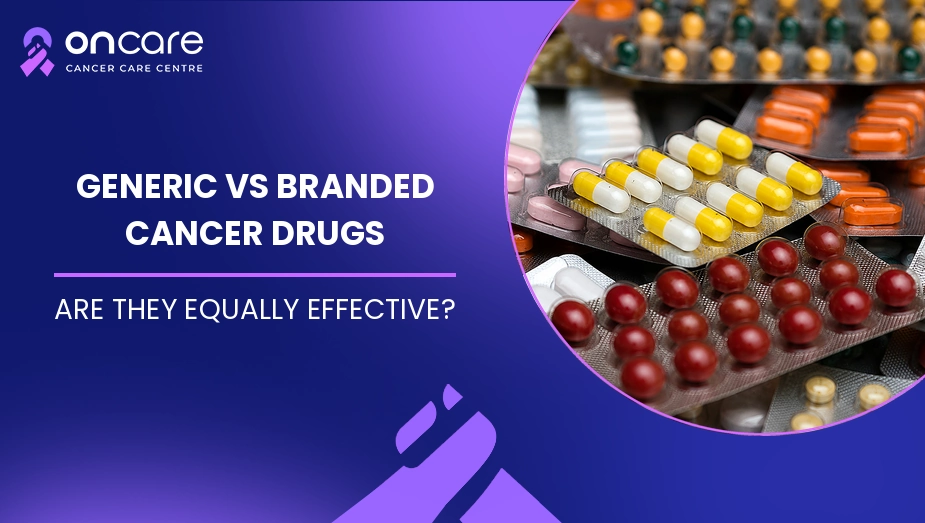
A major concern of people commencing cancer therapy is whether to choose generic or brand-name cancer medications. Most generic cancer drugs approved are as effective, safe, and good in quality as the branded medicines. Regulatory agencies require generic medications to contain the same active ingredient, potency, dosage form, and therapeutic effect, so they are a safe, less-expensive therapy alternative for many patients.
In this blog, we discuss generic vs branded cancer treatments, how they are approved, whether they work the same, safety criteria, possible variances, and how doctors decide which prescription is best for each patient. Knowing these facts can help patients make confident and educated treatment decisions.
Why is this Important?
Cancer therapy can take months, even years, and the expense of drugs can be a heavy burden for patients and their families. Many consumers worry whether they are getting a lesser therapy, and doctors often recommend generic medicines instead of the branded ones.
That's a legitimate worry, but it's also one of the greatest myths in cancer treatment. Knowing the differences between generic and branded medicines can help patients concentrate on what really matters: receiving the correct treatment without undue financial burden.
What is the difference between generic and brand-name cancer drugs?
A branded cancer treatment is the first medicine that a pharmaceutical company creates after several years of research and clinical trials. The corporation is protected by patents. It can sell the medicine exclusively for a length of time. Once the patent expires, other manufacturers can make generic copies of the same medicine. These generic medications have the same active ingredient and are expected to perform in the same way as the original drug. The difference is usually in the manufacturer, brand name, packaging, and price, not the medicine itself.
Feature | Branded Cancer Drugs | Generic Cancer Drugs |
|---|---|---|
Active ingredients | Same | Same |
Strength and dose | Same | Same |
Treatment effect | Same | Same |
Manufacturer | Original firm | Approved generic manufacturer |
Cost & Funding | Higher overall | Usually less |
Do Generic Cancer Drugs Work as Well?
Yes. Approved generic cancer drugs should be just as effective as brand-name medicines.
Before generic drugs may be made available to patients, they have to meet stringent regulatory standards. Manufacturers must prove to regulators that the medicine releases the active ingredient into the body in a similar way and quantity as the branded product. This is called bioequivalence.
These guidelines ensure that patients can generally expect the same treatment results from an approved generic pharmaceutical when taken exactly as recommended.
How Are Generic Cancer Medicines Tested?
There is a misconception among many people that generic drugs don't undergo testing. Generic manufacturers must demonstrate that their products meet rigorous quality standards, including:
- Active ingredient quality
- Same strength, same dose
- Consistent quality of manufacture
- Shelf-life stability
- Bioequivalence to the branded drug
- Compliance with Good Manufacturing Practice (GMP)
Regulatory organizations often examine manufacturing plants to make sure quality standards are being followed.
Can generic drugs differ in appearance?
Yes, a generic pill or capsule could differ in:
- Shape
- Size
- Color
- Packaging
- Inactive compounds, such as fillers or coatings
But these variations don't change how the drug works to treat cancer. The active substance that combats the sickness is still the same.
Why Do Generic Cancer Drugs Cost Less?
Developing a new cancer drug takes years of research, lab work, clinical trials, and regulatory approvals. Such charges are part of the price of branded drugs.
Since the treatment has already proved useful and safe, the generic makers do not repeat the entire drug discovery process. This enables them to provide the same treatment for a fraction of the cost, expanding access for more patients.
When can a Doctor Choose a brand-name medicine?
Most of the time, generic drugs are appropriate, but there are times when a doctor will recommend a branded product.
Such circumstances may include:
- There is no generic available currently.
- Some innovative targeted treatments are still under patent protection.
- One formulation is chosen therapeutically.
- Individual patient considerations must be carefully weighed.
The decision always depends on the patient's diagnosis, treatment plan, and general medical state.
Generic or brand-name drugs: Should you switch?
Patients must not modify their cancer treatments without speaking to their doctor. Approved generics are considered equal, but the healthcare team should continue to coordinate treatment decisions.
If your drug is altered after a refill, or you have concerns about the manufacturer, tell your doctor. Good communication helps keep therapy safe and consistent.
If you want to read more about cancer treatment, then you can visit the National Cancer Institute.
Consult Today
For most patients, the question of generic vs branded cancer medications has a reassuring solution. Approved generic medicines have the same active ingredient, work in the same way, and are as safe as the brand-name medicines but cost less for treatment. The most crucial step is to adhere to the drugs given by your oncologist and get them from trusted pharmacies.
If you have any doubts about generic or branded cancer medicines, consult the oncology experts at Oncare Cancer Hospital. Always let your cancer kind, medical condition, and clinical needs guide your treatment strategy. A skilled oncologist can work with you to evaluate your options and select the most appropriate therapy for your care.
Disclaimer
This text is solely for educational reasons and is not intended to be a substitute for professional medical advice, diagnosis, and treatment. Always seek the advice of a skilled oncologist before you start, stop, or change any cancer medication. Treatment decisions should be based on your own medical situation and the advice of your health care professional.





Frequently Asked Questions
Yes. Approved generic cancer drugs provide the same active ingredient, potency, and therapeutic effect as the branded medicine and are predicted to have similar treatment outcomes.
Generic drug makers don't have to incur the expensive costs of discovering and developing a new pharmaceutical, so they can give the same treatment for less.
Yes. Generic drugs have to pass tight regulatory criteria for quality, safety, manufacturing, and bioequivalence before they can be sold.
No. Always consult with your doctor before changing any cancer medication. Your doctor will decide if a generic choice is suitable for your treatment.
Written and Verified by:
Dr. Gajendra Kumar Himanshu Exp: 10 Yr
Medical Officer
Book an Appointment
Related Blogs
Circulating Tumour DNA (ctDNA): How Blood Tests Track Cancer
Learn how ctDNA liquid biopsy helps monitor cancer treatment, detect MRD, identify recurrence, guide targeted therapy, and support personalized cancer care.
Cancer and Blood Clots (DVT and Pulmonary Embolism): Risks and Prevention
Learn how cancer increases blood clot risk, DVT and PE symptoms, diagnosis, treatment, prevention tips, and when to seek urgent medical care.

Cancer Survivor Support Groups in India: How They Help and How to Join
Learn how cancer survivor support groups in India provide emotional support, recovery guidance and community care with help from Oncare Cancer Hospital experts.

Driving and Travel Restrictions After Major Cancer Surgery
Learn safe driving and travel tips after cancer surgery with Oncare Cancer Hospital. Know recovery timelines, risks, and when to resume normal activities.