Table of Contents
Epithelial Ovarian Cancer: What It Is and How It Starts

By Raveena M Prakash


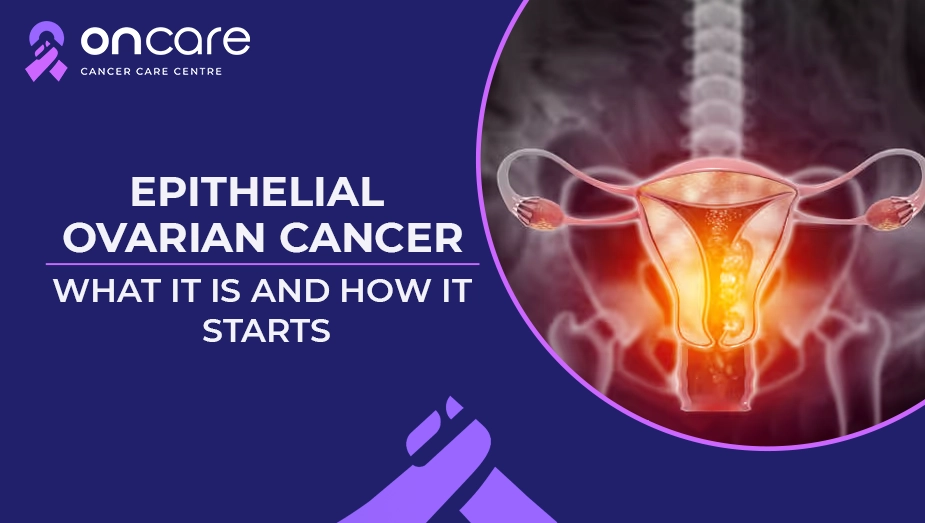
Epithelial cancer is one of the common cancers among the ovarian cancer types across the world, accounting for almost 90% of all ovarian cancer cases. These cancers often develop silently, without causing any major symptoms, with few signs in the early stages, which makes early diagnosis difficult and challenging. Understanding what epithelial cancer is, how it begins in the ovaries, and who is at higher risk of developing this condition can improve the diagnosis and treatment outcomes.
In this article, we’ll discover more about epithelial cancer in simpler terms, including how it starts, its causes, risk factors, symptoms, and why early detection matters!
What is Epithelial Ovarian Cancer
Epithelial cancer generally starts in the epithelial cells, which are known as a thin layer of cells that cover the outer lining or surface of the ovary. All of these are responsible for protecting the ovary, which are quite different from the cells that produce eggs or hormones.
These surfaces start to begin to grow abnormally and uncontrollably, and they can develop a tumor. Over time, these tumors can become cancerous and spread to the nearby tissues or other parts of the body.
Types of Epithelial Ovarian Cancer
As we all know, epithelial ovarian cancer is not a single disease, but it includes several subtypes, based on how the cancer cells look under the microscope.
These may include:
- Serous carcinoma: The most common and aggressive type of an epithelial cancer.
- Mucinous carcinoma: This is another type of cancer that often produces mucus like fluid.
- Endometrioid carcinoma: This is another type of cancer that resembles endometrial cancer cells.
- Clear cell carcinoma: These types of cancer are less common and can be considered more resistant to its treatments.
How does epithelial ovarian cancer start?
An epithelial ovarian cancer usually starts in the normal epithelial cells, which undergo multiple genetic mutations that cause them to grow and divide uncontrollably.
Here’s how, it might starts in patients:
- Genetic mutations: There are changes in the genes that control the cell growth and repair often leads to the development of this cancer. Some genetic mutations are often inherited, while others develop over time.
- Fallopian tube: Some recent cancer research suggests that many epithelial ovarian cancer might start in the fallopian tubes, not the ovaries. While cancerous cells might spread to the ovaries.
- Repeated ovulation: Each ovulation causes a minor injury to the ovarian surface, over time, a repeated pair of these cells might increase the risk of developing this abnormal growth.
Risk factors
There are several factors that might increase the risk of developing epithelial ovarian cancer in women, including:
- Age: Women with an age above 50, is considered a major risk of developing this cancer.
- Family history of ovarian cancer
- Inherited genetic mutation, such as BRCA1 and BRCA2
- Never gets pregnant
- Early menstruation and late menopause
- Hormone replacement therapy (long-term use in some patients)
There are some factors that might act as protective factors including pregnancy, breastfeeding and long-term use of oral contraception.
Common symptoms
As we all know, early stage epithelial ovarian cancer often has no clear symptoms, or some signs can be unclear, usually mistaken as common digestive issues.
As these condition starts to progresses, some signs may include:
- Abdominal bloating
- Abdominal swelling
- Pelvic pain
- Feeling full quickly after while eating
- Frequent urination
- Urgency in bowel movements
- Fatigue
- Unexplained weight loss
While all of these symptoms are often considered as non-specific,most women are diagnosed at an advanced stage, because of negligence or taking these signs as a less serious health concern.
Diagnosis
Unfortunately currently there’s no reliable screening tests for diagnosing epithelial ovarian cancer in women without any specific symptoms. While an accurate cancer diagnosis usually involves a combination of tests, including:
- Pelvic examination
- Imaging tests (CT scan, MRIs, and Ultrasound)
- Blood tests (CA-125, though not specific)
- Biopsy or surgery to confirm the cancer in patients
Why is early diagnosis difficult in this cancer?
An early-stage epithelial cancer is often challenging because the cancer has developed without giving any clear warning signs. However, many symptoms might appear late, which tends to get overlooked or ignored. That’s why cancer awareness and early diagnosis are considered essentially important.
An epithelial cancer is often known as silent killer because,
- These symptoms are mild or appear late
- These ovaries are deep inside the ovaries
- Early tumors are hard to detect on routine physical examinations
That’s why cancer awareness and learning more about the risk factors is often considered important.
Treatments
The treatment options for these cancers mainly depends on the stage and type of cancer, including:
- Surgery: In some cases, a healthcare provider performs surgeries to remove ovaries, fallopian tubes, and affected tissues. Debulking surgery performed to remove as many cancerous tumors as possible.
- Chemotherapy: These treatments are used to destroy the remaining cancer cells. In some cases, your healthcare provider might use chemotherapy along with surgery to treat this cancer.
- Targeted therapy: These treatments are used to treat specific mutations happening in the patient’s body.
Consult Today
Epithelial ovarian cancer can often begin in the epithelial cells of the ovary and fallopian tubes. The early symptoms of this cancer are subtle; many cases are diagnosed at advanced stages. Women getting awareness of risk factors, symptoms, and early warning signs plays a key role in improving survival and cancer diagnosis.
At Oncare, we offer premium-quality cancer treatments, including advanced cancer surgeries, at an affordable price range with an experienced cancer specialist consultation.
If you or any loved ones of yours are diagnosed with cancer, then visit Oncare Cancer Hospital and book an appointment with our experienced cancer specialist today! Get an estimated cost of your cancer treatments today!
Frequently Asked Questions
Here are some of the symptoms of this cancer including abdominal pain, bloating, difficulty in eating, nausea and vomiting.
The risk factors for this type of cancers may include family history of ovarian cancer, having BRCA mutation, previous treatments like hormone therapy, having a baby after the age of 35 after completing a full term pregnancy.
An healthcare provider might use the following tests, including CA-125 blood test, transvaginal ultrasound, CT scan, MRI, PET scan and chest X-rays.
Book an Appointment
Related Blogs

How to Check for Ovarian Cancer at Home: Self-Monitoring Guide
Learn how to check for ovarian cancer at home by tracking symptoms like bloating, pelvic pain, digestive changes, and fatigue. Self-monitoring helps with early detection.

Types of Ovarian Cancer: Epithelial, Germ Cell & Stromal Tumors
Types of ovarian cancer—learn symptoms, risk factors, and treatment options. Early diagnosis can improve outcomes. Get expert consultation and care at Oncare.
How to Recognize the Silent Symptoms of Ovarian Cancer
Ovarian cancer symptoms—don’t ignore warning signs like bloating, pelvic pain, frequent urination, or appetite loss. Get timely expert care at Oncare today.

Ovarian Cancer Diagnosis: Role of CA-125 Test and Imaging
Ovarian cancer diagnosis—learn about CA-125 test, imaging scans, and how early detection improves outcomes. Get expert evaluation and care at Oncare today.