Table of Contents
Ovarian Cancer Diagnosis: Role of CA-125 Test and Imaging

By Dr. Gajendra Kumar Himanshu



It's hard to find ovarian cancer early because its symptoms might be nonspecific and look like those of other prevalent illnesses. That's why it's so vital to have the right testing to make the right diagnosis.
If a doctor thinks you could have ovarian cancer, they usually use a mix of blood tests, imaging scans, and sometimes a biopsy to confirm the diagnosis.
The National Cancer Institute says that no one test can definitely tell if someone has ovarian cancer. You need to take more than one test.
Let's learn about the most important tests that doctors use to find ovarian cancer.
Why it's important to find out early
Finding it early can:
- Raise the chances of survival
- Make treatment easier
- Lower the number of problems
The World Health Organization says that finding cancer early is very important for treating it successfully.
Common Signs That Make You Want to Get Tested
If a patient has, doctors may suggest tests:
- Bloating that doesn't go away
- Pain in the pelvis or abdomen
- Getting full soon
- Going to the bathroom a lot
The NHS says that you shouldn't dismiss symptoms that don't go away.
Important Tests for Diagnosing Ovarian Cancer
1. Blood Test for CA-125
The CA-125 test looks for a protein in the blood that may be greater in women with ovarian cancer.
Key points:
- High levels of CA-125 may mean you have ovarian cancer.
- But it can also get worse in diseases that aren't cancer.
- Not used by itself to make a diagnosis
When symptoms are evident, this test is often the first thing to do.
2. Transvaginal or Pelvic Ultrasound
Sound waves are used in ultrasound to make pictures of the ovaries.
Types:
- Transvaginal ultrasound (more specifics)
- Ultrasound of the abdomen
Helps to:
- Find cysts or masses
- Find out the size and shape
3. CT Scan (Computed Tomography)
A CT scan shows very detailed cross-sectional pictures of the body.
Utilized for:
- Look at the size of the tumor
- Find out if it has spread to other organs
- Plan the treatment
4. MRI (Magnetic Resonance Imaging)
MRI employs magnetic fields to make clear pictures.
Pros:
- More details about soft tissue
- Helpful when the results of an ultrasound aren't clear
5. Biopsy (Final Test)
For a biopsy, a small piece of tissue is taken and sent to the lab for examination.
Main point:
- The only test that proves malignancy
- Helps figure out what kind of cancer it is and how far along it is
The National Cancer Institute says that a biopsy is necessary to confirm cancer.
CA-125 vs. Imaging Tests
Test | Purpose | Limitation |
|---|---|---|
CA-125 | Find out how much protein there is | Not particular to cancer |
Ultrasound | Find the masses | Can't say for sure that it's cancer |
CT Scan | Look at the spread | Exposure to radiation |
MRI | Detailed pictures | Expensive |
Biopsy | Invasive cancer confirmation | Invasive |
What Happens After You Get a Diagnosis?
Doctors figure out what to do once ovarian cancer has been confirmed:
- Stage of cancer
- What kind of tumor is it
- Spread of illness
This assists with planning therapy, like:
- Surgery
- Chemotherapy
- Targeted treatment
Who Needs to Get Tested?
It is best to test for:
- Women who have symptoms that don't go away
- People at high risk (family history, BRCA mutations)
- Women who have gone through menopause and have unusual test results
Is it possible to find ovarian cancer early?
It is possible to find out early, but it is hard because the symptoms are mild. Getting regular exams and being aware of signs can help doctors find problems earlier.
Disclaimer for Medical
This post is simply meant to give you information and should not be taken as medical advice. Always talk to a certified healthcare expert about diagnosis and treatment.
Consult Today
To find out if someone has ovarian cancer, they need to have a CA-125 blood test, an ultrasound, a CT scan, an MRI, and a biopsy.
No one test is enough on its own, but when they are all used together, they give a clear picture for a correct diagnosis.
Don't dismiss symptoms that keep coming back. Testing early can have a big impact on how well therapy works.
You can look into Oncare Cancer Hospital and other trusted cancer care clinics for the right diagnosis and treatment.
Why Oncare: Listen to Our Patients





Frequently Asked Questions
No, it is merely a test that supports the diagnosis, not a final one.
A biopsy is necessary for verification.
It can find lumps, but it can't tell if you have cancer.
Women who have symptoms or are at high risk should see a doctor for testing.
Written and Verified by:

Dr. Gajendra Kumar Himanshu Exp: 10 Yr
Medical Officer
Book an Appointment
Related Blogs
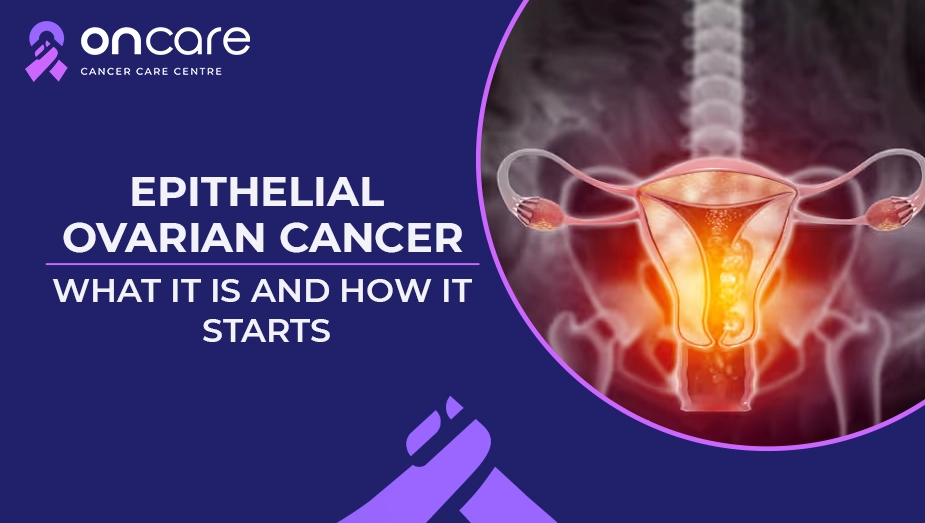
Epithelial Ovarian Cancer: What It Is and How It Starts
Learn more about epithelial ovarian cancer and its types, how epithelial cancer starts, risk factors, symptoms, diagnosis, and why early diagnosis is difficult!
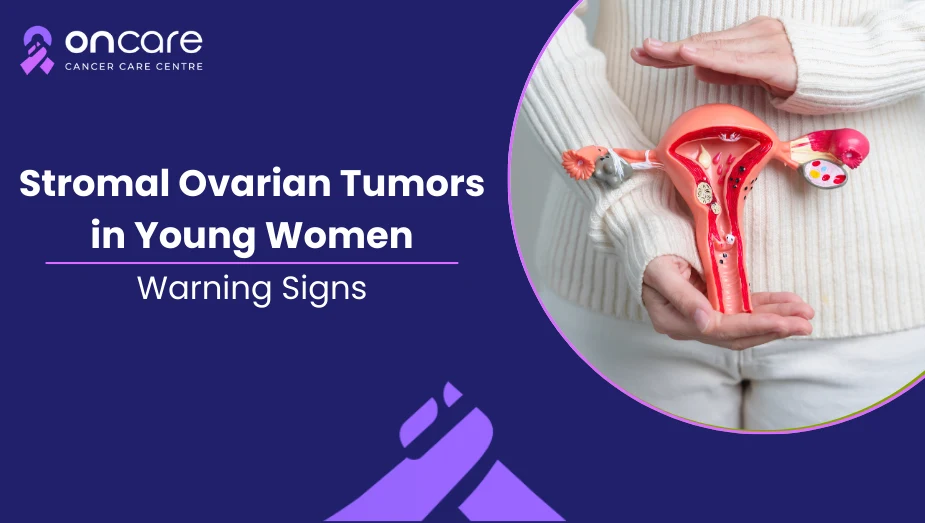
Stromal Ovarian Tumors in Young Women: Warning Signs
Discover more about stromal ovarian tumors and cancers and why young women need to be aware of key warning signs and symptoms to watch out for and when to consult a doctor!
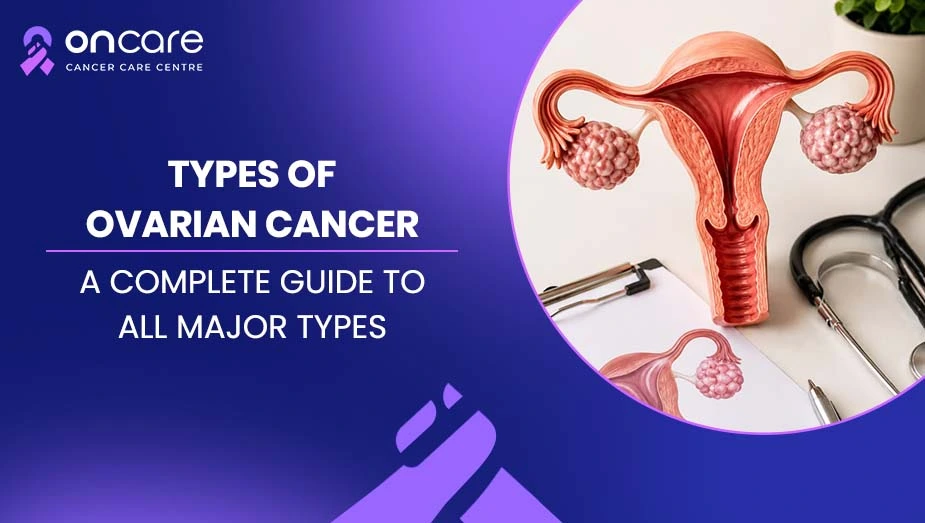
Types of Ovarian Cancer: A Complete Guide to All Major Types
Learn about different types of ovarian cancer, their symptoms, and treatment options. Get expert guidance from Oncare Cancer Hospital for early diagnosis.

World Ovarian Cancer Day: Speaking Up for Women’s Health
Discover more about the symptoms of ovarian cancer on World Ovarian Cancer Day, causes and risk factors, and diagnosis and treatment options for this cancer!