Table of Contents
Types of Ovarian Cancer: A Complete Guide to All Major Types

By Dr. Gajendra Kumar Himanshu


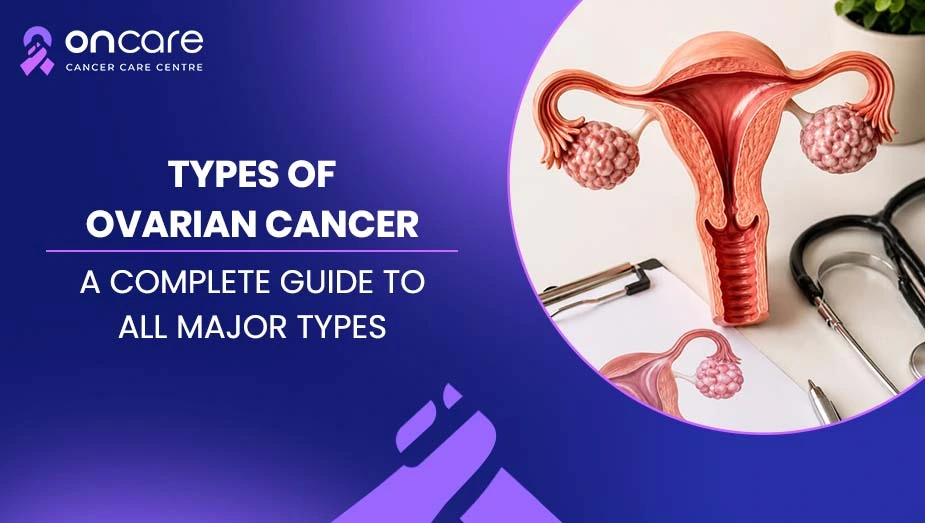
People sometimes call ovarian cancer a "silent disease" since its early signs might be subtle and easy to miss. But a lot of folks don't know that ovarian cancer isn't simply one disease. There are different kinds, and each one acts differently, grows at a different rate, and needs a particular kind of treatment.
Knowing what kinds of ovarian cancer there are might help patients and their families make better choices about diagnosis and treatment.
The National Cancer Institute says that ovarian cancer is grouped by the type of cells where it starts.
What is cancer of the ovaries?
The ovaries are where ovarian cancer starts. They are part of the female reproductive system. These organs make eggs and hormones like progesterone and estrogen.
Cancer happens when cells that shouldn't grow out of control do so and create a tumor. It can spread to surrounding organs and other regions of the body if it isn't treated right away.
The World Health Organization says that finding diseases early is very important for improving survival rates.
The Most Common Types of Ovarian Cancer
Ovarian cancer is mainly divided into three major types:
1. Epithelial Ovarian Cancer (Most Common)
This is the most frequent form, making up around 85–90% of all ovarian malignancies. It begins in the cells that cover the outside of the ovary.
There are other sorts, such as:
- Serous carcinoma (the most prevalent type)
- Carcinoma with mucin
- Endometrioid carcinoma
- Carcinoma of clear cells
Important parts:
- Most of the time, it happens to elderly women.
- Frequently identified at an advanced stage
- Can spread quickly if not addressed
2. Tumors of Germ Cells
These tumors start in the cells that make eggs.
Important parts:
- More prevalent in girls and women under 30
- Often found early
- Usually easy to treat
There are other sorts, such as:
- Dysgerminoma
- Yolk sac tumor
- Teratoma
3. Stromal Tumors
These begin in the connective tissue cells that make hormones.
Main parts:
- Not very common compared to other sorts
- May produce hormones, which might cause early signs
- Frequently diagnosed before epithelial malignancies
There are other sorts, such as:
- Tumors of granulosa cells
- Sertoli-Leydig cell cancers
Uncommon Forms of Ovarian Cancer
Some less common varieties are:
- Carcinoma of small cells
- Ovarian sarcoma
- Borderline tumors (low risk of spreading)
These are uncommon but can necessitate expert intervention.
Comparison of Ovarian Cancer Types
Type | Origin | Common Age Group | Growth Speed | Results of Treatment |
|---|---|---|---|---|
Epithelial | The outside of the ovary | Older women | Faster | It depends on the stage |
Cell of Germ | Cells that make eggs | Young ladies | Slower | A lot of the time good |
Stromal | Tissue that makes hormones | Moderate middle age | Moderate | Often good |
Symptoms May Differ by Type
Distinct kinds of ovarian cancer may have distinct symptoms; some frequent ones are:
- Bloating in the stomach
- Pain in the pelvis
- Getting full soon
- Going to the bathroom a lot
The NHS says that you should see a doctor if your symptoms don't go away.
What Makes Ovarian Cancer Happen?
There is not always an obvious reason; however, some things that make you more likely to get it are:
- History of cancer in the family
- Changes in genes (BRCA1, BRCA2)
- Age (risk increases post-menopause)
- Hormonal factors
How Do Doctors Find Ovarian Cancer?
Doctors might use:
- Ultrasound
- Tests on blood (CA-125)
- CT scan and biopsy
Early diagnosis makes treatment more likely to work.
Why does it matter to know the type
Different types of ovarian cancer respond to treatment in different ways.
- Chemotherapy and surgery may be needed for epithelial malignancies.
- Germ cell cancers frequently have favorable responses to treatment.
- Hormone therapy may be part of the treatment for stromal tumors.
Knowing the type helps doctors figure out the best way to treat it.
Is it possible to stop ovarian cancer?
There is no sure way to stop ovarian cancer, but you can lower your risk by:
- Regular checkups for health
- Genetic counseling if you are at risk
- Keeping a healthy way of life
Disclaimer for Medical
This post is simply meant to give you information and should not be taken as medical advice. Always see a trained healthcare expert for diagnosis and treatment.
Consult Today
Ovarian cancer is not just one illness; it is a set of distinct malignancies that each have their own traits. It is important to know what kind of ovarian cancer you have so that you can get the right diagnosis and treatment.
Being aware early, going to the doctor often, and getting care when you need it can make a great impact. Don't overlook symptoms that don't go away. See a doctor as soon as you can.
You can look into Oncare Cancer Hospital and other recognized cancer care institutions for diagnosis and treatment.
Why Oncare: Listen to Our Patients





Frequently Asked Questions
The most prevalent kind is epithelial ovarian cancer.
Germ cell tumors are usually easy to cure, especially if they are found early.
Yes, especially malignancies that come from germ cells.
Because the symptoms are typically minor and like those of other diseases.
Written and Verified by:

Dr. Gajendra Kumar Himanshu Exp: 10 Yr
Medical Officer
Book an Appointment
Related Blogs
Stage 1 Ovarian Cancer: Early Detection Saves Lives
Learn more about stage 1 ovarian cancer and why early detection matters, early signs and symptoms to watch out for, and risk factors, diagnosis, and treatments!
Epithelial Ovarian Cancer: What It Is and How It Starts
Learn more about epithelial ovarian cancer and its types, how epithelial cancer starts, risk factors, symptoms, diagnosis, and why early diagnosis is difficult!
Stromal Ovarian Tumors in Young Women: Warning Signs
Discover more about stromal ovarian tumors and cancers and why young women need to be aware of key warning signs and symptoms to watch out for and when to consult a doctor!
How Stage 3 Ovarian Cancer Spreads: Key Facts You Should Know
Discover more about stage 3 ovarian cancer and how this cancer spreads in stage 3, and its symptoms, diagnosis, treatments, prognosis and importance of supportive care!