
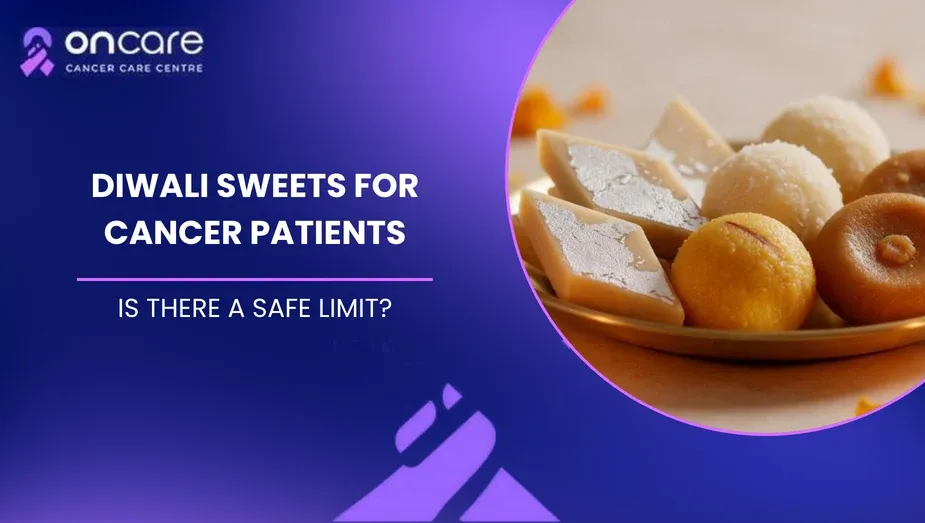
Most cancer patients can enjoy Diwali sweets in small portions. Extra care is needed for those with diabetes or high blood sugar, nausea, mouth sores or low immunity. However, in case of lighter mithais for cancer patients, the choice of sweet, fresh desserts like Rasgulla and Sandesh can be made in smaller quantities. But their acceptance will depend on digestion, blood glucose levels, side effects of treatment, and restrictions on diet.
Even though being diagnosed with cancer does not mean that a person has to stop eating sweet food items, there is no denying the fact that every patient’s nutritional requirement differs depending on his/her treatment. While some people require extra calories and protein to boost their energy during treatment, others suffer from high sugar levels, nausea, mouth ulcers, or digestive problems.
Thus, the choice of mithai should depend on the ingredients used, mode of preparation, freshness, and health needs of the individual concerned. A freshly made dessert, made using pasteurized milk, might be good for one individual, while the same could be quite problematic for another, who is suffering from difficulty in swallowing and nausea.
In this blog we see how certain factors help determine the suitability of Diwali sweets for cancer patients, portion control issues, traditional sweets that are easy to handle, and food safety considerations.
Are Festive Sweets Allowed for Patients Undergoing Cancer Treatment?
Yes, cancer patients can consume sweets during Diwali if their symptoms of disease and dietary needs permit them to do so. There is no medical rule that all cancer patients must avoid sugar or Indian sweets.
The common myth is that consuming sweets promotes the growth of cancer cells. While it is true that cancer cells consume glucose for survival, it is important to know that healthy cells also require glucose. According to the National Cancer Institute, there is no evidence that eating sugar will make your cancer grow faster.
However, this does not mean that an unlimited amount of mithai is suitable for everyone. In the majority of cases, Indian sweets may contain an extra amount of sugar as well as fats and calories. This can lead to the difficulty in managing patients’ blood glucose levels and getting balanced nutrition. It is necessary for the patients to consider individual cases:
People with a stable weight: Can usually have some sweets as part of their normal diet.
Individuals who lose weight: The patients’ dietician can suggest to consume high-calorie food.
Diabetic people: They might have to consider the carbohydrates and sugar present in mithai in their meal plans.
People suffering from digestive issues: Heavy preparations of this sweet dish may cause discomfort due to nausea, bloating, and/or diarrhea in some people.
The oncologist or dietician can assist in identifying whether there are any restrictions. People must not adopt food restrictions based on general guidelines available online.
How Much Mithai Can Cancer Patients Eat Without Overdoing Sugar?
There is no scientific evidence on the quantity of mithai that one should eat on a daily basis in all patients suffering from cancer. The requirement depends on total energy requirement, glucose levels in the blood, and side effects of treatment.
For example, in the case of individuals with normal appetite and blood sugar levels, they could eat a little mithai like kaju katli. But in the case of people who have diabetes, or high blood sugar because of steroids, they would have a different requirement than the rest. Similarly, for individuals who have recently lost some body weight, there could be a difference in their requirement compared to the rest.
Below are some simple guidelines for controlling the serving size during Diwali festivities:
Start with a little amount: Instead of consuming multiple amounts at one time, start with a smaller amount and observe the reaction of the body.
Take the whole meal into account: Mithai needs to be part of the eating plan of the patient and not a replacement for a usual meal.
Find out the carbohydrate amounts: Some packaged mithais give nutrition labels which help patients suffering from diabetes know what they have consumed.
Do not nibble all day long: Consuming sweets on and off the day increases the amount of sugar consumed without any nutrient diversification.
Obey professional advice: Patients with diabetes, loss or gain of appetite, and any other conditions need to consult the dietitian about portion size.
It is equally critical to realize that a sweet does not have to be entirely eliminated just because it has sugar in it.
Traditional Diwali Sweets and What Patients Should Know Before Eating Them
Indian Mithai comes in various varieties, and the ingredients in each can play a role in determining how well a person will tolerate the mithai. Mithais that contain nuts and ghee on the one hand and mithais that use milk powder or paneer as their main ingredients on the other hand are some of the ingredients in the Indian sweets. The table below explains the ingredients contained in seven common mithais and things the patients should look out for:
Diwali sweet | Common ingredients | What patients should consider |
|---|---|---|
Kaju Katli | Cashews, sugar and sometimes ghee | Contains nuts and added sugar; consider allergies and blood glucose levels. |
Besan Ladoo | Gram flour, ghee, sugar and nuts | Provides energy but may feel heavy because of its fat content. |
Coconut Ladoo | Coconut, sugar and milk or condensed milk | Check freshness and dairy ingredients; rich preparations may cause discomfort. |
Sandesh | Chhena, sugar and flavouring | Choose a freshly prepared version made with pasteurised milk. |
Peda | Khoya, sugar, cardamom and sometimes nuts | Milk-based and often rich; check preparation and storage conditions. |
Rasgulla | Chhena, sugar syrup and water | Soft texture may be easier to chew, but syrup contributes added sugar. |
Moong Dal Halwa | Moong dal, ghee, sugar and milk | High in calories and fat; a large serving may feel heavy. |
Which Ingredients in Diwali Mithai May Cause Problems During Treatment?
The ingredients in traditional sweets include some that need special consideration during treatment for cancer. This does not mean that the ingredients will make cancer worse but may influence blood glucose levels, digestive processes, allergic reactions and the safety of food items.
Sugar: Sugar is an ingredient in most traditional mithais. Regularly eating large quantities can cause problems with blood glucose regulation, especially if the patient already suffers from diabetes or hyperglycaemia as a result of treatment. The quantity needs to be taken into account when calculating all carbohydrate consumption.
Ghee and rich dairy products: These ingredients include khoya, cream, condensed milk and ghee that provide sweets with their typical taste and texture. However, rich mithais may seem heavy and unpleasant to people who suffer from nausea, indigestion and early satiety. Lactose-intolerant people may have such symptoms as bloating and diarrhoea.
Nuts and dried fruits: Cashew, almonds, pistachio, and raisins are usually included in the list of ingredients in festival desserts. Nuts give energy and nutrition, but patients with a nut allergy should avoid them; also, they can be hard to chew with mouth ulcers or dysphagia.
Coconut and other fat-rich ingredients: Desserts made of coconut are rich in fats. However, these types of desserts might not suit some patients due to nausea and loose stool conditions.
Unknown ingredients: Sweets bought from an untrustworthy source might have ingredients whose composition is unclear to the consumer or have been manufactured in non-hygienic conditions. People with weak immunity should try to take care of themselves when dealing with sweets.
Family members should not necessarily think that just because a sweet is homemade, it is safe for consumption or that all shop-bought sweets are bad.
Why Can Chemotherapy Change the Way Cancer Patients Taste Sweets?
Chemotherapy may affect the mouth and digestive system, leading to alterations in taste, smell, and appetite. Moreover, some medications may change the brain and taste receptors’ reaction to the food we eat, causing a dessert that used to be delicious to appear too sweet, bitter, or strange to the patient.
Some patients complain about a metallic or chemical flavour in the mouth, while other patients may describe their food as being too bland or even cause nausea by the smell of cooked food. These factors will affect their desire to consume any Diwali dessert.
However, the reaction is individual for each patient. Some common problems experienced during treatment include:
Perception of high sweetness: Certain food products could be excessively sweet for consumption.
Metallic or bitter taste: An unpleasant taste sensation is likely to reduce pleasure while consuming desserts and other dishes.
Nausea and vomiting: The odour of food, heavy composition, and large serving size could trigger the condition.
Dry mouth: Lack of saliva could make it tough to consume thick food items.
Sores in the mouth: Any painful part inside the mouth makes it difficult to consume sticky and spicy food items.
American Cancer Society states that cancer and its treatments may affect one’s sense of taste and smell causing aversion towards certain foods and reduction in food intake.
Homemade or Shop-Bought Mithai: What Should Cancer Patients Choose?
Home-made and shop-bought desserts are equally good options as long as they have been produced and stored correctly. It is not the place from where the mithai comes from that matters, but rather its ingredients and whether the food has been kept hygienic.
Home-made sweets give people an option to choose the ingredients and even to regulate the level of sweetness, and the amount of the dessert will be less as well. But dirty hands, utensils, spoiled milk, or lack of refrigeration may make the home-made dessert dangerous.
The commercial mithais may come with packages that give information regarding their preparation. Loose sweets kept without proper coverings and without appropriate temperatures may pose problems with respect to food safety. Patients with weak immunity must be careful about such sweets which may have been exposed to dust.
Some tips for families include:
Go for pasteurized dairy items: Consume milk and its products prepared from pasteurized milk. Do not consume raw or unpasteurized milk products.
Keep the kitchen clean: Before preparing desserts, wash your hands, utensils, working area and packaging.
Purchase fresh products: Buy sweets from a dependable source who follows food preparation norms.
Inspect packaging: When you buy packaged mithai, ensure to check the manufacturing date, expiration date, ingredients used and storage instructions.
Store perishable sweets: Those sweets made with milk and other such products requiring refrigeration should not be kept at room temperature.
Avoid cross contamination: Ready-to-eat mithai should be kept separate from raw foods, unclean utensils and contaminated surfaces.
Serving clean food: Use a spoon for serving sweets and do not allow more people to use the same utensil.
Food safety becomes even more important when the treatment for cancer leads to low levels of white blood cells, which are used by the body to fight off infections. There is an increased chance of getting sick from food during times when there is a decreased immune system. The American Cancer Society has some recommendations about food safety.
Not all patients require the same level of dietary restrictions. Those patients whose neutrophil levels are low must consult their oncology department about any further measures that must be taken.
During Which Stages of Cancer Treatment Can Eating Sweets Become Difficult?
Although many individuals are capable of consuming sweets in their diets, there are a number of health-related reasons that certain types of sweets might be inappropriate at some point during their medical treatment. The following list might help you identify the mentioned situations and prevent yourself from discomfort.
Uncontrolled blood glucose: Some medications used in cancer treatment, infections, lack of physical activity and even some other medications, including corticosteroids, might influence blood sugar. Patients suffering from hyperglycaemia should reduce consumption of sweet foods and comply with their diabetes control plan.
Nausea and vomiting: Heavy foods, large portions and strong smells of any foods can make these symptoms even worse. People experiencing such symptoms and unable to retain fluids and food should consult their doctors and not solve their problems by diet alone.
Oral ulcers and difficulties in swallowing: Hard and crunchy sweets might cause irritation of the tender area or be difficult to swallow. In case the symptoms persist, one should consult a physician, as soft food may not help in this situation.
Loose stools or intestinal distress: Some patients have these symptoms during their therapy. Sweets with high fat content and dairy desserts might provoke the symptom in those people who have sensitivity to such foods.
Low immunity: A low count of neutrophils does not imply that one should avoid eating sweets completely. Sweets that are made using un-pasteurized items should be avoided, along with milk or items stored in dangerous conditions. Food safety guidelines for patients issued by the oncology department should be followed.
Appetite loss and changes in body weight: Where a patient suffers from significant losses of body weight or is unable to eat enough due to lack of appetite, avoiding high-calorie foods will further aggravate the situation. A dietician can help one to determine whether or not some dessert would be possible.
The treatment team should be contacted when the symptoms of vomiting, diarrhea, sore mouth, and difficulty swallowing make it impossible for the patient to eat or drink enough.
When Should Cancer Patients Consult a Doctor About Dietary Concerns?
If a cancer patient finds that he or she experiences problems with consuming sweets and other food while undergoing treatment, then it is advisable to consult an oncologist or a registered dietitian. Some specific symptoms would suggest that changes should be made to your diet or treatment. Contact the treatment team if you find yourself:
- Having persistent nausea and vomiting that prevents you from eating and drinking.
- Experiencing frequent diarrhea, constipation or stomach pain after meals.
- Developing mouth ulcers and difficulty swallowing.
- Losing weight without reason or experiencing reduced appetite.
- Having high blood sugar levels, especially after meals.
- Having fever, chills or any other symptoms of infection while having low immune system function.
A cancer patient receiving chemotherapy should report to his or her oncology team immediately in case of developing a fever according to the body temperature threshold prescribed by your treatment center.
Consult Today
Cancer treatments can also impact how you feel about food, taste, and what your body can tolerate when eating. If you experience nausea, difficulty eating, unexpected weight loss or changes in blood sugar levels, seek advice from your oncologist or a registered dietitian. It will be helpful to get professional recommendations on proper food selection and nutrition that suits you.
At Oncare Cancer Hospital, patients have the ability to receive professional cancer care and consult oncologists who have experience to help them understand what is needed from them and how to deal with their problems.
Disclaimer
This article should serve as an educational resource only and does not replace medical or dietary advice from your doctor. The nutritional needs of each cancer patient are unique and can vary depending on many factors such as the type of cancer, treatment plan and individual’s medical history.
Frequently Asked Questions
Does eating sugar make cancer grow faster?
Sugar promotes cancer growth is a myth. Glucose is used by cancer cells for energy purposes, and this is the case for normal cells too. One needs to refrain from imposing strict dietary limitations on themselves and consult an expert regarding nutrition.
Are home-cooked sweets better than commercially prepared mithai?
While homemade sweets give people control over their ingredients and methods of cooking, commercial sweets may offer proper packaging and storage details. Both alternatives are fine if hygiene and freshness requirements are met.
What sweets should one avoid during chemotherapy?
There is no comprehensive list of sweets that patients have to avoid during their chemotherapy. People might have to limit their consumption of products containing allergens, raw milk, improper ingredients or texture causing difficulties in swallowing.