Table of Contents
Chemo Port (Port-a-Cath): What to Expect and How to Care for It at Home

By Dr. Gajendra Kumar Himanshu


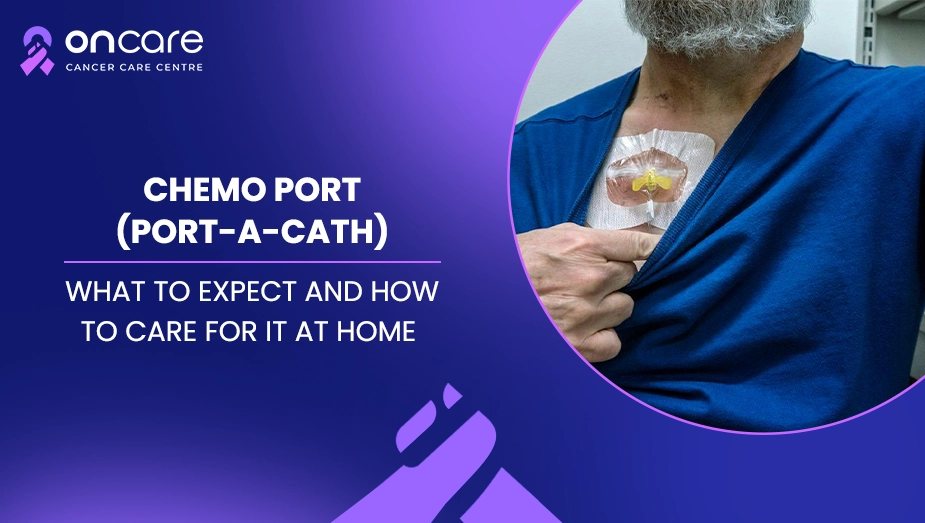
A chemo port (also called a Port-a-Cath) is a tiny device that is implanted under the skin to make it easier for doctors and nurses to access a vein for chemotherapy, blood tests, fluids, and other treatments. Many cancer patients have a chemo port placed because it can eliminate the need for repeated needle sticks and aid in making therapy more tolerable over time. A port can seem strange at first, but most people quickly get used to it and go about their typical daily activities.
Knowing what to expect after installation, how a chemo port works, and how to care for it at home can help patients and families feel more confident during treatment. The optimum care approach always depends on the individual’s risk, family history, findings of genetic testing, overall health, and the doctor’s advice.
In this blog, we’ll talk about what a chemo port is, how it’s used during treatment, what recovery might look like, and easy methods you can use to care for it securely at home.
What is a Chemo Port? What is it Used For?
A chemo port is a tiny device that is implanted under the skin, commonly in the chest area. It is connected to a thin tube (catheter) that is put into a big vein. A port might be used by healthcare teams to provide:
- Chemotherapy treatments
- Blood tests
- Intravenous drugs
- Nutritional assistance and fluids
- Other long-term therapies
The port can stay in one place during treatment, which can allow repeated access to the veins that is easier and more comfortable.
What to Expect Following Port Placement
Most can go home the same day or shortly after the treatment. It is common to experience:
- Minor tenderness surrounding the port location
- Mild swelling
- Bruising around the incision
- Some little pain when the arm or shoulder is moved
These symptoms tend to improve slowly as the area heals.
How Long Does Healing Normally Take?
Recovery is different for everyone. Most people start to feel better within the first few days to a few weeks. During this period, it is crucial to follow all directions from your health care provider.
How the Port Is Used in Treatment
If therapy is needed, a professionally trained health practitioner will insert a needle through the skin and into the port. The port can be used for:
- Chemotherapy administration
- Blood sample collection
- Administering drugs
- Fluid therapy
Many patients find this more convenient than repeatedly poking needles into veins in their arms.
Living With a Chemo Port: Daily Life
Most people can get back to many of their normal activities after recovery.
Things You Might Still Be Able to Do
Depending on your doctor’s instructions, while you heal, you may be able to:
- Take a walk often
- Light housework
- Return to work
- Travel
- Engage in light exercise
Make sure to talk to your health care professional about particular activity suggestions.
Activities That May Require Extra Care
Your healthcare staff may suggest you be careful with:
- Heavy lifting
- Sports with contact
- Things that might hurt the chest area
- Sudden vigorous movements in early recovery
Recommendations will rely on your general health and your plan for treatment.
A Practical Guide to Home Care for Chemo Ports
Home Care Advice | Why It’s Important |
|---|---|
Attend your follow-up appointments | Healthcare teams can check the port |
Look for changes to the site | Helps find problems early |
Follow the cleaning directions | Aids in healing properly |
Report any unexpected symptoms | Enables rapid medical evaluation |
Follow the activity advice | Helps protect the port zone |
Signs That You Should Tell Your Doctor
Most people do well with a chemo port; however, there are some symptoms to discuss with your healthcare team. If you see something, call your healthcare team:
- Redness at the site of the port
- Increasing swelling
- Fever
- Incision and drainage
- Increasing pain
- Problem with the port
- Unusual warmth in the area
Early communication allows healthcare staff to immediately assess any problems.
Preventing Infection and Other Issues
Good hygiene and follow-up care are necessary. Helpful behaviors include:
- Keep the place clean
- Dressing as instructed when appropriate
- Participate in regular port maintenance visits
- Prompt reporting of symptoms
- Follow the guidance advised by your healthcare provider
If a chemo port is not in frequent use, it normally requires routine maintenance.
Also, Part of Recovery Is Emotional Adjustment
Some patients may have mixed feelings about having a chemo port.
You might feel:
- Relieved that therapy may be easier to access
- Concerned about the process
- Unclear how the port will affect daily life
- Worried about impending treatments
These feelings are natural and understandable.
Support may be provided by:
- Relatives
- Friends
- Cancer support organizations
- Therapists
- Medical caregivers
Sometimes just discussing concerns can make the process seem more bearable.
Explore Further With Trusted Sources
Trusted information can assist patients and families in better comprehending cancer care and treatment equipment.
For evidence-based information about cancer therapy and supportive care and reliable educational resources for patients and caregivers, readers can visit the National Library of Medicine.
Living Confidently With a Chemo Port
Many people live peacefully with a chemo port during their cancer treatment. After the first healing time, the port is generally a normal element of care.
Routine monitoring, good home care, and contact with healthcare experts can help patients feel more at ease and confident during treatment. Every individual's experience is different, and care choices should always be made based on individual risk factors, family history, genetic testing results, overall health, and doctor's advice.
Consult Today
A chemo port, or Port-a-Cath, can make cancer treatment easier by providing a consistent access point for chemotherapy, medicines, fluids, and blood tests. It can take some time to get used to, but many patients find that a port simplifies treatment and reduces recurrent needle sticks. Adhering to home care instructions, attending follow-up visits, and reporting any unexpected symptoms may assist in ensuring safe and comfortable use of the port.
Treatment and care decisions should always be based on the individual’s risk, family history, results of genetic testing, general health and the recommendations of the doctor. Oncare Cancer Hospital is a name you can trust for expert guidance, comprehensive cancer care, and compassionate support through diagnosis, treatment, recovery, and survivorship.





Frequently Asked Questions
A chemo port is a little device that is inserted beneath the skin, allowing healthcare providers to administer treatments and draw blood more readily.
A chemo port can remain in place for months or even several years, depending on your treatment needs. It is usually removed once treatment is completed and the port is no longer needed.
Many people can shower after healing, but you should always follow the directions from your healthcare practitioner.
Call your doctor if you detect redness, swelling, fever, discharge, increasing pain, or any odd changes around the port site.
Written and Verified by:
Dr. Gajendra Kumar Himanshu Exp: 10 Yr
Medical Officer
Book an Appointment
Related Blogs

Probiotics and Gut Health for Cancer Patients on Chemotherapy
Learn how probiotics may support gut health during Chemotherapy, their potential benefits, safety considerations, and when Cancer patients should use them.

Drugs Used in Breast Cancer: Hormone Therapy, Chemo and Targeted Medicines
How hormone therapy, chemotherapy and targeted therapy work in breast cancer treatment, when each may be prescribed, possible side effects, and how doctors decide which approach is right for a patient.
Chemotherapy vs Immunotherapy vs Radiation Therapy: Understanding the Differences
Compare chemotherapy, immunotherapy, and radiation therapy, including benefits, side effects, and treatment options at Oncare Hospital with expert cancer care.
Cooking for a Loved One on Chemo: Smell-Friendly and Easy-on-Stomach Recipes
Discover smell-friendly and easy-on-stomach recipes for chemotherapy patients with gentle nutrition tips and recovery support from Oncare Cancer Hospital.