Table of Contents
Breast Cancer Diagnosis: Early Tests, Results, and Next Steps

By Dr. Gajendra Kumar Himanshu


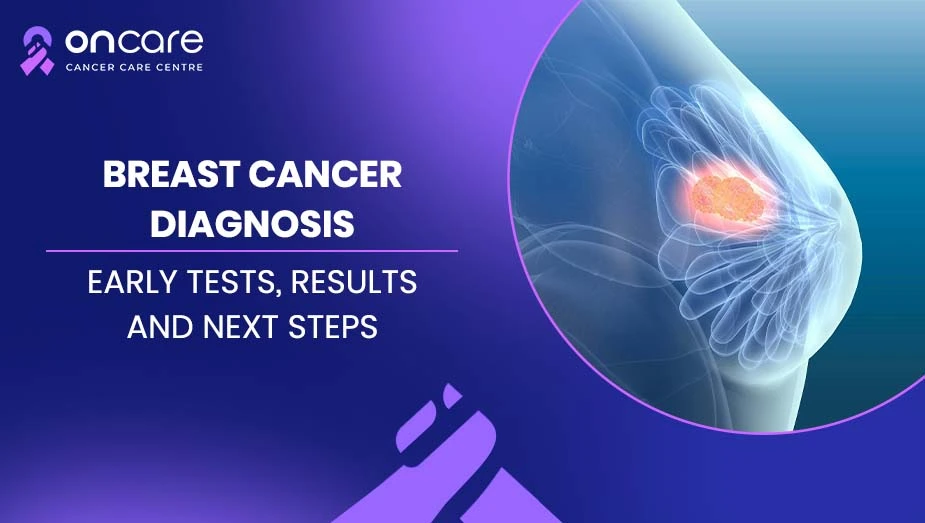
A little bump. A shift in the contour of the breasts. A little pain that doesn't feel right.
A lot of women disregard these early signals, expecting they will go away. But early detection can make a big difference in saving lives when it comes to breast cancer.
Breast cancer is one of the most common types of cancer in women, especially in India. The good news is that if the disease is caught early, the chances of treatment working are substantially better. The National Cancer Institute says that breast cancer that is found early is easier to treat and has better outcomes.
Let's learn how doctors figure out if someone has breast cancer, what tests they do, and what happens next.
What is breast cancer?
Cells in the breast proliferate out of control, which leads to breast cancer. These cells could develop a mass (tumor) or move to surrounding tissues.
It can grow in different areas of the breast, such as:
- Ductal carcinoma in milk ducts
- Lobules (lobular carcinoma)
- Tissues that are nearby
The World Health Organization (WHO) says that screening and raising awareness can help people live longer by catching diseases early.
Early Signs That Might Need Testing
Some warning indicators may show up before a diagnosis:
- A bulge in the breast or armpit
- Change in the size or shape of the breasts
- Discharge from the nipple
- Dimpling or redness of the skin
- Pain in one spot
These signs don't always mean you have cancer, but you should never ignore them.
Tests for breast cancer that are done early
1. Clinical Breast Exam (CBE)
A doctor looks for lumps or other strange changes in the breast and underarm area.
If you discover symptoms, this is usually the first thing you do.
2. Mammograms
A mammogram is an X-ray of the breast that can find cancers that you can't feel.
The CDC says that mammography is one of the best ways to find breast cancer early.
3. Ultrasound of the breast
An ultrasound makes pictures of breast tissue by sending sound waves through it.
It helps doctors figure out if a mass is solid or has fluid in it.
4. MRI, or Magnetic Resonance Imaging
MRI gives clear pictures and is commonly utilized when other tests are unclear or when the patient is at significant risk.
5. Biopsy (The Most Important Test)
A biopsy is when a little piece of tissue is taken from the breast and looked at under a microscope.
This is the only test that can tell for sure if you have cancer.
The National Cancer Institute says that a biopsy is the best way to make a diagnosis.
How to Understand Test Results
It can be stressful to get test results, but knowing what they mean might help.
Good vs. Bad
- Benign: A tumor that is not malignant
- Malignant: A cancerous tumor
Stages of Cancer
If cancer is proven, doctors figure out what stage it is in:
- Stage 0–1: Early stage
- Stage 2–3: Advanced in the area
- Stage 4: It has spread to other organs.
Staging helps figure out the best way to treat someone.
Status of Hormone Receptors
Tests may see if cancer cells respond to hormones like progesterone or estrogen.
This makes it easier to pick the right remedies.
What Happens After You Get a Diagnosis?
Once breast cancer is proven, the next steps are usually
1. Planning the Treatment
Based on the following, doctors make a tailored plan:
- Stage of cancer
- Size of the tumor
- The patient's overall health
2. Common Treatment Options
- Surgery to take out the tumor in the breast
- Chemotherapy
- Radiation treatment
- Hormone treatment
The NCI treatment guide says that treatment depends on the person.
3. Help with feelings and thoughts
Getting a cancer diagnosis can be too much to handle. Family, physicians, and counselors can help a lot.
Breast Cancer in India: Why It's Important to Know
A lot of instances in India are detected late since people don't know about them and don't get tested right away.
The Indian Council of Medical Research (ICMR) says that breast cancer is one of the most common cancers in women in India.
Regular checkups and being aware of the signs of cancer can help find it earlier and improve survival rates.
When Do You Need to See a Doctor?
If you have any of the following, you should see a doctor:
- You feel a bump in your breast.
- You can see changes in the form of your breasts or skin.
- You have pain or discharge that won't go away.
Getting help early can help avoid delays in getting a diagnosis.
Can you find breast cancer early?
Yes, it is possible to find out early through:
- Self-examination regularly
- Checkups at the doctor's office
- Screening with mammograms
The CDC says that women over 40 or who are at increased risk should get screened often.
Medical Disclaimer
This post is simply meant to give you information and should not be taken as medical advice. Always see a certified healthcare provider for diagnosis and treatment.
Consult Today
A breast cancer diagnosis is a spine-chilling moment in a woman’s life. But knowing what to expect during each stage can empower you to make more informed decisions during the treatments. Early detection and timely attention can significantly impact the treatment outcomes.
Keeping an open communication with your oncologists and care teams helps you to prepare for the procedures. Know that you are not alone in this journey.
At Oncare, we offer high-quality cancer treatments, including cancer surgeries at affordable price ranges with an experienced cancer specialist consultation.
If you or any loved ones of yours are diagnosed with cancer, then visit Oncare Cancer Hospital and book an appointment with our cancer specialist today. Don’t wait for symptoms to start. Get an estimated cost of your cancer treatments today.
Expert Insights by Aman Rastogi





Frequently Asked Questions
There are two types of breast cancer include:
- Invasive (infiltrating) ductal carcinoma (IDC)
- Lobular breast cancer
- Ductal carcinoma in situ (DCIS)
There are some breast cancer subtypes, including:
- ER- Positive (ER+)
- PR- Positive (PR+)
- HR-Positive (HR+)
- HR- Negative (HR-)
- HER2- Positive (HER2+)
The common symptoms of breast cancer include:
- A change in the size, shape, or color of the breast
- A mass or lump, which can feel as small as a pea
- A thickening or lump near the breast or in the underarm that continues through the menstrual cycle.
- A change in the appearance or feel of the skin on your breast or nipple.
- Breast skin might appear dimpled, puckered, scaly, or inflamed.
- The breast or breast skin might appear red, purple, or darker than other parts of the breast.
- A marble-like hardened area under the skin
- A blood-stained or clear fluid discharge coming from the nipple.
Several studies suggest that breast cancer happens when the breast cells mutate and become cancerous cells that divide and multiply to develop tumors.
However, there are some studies that show that there are several risk factors that might increase the chances of developing breast cancer.
These include:
- Women above the age of 55 or older
- Women are highly prone to develop these types of cancer
- Family history of cancer mainly breast cancer
- Genetic mutations include BRCA1 and BRCA2 genes
- Smoking habits
- Excessive alcohol consumption
- Obesity or over weight
- Radiation exposure
- Hormone therapy
Written and Verified by:

Dr. Gajendra Kumar Himanshu Exp: 10 Yr
Medical Officer
Book an Appointment
Related Blogs
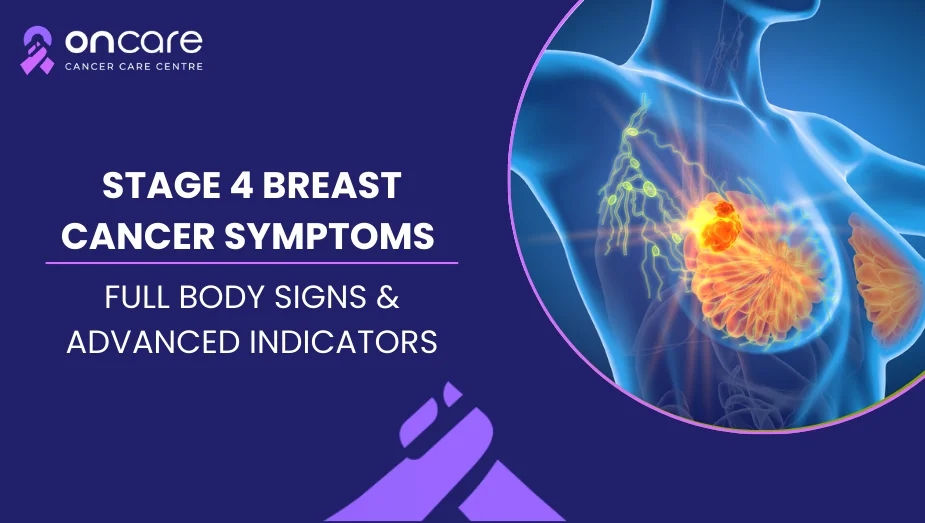
Stage 4 Breast Cancer Symptoms: Full Body Signs & Advanced Indicators
Learn the full-body symptoms of stage 4 breast cancer, including bone pain, shortness of breath, fatigue, and signs of advanced metastasis and its full-body signs!
Is a Cure Possible for Breast Cancer Metastatic to the Liver?
Breast cancer that has spread to the liver is usually not curable, but modern treatments can control the disease and help patients live longer with a good quality of life.
Is Heel Pain a Sign of Breast Cancer?
Heel pain is common and usually caused by foot problems, not breast cancer. Learn the real causes of heel pain, rare cancer links, and when to see a doctor.
Is Chemotherapy Treatment Painful for Breast Cancer?
Many people fear chemotherapy pain in breast cancer. Learn whether chemotherapy really hurts, what discomfort may occur, and how doctors manage pain during treatment.