Table of Contents
Can Air Pollution Cause Cancer? What Science Really Says

By Dr. Gajendra Kumar Himanshu


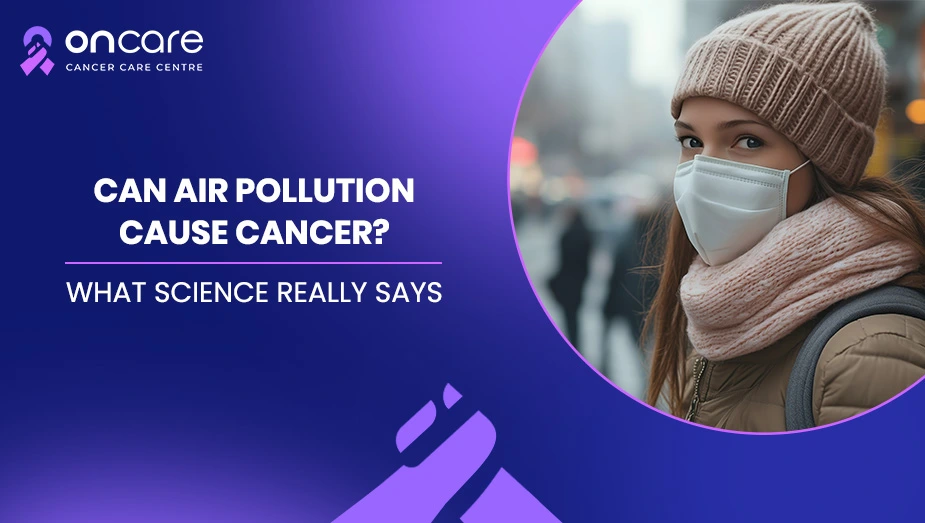
Most of us deal with air pollution every day, especially in big cities. We usually see it as smoke, dust, or the smell of anything burning. Many people know that breathing in dirty air is bad for their health, but they also wonder if it could give them cancer.
Yes, but you need to know how and why. Cancer doesn't happen all at once. It normally grows slowly, and it often does so after being around dangerous things for a long time. This blog will discuss what real research says regarding cancer and air pollution.
What Are the Parts of Air Pollution?
Air pollution is made up of harmful substances and particles in the air. Here are some of them:
- PM10 and PM2.5 are tiny bits of dust.
- Smoke from cars and factories
- Chemicals that factories use
- Nitrogen dioxide and carbon monoxide are two gases that might be bad for your health.
These pollutants are tiny enough to go into the lungs and be breathed in.
What do scientists say about air pollution and cancer?
There is a clear correlation between cancer and air pollution, according to scientists. The World Health Organization has even claimed that pollution in the air outside can cause cancer.
Long-term exposure to polluted air can increase your risk of getting certain types of cancer, including lung cancer. Studies show that there may be links between bladder cancer and several health problems.
What does air pollution do to cause cancer?
We need to look at what's going on inside the body to comprehend this.
If you breathe in a lot of dirty air:
- Your lungs get bad particles.
- They can harm cells over time.
- This injury could change the DNA.
- Cells that aren't normal can grow too big, too fast.
This process doesn't happen all at once. It builds up over time, like being around it for months or years.
Different types of cancer and pollution in the air
Cancer of the lungs
This is the cancer that is most likely to be related to it. People who don't smoke can nevertheless get lung cancer if they breathe in polluted air for a long time.
Cancer of the bladder
Some bad elements in the air can go into the blood and hurt other organs of the body, like the bladder.
Other Possible Dangers
Research is ongoing; there is evidence that air pollution may increase the likelihood of different cancer forms.
Who Is Most Likely to Be Affected?
Not everyone is affected the same way. Some groups are more likely to get hurt:
- People who live in exceedingly unclean cities
- Police officers who direct traffic, cars, and other individuals who work outside
- Kids and people over 65
- People whose immune systems aren't very strong
Things are most deadly when they are exposed to them for a long time.
A Look at How Air Pollution Can Raise Your Risk of Cancer
Health Effects | More Information |
|---|---|
Small bits of matter (PM2.5) | Very serious injury to the lungs |
Long-term exposure | More likely to get cancer |
Cities with a lot of pollution | More health problems |
Low immunity | More vulnerable to attack |
Toxins at work | Risk of damage to DNA |
Is it possible to completely stay away from danger?
It's hard to stay away from all the air pollution, especially in cities. But you can minimize your risk by doing the following:
- Wear a mask when you're in a place with a lot of pollution.
- Don't go outside while the pollution is at its highest.
- Put air cleaners inside.
- When the pollution levels are high, close your windows.
Over time, these little things could add up.
How important it is to find out early on
People don't typically think about how pollution will harm them in the long run because they can't see the effects right away. But the first step to stopping it is to know about it.
If someone has trouble breathing for a long period, a cough that won't go away, or other problems that can't be explained, they should see a doctor very soon. Knowing something early can make a big difference in the outcome.
Getting care from a professional is really important
If you think you might get sick from being around pollution for a long period, you should go to an expert.
Oncare Cancer Hospital offers cutting-edge cancer treatment, early detection, and expert advice to help patients lower their risks and get the correct care.
You can go to the National Cancer Institute for more accurate and research-based information.
Consult Today
Air pollution is terrible for both your health and the environment. There is a lot of scientific evidence that breathing in polluted air for a long time may raise the risk of getting cancer, especially lung cancer.
You can't always avoid pollution, but you can lower your risk by being aware of what's going on around you and taking steps to protect yourself.
It's crucial to know how your surroundings can affect your health in order to stay safe. Taking action early, going to the doctor often, and asking specialists for help can all make a major difference in the long term.





Frequently Asked Questions
Long-term exposure to dirty air is connected to cancer, especially lung cancer.
Air pollution can hurt people who don't smoke, as well.
By wearing masks, limiting exposure, and keeping the air inside clean.
This type is most closely associated with lung cancer.
Written and Verified by:

Dr. Gajendra Kumar Himanshu Exp: 10 Yr
Medical Officer
Book an Appointment
Related Blogs
Types of Lung Cancer: Early Warning Signs You Shouldn’t Ignore
Discover more about lung cancer and its types, early warning signs people shouldn’t ignore, who is at risk of developing this cancer, and when to consult a doctor!
Lung Cancer Supportive Therapy: How It Improves Quality of Life
Discover more about lung cancer supportive therapy and characteristics of supportive therapy for lung cancer, and how these therapies improve the quality of life!
Lung Cancer Cough: Differences Between Dry and Wet Coughs
Discover more about lung cancer cough and its differences between dry and wet coughs, and why lung cancer causes cough in patients, and when you should get concerned!
Squamous Cell Lung Carcinoma: Differences from Other Lung Cancer Types
Learn what makes squamous cell lung carcinoma different from other lung cancers. Understand symptoms, diagnosis, treatment options, and prognosis in simple terms.