Table of Contents
Which Type of Blood Cancer Is Most Dangerous? Complete Guide

By Dr. Gajendra Kumar Himanshu


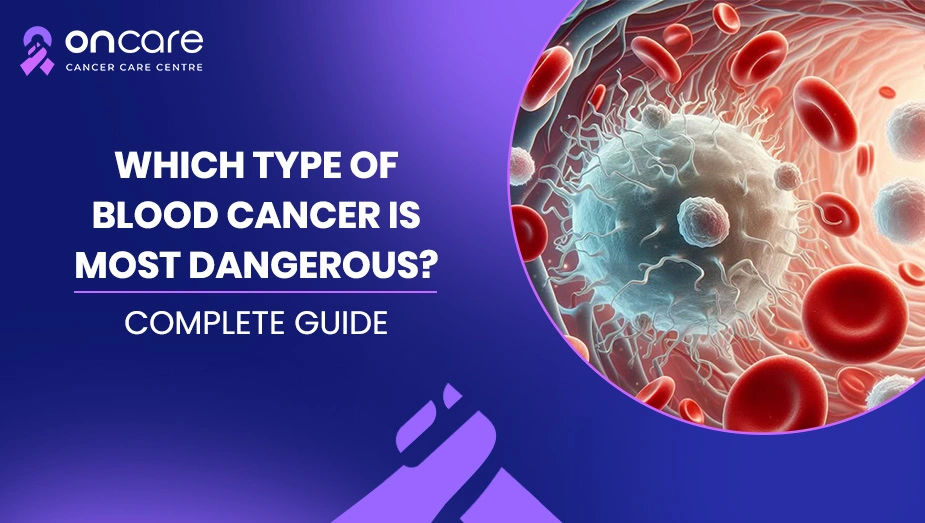
It can be unnerving to hear the word "blood cancer." A lot of folks jump to the worst possible conclusion. But it's vital to know that not all blood cancers are the same. Some grow slowly and can be treated for years, while others spread quickly and need immediate care.
The essential question is not just "Which is dangerous?" but "Which type is more aggressive, and why?"
This blog will provide you with a clear and easy explanation of the numerous kinds of blood cancer, which ones are the most deadly, and what factors really affect survival. This will help you see things as they really are instead of depending on fear or myths.
What is cancer of the blood?
Blood cancer changes how your blood cells are formed and how they work. It normally starts in the bone marrow, which makes blood cells.
The three basic kinds of blood cancer are
1. Blood cancer
This has an effect on white blood cells and usually begins in the bone marrow.
2. Lymphoma
This has an effect on the lymphatic system, which is part of your immune system.
3. Myeloma
This has an effect on plasma cells, which assist your body in fighting against infections.
Each of these cancers can behave very differently.
What is the most dangerous type of blood cancer?
There is no one answer; acute leukemias, especially Acute Myeloid Leukemia (AML), are commonly thought to be the most hazardous.
Why Acute Leukemia Is So Dangerous
- It expands quickly.
- It spreads fast via the blood and bone marrow.
- It needs to be treated right away.
- If you don't get treatment, it might become life-threatening in weeks or months.
Difference Between Acute and Chronic
- Acute malignancies are fast-growing and aggressive.
- Chronic malignancies grow slowly and may not need treatment right away.
So, the name of the cancer isn't the only thing that matters when it comes to danger.
A description of the several kinds of blood cancer
Types of leukemia
1. Acute Myeloid Leukemia (AML)
- One of the most dangerous types of blood cancer
- Adults often have this.
- Needs chemotherapy right away
2. Acute Lymphoblastic Leukemia (ALL)
- A lot of kids have it.
- Grows quickly, but can usually be treated with early treatment
3. Chronic Myeloid Leukemia (CML)
- Growing slowly
- Medications can keep it under control for years.
4. Chronic Lymphocytic Leukemia (CLL)
- Growing very slowly
- For years, a lot of people live typical lives.
Among these, AML is thought to be one of the most hazardous since it moves so quickly.
Types of Lymphoma
1. Hodgkin's Lymphoma
- Usually able to be treated
- If found early, the chances of survival are high.
2. Non-Hodgkin's Lymphoma (NHL)
- A lot of different sorts
- Some are slow, while others are highly aggressive.
Aggressive NHL varieties, such as diffuse large B-cell lymphoma, can be hazardous, but contemporary treatments can still help.
Myeloma with several cells
- Affects plasma cells
- Not usually as fast as acute leukemia
- Long-term illness that can get worse over time
People think it's serious, but with long-term treatment, it's usually controllable.
What Makes Blood Cancer So Dangerous?
It's not only the kind. There are a lot of things that affect how dangerous it is.
1. How fast does it grow
Cancers that grow quickly are more hazardous because they spread quickly.
2. The stage at which the diagnosis was made
Finding it early greatly increases the chances of survival.
3. Health and Age
Younger, healthier people frequently do better with treatment.
4. Changes in Genes
Some tumors contain changes in their DNA that make them more aggressive.
5. How well the treatment works
Outcomes get better if the cancer responds well to treatment.
Signs You Shouldn't Ignore
Blood malignancies often give off warning indications. Finding out early can save lives.
Common Signs:
- Infections that happen often
- Weight loss that isn't explained
- Very tired
- Bleeding or bruising easily
- Pain in the bones or joints
- Lymph nodes that are swollen
- Sweating at night
It's crucial to see a doctor if these symptoms linger for weeks.
What You Should Know About Survival Rates
A lot of people look for survival statistics, but they don't give the whole story.
- Early diagnosis is what keeps people alive.
- In the last few years, treatment has gotten a lot better.
- A lot of people have long, healthy lives when they get better.
For instance:
- Hodgkin lymphoma → very high chance of survival
- Chronic leukemia → can be controlled for years
- Acute leukemia is dangerous but can be treated if found early.
You can get accurate and up-to-date information from reliable sources like:
These groups give out information that is based on study and is trustworthy.
Is it possible to cure blood cancer?
Yes, a lot of the time.
- Some blood cancers can be totally treated.
- Some can be controlled for a long time.
Some of the treatments are:
- Chemotherapy
- Therapy that targets
- Immunotherapy
- Transplantation of bone marrow
Every year, medical research gets more and better, and survival rates go up.
How Early Detection Can Help
One of the most important things for survival is getting a diagnosis early.
Advantages of Early Detection:
- Less harsh treatment is needed.
- More likely to succeed
- A better quality of life
Regular blood testing and health exams might help find problems early.
Consult Today
It may sound scary to have blood cancer, but knowing more about it changes everything. Acute leukemias are one of the most deadly varieties because they grow quickly, yet even these can be treated with modern medicine.
If you or someone you know has symptoms or a diagnosis, don't wait to get medical help. Picking the appropriate hospital and doctors is a big part of getting better.
Oncare Cancer Hospital is a trusted place to go for blood cancer treatment and patient care since it has sophisticated care, professional specialists, and innovative treatment options.





Frequently Asked Questions
Acute Myeloid Leukemia (AML) is often considered one of the most dangerous because it grows very fast and needs immediate treatment.
Yes, some blood cancers can be completely treated, while others can be controlled for many years with proper medical care.
Common early signs include fatigue, frequent infections, weight loss, easy bruising, and swollen lymph nodes.
Not always. Many types of blood cancer are treatable, especially when detected early and managed with the right treatment.
Written and Verified by:

Dr. Gajendra Kumar Himanshu Exp: 10 Yr
Medical Officer
Book an Appointment
Related Blogs
Most Dangerous Types of Cancer: What You Need to Know
Learn about the most dangerous types of cancer, their risks, and early warning signs. Get expert diagnosis and treatment support at Oncare Hospital for better care.
Which Type of Cancer Is Hereditary? Are You at Risk?
Discover which type of cancer is hereditary, including breast and pancreatic cancers. Learn about genetic risks and expert care at Oncare Cancer Hospital.
Types of Biopsy Used for Cancer Diagnosis
Learn about different types of biopsy used for cancer diagnosis, including needle biopsy, surgical biopsy, and liquid biopsy. Get expert care at Oncare Hospital.

What Is FOLFOX and 5-FU Infusion Protocol? Uses and Cancer Types Explained
Learn what the FOLFOX and 5-FU infusion protocols are, how they work, and its side effects, and what cancers they treat, including different types of cancers.