Table of Contents
What Level of Eosinophils Indicates Cancer and When to Worry

By Dr. Gajendra Kumar Himanshu


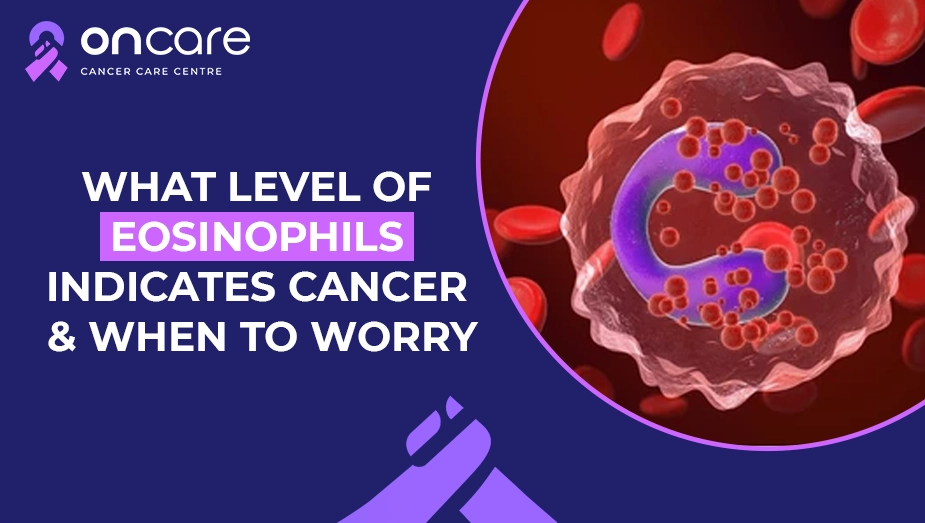
There is no single eosinophil count that confirms cancer alone. However, a count of eosinophils above 1,500 cells per microliter (µL) that persists for several weeks or months and for which there is no known cause often warrants further medical assessment. Sometimes, very high eosinophil counts over 5,000 cells/µL may be associated with blood malignancies such as leukemia, lymphoma, or other bone marrow abnormalities. Doctors examine eosinophil levels, a person's symptoms, medical history, physical exam, and other tests when evaluating the cause of a high eosinophil count.
What Is an Eosinophil?
Eosinophils are a type of white blood cell (WBC) that help guard the body against infections and are involved in allergic reactions and inflammation. They are generated in the bone marrow and generally account for about 1% to 4% of all circulating white blood cells.
When the body encounters parasites, allergies, or some illnesses, these cells are more active. When the immune system recognizes a threat, eosinophils migrate to the site of the immune response and release chemicals to help fight off the threat.
Low eosinophil levels are typical in healthy persons. When the eosinophil count is higher than usual, it is called eosinophilia. Most occurrences are caused by allergies, asthma, infections, or side effects of medications, but continued elevation may occasionally be a sign of a more serious underlying illness.
If you would like to know more about normal blood eosinophil counts from a reliable government source, you can visit the National Library of Medicine.
Normal vs High Eosinophil Levels
Doctors utilize the absolute eosinophil count (AEC) to evaluate if eosinophil levels are normal or excessive. The severity of eosinophilia is graded according to the number of eosinophils present in a microliter of blood.
Eosinophil Levels by Category
Eosinophil Category | Absolute Eosinophil Count (cells/µL) | Interpretation |
|---|---|---|
Standard | Sub 500 | Normal range |
Mild eosinophilia | 500–1,500 | Typically associated with allergies, asthma, or illnesses |
Hypereosinophilia | Over 1,500 | Needs further evaluation if persistent |
Significant Hypereosinophilia | Over 5,000 | May be linked to severe immunological, blood, or bone marrow diseases |
Usually, one abnormal blood test result is not enough to figure out the cause. Doctors will typically repeat the tests and look at the trends over time before recommending further inquiry.
What Is the Function of Eosinophils in Cancer?
Many individuals want to know if there is a precise number of eosinophils that signals cancer. In fact, no one number can diagnose cancer. The number itself is what matters most: how high it is, how long it stays high, and if there are any other symptoms or aberrant test results.
Most physicians consider eosinophil levels over 1,500 cells/µL without a known cause, such as allergy, asthma, parasite infection, autoimmune disease, or drug responses, to be alarming. If your hypereosinophilia persists, you may need more blood tests, imaging scans, or a bone marrow assessment.
Physicians may be more aggressive in their investigation for underlying hematologic diseases when eosinophil counts are greater than 5,000 cells/µL. Research has demonstrated that high eosinophil counts can be linked to blood malignancies and conditions of the bone marrow, especially in cases where it occurs alongside aberrant blood counts, swollen lymph nodes, unintentional weight loss, night sweats, or a continuous fever.
It is crucial to remember that significant eosinophilia does not always signify that malignancy is present; a large number of patients with high eosinophil counts are ultimately found to have benign disorders. Sometimes conditions that may be associated with unusually high numbers of eosinophils include:
- Leukemia
- Lymphoma
- Myeloproliferative diseases
- Certain problems of the bone marrow
- Rare solid tumors
High Eosinophil Cancers
High numbers of eosinophils are most often due to allergies, asthma, infections, and responses to medications; however, some malignancies also induce eosinophilia. This may happen if the malignancy directly involves the bone marrow or if the tumor cells release chemicals that stimulate the development of eosinophils. Cancer-induced eosinophilia is relatively rare. However, if eosinophils are consistently increased without any apparent cause, doctors may consider other causes.
Eosinophilic Leukemia
Eosinophilic leukemia is a rare kind of blood cancer in which the bone marrow makes too many aberrant eosinophils. Patients have a high eosinophil count and may have weariness, weight loss, fever, and swollen organs.
Hodgkin's Disease
Hodgkin lymphoma is among the most common malignancies associated with eosinophilia. Sometimes the lymphoma cells make molecules called cytokines. Cytokines cause the body to make more eosinophils. This leads to a high amount of eosinophils in the blood.
Chronic Lymphocytic Leukemia (CLL)
In a few patients with chronic lymphocytic leukemia (CLL), eosinophils are increased, but this is less common. When looking at CLL, doctors frequently consider eosinophil levels in the context of other blood abnormalities.
Myeloproliferative Disorders
Myeloproliferative neoplasms are illnesses of the bone marrow that sometimes result in overproduction of certain blood cells, particularly eosinophils. Persistent hypereosinophilia may occasionally provide an early clue to these diseases.
Tumor-Associated Eosinophilia
Eosinophilia may be caused by some solid tumors, such as some lung, gastrointestinal, and gynecologic tumors. This is termed tumor-associated eosinophilia. Cancer cells secrete chemicals that lead to increased production of eosinophils in the body. But this is much less prevalent than eosinophilia in allergies, infections, or inflammatory disorders.
High Eosinophils: Common Non-Cancer Causes
It can be alarming to hear that your eosinophil number is high, but it's vital to remember that cancer is not the most prevalent cause of eosinophilia. In fact, the majority of the occurrences are related to benign illnesses.
Common reasons include allergies such as hay fever, allergic rhinitis, and food allergy. Eosinophils are often increased in asthma and eczema as well. Increased eosinophils are common during parasitic infections, especially those involving the digestive system, as part of the immunological response to the parasite.
Certain treatments, such as antibiotics, anti-inflammatory drugs, and seizure medications, can also lead to eosinophilia in some persons. Autoimmune illnesses and chronic states of inflammation can also be factors sometimes.
Most people who have a mildly high eosinophil count do not have cancer. In many cases, the cause can be discovered by a comprehensive evaluation of symptoms, medical history, and additional tests.
Foods That May Decrease Eosinophil Levels
There is no specific meal that directly lowers eosinophil levels, but a healthy and balanced diet may assist in boosting the immune system and reducing inflammation in the body. This can be particularly helpful when increased eosinophils are associated with allergic or inflammatory diseases.
1. Increase Your Intake of Fruits and Vegetables
Fruits and vegetables are packed with vitamins, minerals, and antioxidants that are great for your general health. Good food additions to your everyday diet can be apples, oranges, berries, spinach, broccoli, carrots, and tomatoes.
2. Add Omega-3 Rich Foods
Omega-3 fatty acids are recognized to help with inflammation. Salmon, sardines, mackerel, walnuts, flaxseeds, and chia seeds are all foods that may assist in supporting a healthy immunological response.
3. Use Natural Anti-Inflammatory Foods
Turmeric, ginger, and garlic are some of the kitchen products that are natural anti-inflammatories. Regularly incorporating them into meals may help boost general well-being.
4. Avoid Foods That Cause Allergies
If an elevated eosinophil count is caused by food allergies, avoiding foods that trigger allergic reactions can be important. Milk, eggs, peanuts, soy, wheat, fish, and shellfish are common foods that cause allergies. Check with your doctor before you make any big changes to your diet.
5. Maintain a Healthy Diet
A well-balanced diet rich in whole grains, lean proteins, healthy fats, fruits, and vegetables can help to maintain overall health. It may also help the body's natural immunological function to stay hydrated and cut back on processed foods and sugary drinks.
Important Information
A diet can be beneficial to overall health, but it won't treat the underlying cause of elevated eosinophils on its own. A long-term high eosinophil count should be evaluated by a doctor to establish the exact source of the increased eosinophils and what to do about it.
Tests and What to Do Next When High Eosinophils Are Found
If blood tests reveal a high number of eosinophils, doctors typically do additional tests to find the cause. Often, the first step is to repeat the Complete Blood Count with differential to confirm the ongoing increase.
A peripheral blood smear can be looked at for aberrant cells. Depending on the symptoms and how many eosinophils are present, doctors may order allergy tests, tests for infections, or imaging tests, such as a CT scan.
A doctor may do a bone marrow biopsy to look at how blood cells are made and check for blood malignancies or bone marrow problems if eosinophil counts are very high and there is no clear reason.
Sometimes advanced molecular testing, including FISH (Fluorescence In Situ Hybridization) and cytogenetic testing, is used to find genetic anomalies that may be related to leukemia, lymphoma, or myeloproliferative diseases.
When to See a Doctor?
If your eosinophil count is above 1,500 cells/µL for several weeks or more, particularly if there's no evident cause like allergy or infection, you should consult a doctor. Medical assessment is also crucial if you experience unexplained weight loss, persistent fever, night sweats, swollen lymph nodes, unusual exhaustion or breathing difficulties.
“A high eosinophil count alone doesn't mean cancer,” explains Dr. S K Sahoo, Medical Oncologist, Oncare Cancer Hospital. It is the whole clinical picture that matters, including symptoms, trends in blood tests, and other investigations. “Persistent or unexplained eosinophilia should always be investigated to find the cause and start the appropriate treatment, if needed.”
Early assessment helps to discover non-cancerous and serious disorders before complications occur.
Disclaimer
This material is for informational purposes only and is not a substitute for professional medical advice, diagnosis, or treatment. There can be several reasons for the variation in eosinophil levels, and one blood test does not detect malignancy. If you are high in eosinophils or have troubling symptoms, please consult a trained health expert for appropriate examination and guidance.





Frequently Asked Questions
No. Eosinophilia is usually caused by allergies, asthma, eczema, infections, drug responses or inflammatory diseases. Cancer is considerably rarer.
No eosinophil count confirms malignancy. However, eosinophil counts persistently beyond 1,500 cells/µL without an apparent reason usually require additional workup. If levels are above 5,000 cells/µL, doctors may look for blood malignancies and bone marrow diseases.
Eosinophils at 5% are somewhat over the usual reference range of 1% to 4%. However, clinicians frequently look at the Absolute Eosinophil Count (AEC) rather than just the percentage, as it is a more precise measurement.
Allergies are one of the most common causes of high eosinophils. Eosinophils are often increased in common conditions such as allergic rhinitis, asthma, eczema, and food allergies.
Depending on the clinical circumstances, physicians may order a complete blood count (CBC) with differential, peripheral smear, screening for infection, imaging tests, a bone marrow biopsy, and molecular testing such as FISH or cytogenetic analysis.
Yes. In many cases, when the underlying cause, such as an allergy, infection, drug reaction, or another medical condition, is treated, eosinophil counts return to normal.
Written and Verified by:
Dr. Gajendra Kumar Himanshu Exp: 10 Yr
Medical Officer
Book an Appointment
Related Blogs
Is Lymphocytosis Related to Cancer? Key Facts Explained
Understand lymphocytosis, its common causes, symptoms, and when it may signal cancer. Get expert guidance and timely diagnosis support at Oncare Cancer Hospital.

Caring for Cancer Patients at Home: A Complete Guide
Learn practical tips for caring for cancer patients at home, including diet, hygiene, and emotional support. Get expert guidance from Oncare Cancer Hospital.

How to Stop Vomiting in Cancer Patients: Causes and Solutions
Learn why vomiting happens during cancer treatment, how to manage it safely, and when to seek help. Get expert, supportive care at Oncare Cancer Hospital.
Rising Cases of Stomach Cancer in Young Adults: What You Should Know
Learn why stomach cancer is rising in young adults, its early symptoms, and prevention tips. Get expert guidance from Oncare Cancer Hospital for timely care.