Table of Contents
How to Stop Vomiting in Cancer Patients: Causes and Solutions

By Dr. Gajendra Kumar Himanshu


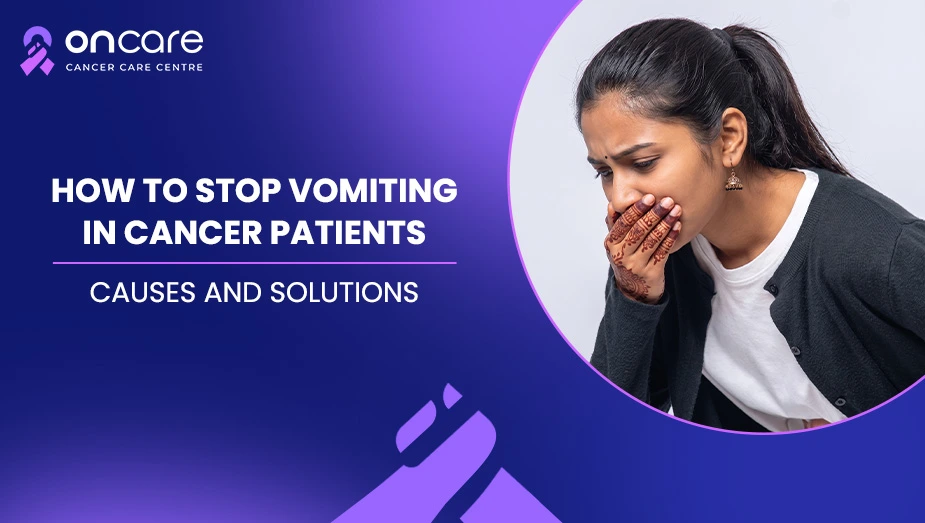
Vomiting is one of the worst and most painful symptoms that many cancer patients have to deal with while they are getting treatment. It can come on abruptly, change your appetite, make your body weaker, and make an already hard journey much tougher. It often makes both patients and caregivers ask, "How can this be controlled?"
Most of the time, vomiting in cancer patients is not a big deal. It is possible to make it less common and less severe by learning about what causes it and making some basic changes to your lifestyle, together with medical therapy.
In this blog, we'll talk about the most common reasons why cancer patients vomit, how to deal with it, and when to get medical care.
Why do people with cancer throw up?
There are several reasons why cancer patients could throw up. The cancer itself doesn't usually cause it, but treatment or other related variables typically do.
1. Chemotherapy
One of the most common reasons people feel sick and throw up is because of chemotherapy medicines. These drugs make you want to vomit by affecting your brain and digestive system.
2. Treatment with radiation
Radiation can make you feel sick and throw up, especially if it hits your stomach or brain.
3. Drugs
Some antibiotics and painkillers might make the stomach hurt and make you throw up.
4. Stress from emotions
Some people may also feel sick and throw up because of stress and anxiety.
The National Cancer Institute and other trustworthy sites can help you find out about the adverse effects of treatment.
Cancer Patients Who Vomit
Knowing what kind of vomiting you have will help you deal with it better.
Severe vomiting
Happens a few hours after treatment, especially chemotherapy.
Vomiting that doesn't happen right away
It happens a day or more after therapy.
Vomiting in Advance
Triggered by things that happened in the past, frequently before treatment starts.
How to Stop Throwing Up: Useful Tips
To deal with vomiting, you need both medical attention and daily care.
1. Medicines (Antiemetics)
Doctors commonly give patients drugs to help with nausea and vomiting.
- Follow the directions on how to take your medications.
- Even if you feel better, don't skip doses.
- Tell your doctor if the symptoms don't go away.
2. Changes to your diet
What and how you consume can have a major effect.
- Eat modest meals often.
- Pick foods that are light and easy to digest.
- Stay away from foods that are spicy, greasy, or smell bad.
- Take your time eating and chew well.
3. Drink plenty of water
When you throw up, you can become dehydrated.
- Drink water all day long.
- Drink clear drinks like coconut water or soup.
- Don't drink drinks that are too hot or too cold.
4. Rest and Positioning
- After eating, take a break, but don't lie down right away.
- Eat while sitting up.
- Keep your head up.
5. Home Remedies
Some easy things you can do might assist with nausea.
- Tea with ginger
- Water with lemon
- Breathing exercises that go deep
Quick Care Guide
Area | What You Should Do | Things to Stay Away From |
|---|---|---|
Food | Meals that are small and light | Food that is heavy and greasy |
Beverages | Drink plenty of water | Drinks that are sweet or effervescent |
Action | Moving light | Too much work |
Take a break | Getting enough sleep | Lying down flat after eating |
Medication | Do what your doctor says | Not taking dosages |
When Should You Go to the Doctor?
Some instances need emergency medical intervention, although occasional vomiting can be dealt with.
Signs of Danger
Do not overlook these danger signs, as they could cause serious problems:
- Throwing up for more than 24 hours
- Inability to keep liquids down
- Signs of dehydration include a dry mouth and feeling dizzy.
- Blood in the vomit
- Very weak
Emotional support is important
Throwing up can be hard on your body and mind.
How to Deal
Emotional strength is a big part of getting better. Here are some ways to cope:
- Keep in touch with the people you love.
- Be honest about how you feel.
- Learn how to relax.
- If you need it, get counseling.
What caregivers do
During this period, caregivers can be quite helpful.
What Caregivers Can Do to Help
Simple care can really help with comfort and healing:
- Make sure the medicine is given on time.
- Make meals that are right for you.
- Keep an eye on the signs.
- Give emotional support.
Stopping vomiting while getting treatment
It's always preferable to stop something before it happens than to fix it.
Useful Advice
Following these actions can lower the risk of throwing up:
- If your doctor tells you to, take medicine to stop nausea before treatment.
- Stay away from harsh scents.
- Before therapy, have a light supper.
- Stay calm and relaxed.
Consult Today
Cancer patients who vomit may find it hard, but it is not impossible. It can be handled well with the correct mix of medical care, food, hydration, and mental support.
Knowing what caused the problem and acting quickly can make treatment more comfortable and enhance quality of life. Oncare Cancer Hospital is known for delivering sophisticated cancer therapy and supportive care for controlling side effects.





Frequently Asked Questions
Yes, this is a common side effect, especially during chemotherapy.
With the right medicine and care, it may typically be kept under control.
Rice, bread, bananas, and soups are some light items that can aid.
If it doesn't go away, is very bad, or makes you dehydrated, see a doctor right away.
Written and Verified by:
Dr. Gajendra Kumar Himanshu Exp: 10 Yr
Medical Officer
Book an Appointment
Related Blogs
How to Stop Vomiting in Cancer Patients: Causes and Solutions
Learn why vomiting happens during cancer treatment, how to manage it safely, and when to seek help. Get expert, supportive care at Oncare Cancer Hospital.

Yoga Asanas Safe for Cancer Patients: A Practitioner's Guide
Learn safe yoga asanas, breathing exercises, and wellness tips for cancer patients during recovery with expert guidance from Oncare Cancer Hospital.