Table of Contents
What Is a Tumour Board and How a Team of Doctors Plans Your Treatment

By Dr. Gajendra Kumar Himanshu


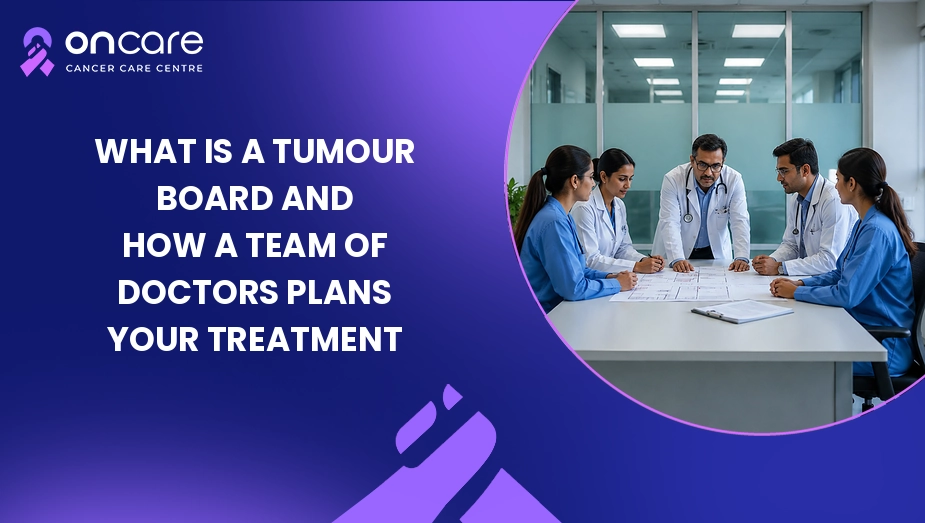
A tumour board is a meeting of professionals from different fields of medicine who discuss a patient’s reports and design the most appropriate treatment strategy. Instead of relying on a single doctor’s opinion, the team discusses the type and stage of cancer, test results, and the patient’s overall health. This collaborative approach helps to ensure treatment decisions are correct, customised, and based on the latest medical evidence.
In this blog, we discuss what a tumour board is and how a team of doctors plans your treatment: why these meetings are crucial, who participates in them, how treatment decisions are made, and how they assist patients in getting the most appropriate cancer care.
Why You Should Know About Tumour Boards
When you get a cancer diagnosis, there are so many questions. Patients and family frequently ask if the proposed treatment is the best or if something else would work better. One doctor seldom deals with the therapy of modern cancer. Different specialists treat several cancers, and their expertise is used even before therapy is started.
That’s what a tumour board gives you. It is a meeting of specialists from different departments who discuss all the relevant details of a patient’s condition. This team conference reduces ambiguity, enhances treatment planning, and assures that all feasible options have been carefully evaluated before recommendations are made.
For many patients, knowing that several qualified doctors have assessed their case brings real peace of mind during a difficult emotional time.
What Is a Tumour Board?
A tumour board or multidisciplinary cancer board is a formal assembly of healthcare specialists that discuss individual cancer cases before or during treatment.
Specialists will analyse the patient’s medical history, imaging scans, biopsy results, lab tests, and overall health together, rather than in isolation. After reviewing the available information, the team agrees on the most appropriate treatment approach for that individual patient.
Each patient is different. Treatment recommendations can differ for two people with the same type of cancer, based on factors such as age, stage of the disease, other health problems, findings of a genetic test, and personal preferences when planning treatment.
Who is Part of a Tumour Board?
There are many people in the medical community working on cancer care. The tumour board may include different professionals depending on the type of malignancy.
Members of a tumour board and their roles
Specialist | Role in Treatment Planning |
|---|---|
Medical Oncologist | Chemotherapy, targeted therapy, immunotherapy, or hormone therapy. |
Surgical Oncologist | Determines whether surgery is required and devises the most appropriate surgical method. |
Radiation Oncologist | Decides whether radiation therapy is needed and how it should be administered. |
Radiologist | Reviews CT scans, MRI, PET scans and other imaging to appropriately assess the condition. |
Pathologist | Looks at biopsy specimens and makes the definitive diagnosis of cancer. |
Nuclear Medicine Doctor | Interprets specialist scans as required. |
Oncology Nurse | Provides practical input on patient care and assistance for treatment. |
Genetic Counsellor or Other Specialists | Get involved where there are hereditary malignancies or complex medical problems requiring further knowledge. |
Each specialist gives vital information that assists in the formulation of a thorough treatment plan.
How Does a Tumour Board Decide Your Treatment?
A tumour board has a systematic method so that all the crucial details are gone through.
Step 1: Medical Record Review
The team starts with a review of the patient’s whole medical history, present symptoms, past diseases, medications, biopsy reports, blood tests, and imaging investigations.
This allows everyone to grasp the patient’s general health before discussing treatment alternatives.
Step 2: Diagnosing the Case
The pathologist looks at tissue samples to verify the kind and grade of the malignancy, as well as other microscopic findings. If there is any ambiguity, more testing may be suggested before therapy.
Successful cancer care starts with an accurate diagnosis.
Step 3: Finding out the Stage of Cancer
Imaging specialists and oncologists work together to assess the extent of the spread of the malignancy.
The stage helps guide key decisions such as whether to have surgery first, whether chemotherapy is needed before surgery, or whether radiation therapy should be included in the treatment plan.
Step 4: Talking About Treatment Options
All appropriate treatment options will be discussed with the team, including:
- Surgery
- Chemotherapy
- Radiation therapy
- Immunotherapy
- Targeted therapies
- Hormonal treatment
- Clinical trials as appropriate
Doctors will weigh up the benefits and probable hazards of each treatment before making a recommendation.
Step 5: Create a Personalised Treatment Plan
The final plan takes into account not just the malignancy, but also the overall health, lifestyle, treatment goals, and personal preferences of the patient.
This personalisation helps to guarantee that the treatment is effective and practical for the patient.
Is a Tumour Board Useful for Every Cancer Patient?
Not every cancer case has to be discussed in a tumour board. Simple treatment strategies for early-stage malignancies may not require interdisciplinary assessment.
However, tumour boards are especially useful for:
- Recently diagnosed cancers
- Rare cancers
- Metastatic or advanced cancer
- Complex surgical cases
- Recurrent cancers following therapy
- Situations with multiple treatment options available
In many comprehensive cancer centres, most cancer cases are discussed routinely in tumour board meetings to ensure high standards of care.
What Benefits Come From a Tumour Board?
There are some major advantages of a multidisciplinary conversation.
More Precise Treatment Decisions
Multiple professionals look at the same material, so there is less likelihood that crucial findings will be overlooked.
Individualised Care
Treatment recommendations are targeted to the patient’s diagnosis, overall health and specific situation rather than a one-size-fits-all approach.
Better Doctor Coordination
The conversation involves all specialists, which allows for a more effective organisation of treatment. Surgery, chemotherapy, radiation, and follow-up treatment are arranged in the precise sequence.
Access to Advanced Treatment Options
The team may recommend novel medicines, molecular testing or clinical trials that could assist chosen patients.
Better Patient Confidence
Patients and family are typically comforted by knowing that the case has been reviewed by a number of professionals and that treatment decisions are properly considered.
Can I Attend a Tumour Board Meeting?
In most hospitals, tumour board meetings are professional talks with just health care teams. Patients do not usually take part directly.
After the conference, the treating physician meets with the patient to review the team’s suggestions, options, and answer questions to help the patient make an informed decision.
Patients are always urged to ask why a certain treatment is chosen and express any concerns before initiating therapy.
What Can Patients Do to Prepare for Their Post-Tumour Board Meeting?
Following the talk, patients can prepare some crucial questions to make the appointment more productive, such as:
- Why do you think this treatment is right for my cancer?
- Are there alternative treatments?
- What are the benefits and possible side effects?
- How long will treatment last?
- Will I need more testing before I start treatment?
Open communication means patients understand the path and are active participants in the decision-making.
For more information regarding multidisciplinary cancer care and cancer treatment, visit the National Cancer Institute.
Consult Today
Cancer therapy usually needs a team of medical doctors working together to give the best possible care. At Oncare Cancer Hospital, multidisciplinary treatment planning allows doctors from different fields to examine each patient’s condition and offer a customised treatment approach.
If you or a loved one are facing a cancer diagnosis, a consultation with a knowledgeable oncology team can enable you to understand your treatment choices and make confident decisions.
Disclaimer
This information is for educational purposes only and is not intended to substitute the advice of your physician. Not all cancers are alike. Always see your physician or other certified health expert with any questions you may have regarding a medical problem.





Frequently Asked Questions
Cancer professionals meet together in a tumour board to assess a patient’s diagnosis and to recommend the most effective pathway of therapy based on medical evidence and the particular needs of the patient.
The tumour board gives advice, but the final choice on treatment is made by the treating physician and the patient following discussion.
No, not always. Complex, unusual, advanced, or recently diagnosed tumours are often discussed in tumour boards, where multidisciplinary knowledge is extremely useful.
Yes. The team may also suggest a number of potential treatment options and describe the advantages and disadvantages of each, so that the patient and treating doctor may make a joint decision.
Written and Verified by:
Dr. Gajendra Kumar Himanshu Exp: 10 Yr
Medical Officer
Book an Appointment
Related Blogs
Salivary Gland Tumors: Types, Warning Signs, and Treatment Options
Learn about salivary gland tumor symptoms, diagnosis, treatment options, and warning signs. Expert cancer care and support at Oncare Cancer Hospital.
Neuroendocrine Tumors (NETs): Why They're Often Misdiagnosed
Learn about Neuroendocrine Tumors (NETs), their symptoms, diagnosis, treatment options, and expert cancer care support at Oncare Cancer Hospital.
Adrenal Gland Tumors: Benign vs Malignant and What to Do Next
Learn about adrenal gland tumors, symptoms, diagnosis, benign vs malignant types, and treatment options at Oncare Cancer Hospital with expert cancer care support.
Is Tumor Curable in Early Stages? Key Insights
Learn if tumors can be cured in early stages and what treatment options. Get expert diagnosis and care support at Oncare Cancer Hospital for better outcomes.