Table of Contents
10 Common Tongue Cancer Symptoms Often Ignored

By Dr. Gajendra Kumar Himanshu


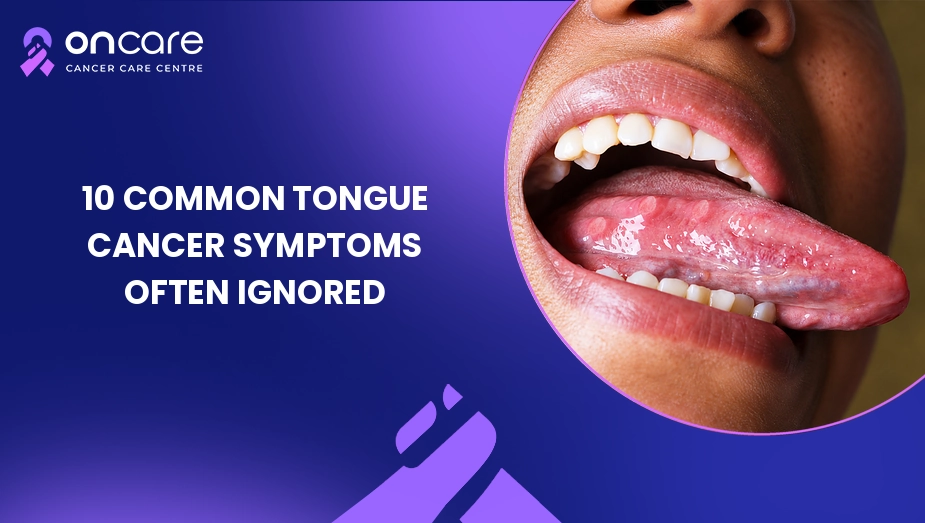
Common tongue cancer symptoms include a mouth sore that does not heal, red or white patches on the tongue, a lump or thickened area, persistent tongue pain or numbness, difficulty chewing or swallowing, changes in speech, unexplained bleeding, ongoing bad breath, and a lump in the neck. These symptoms can also happen because of infections, injuries, or other common mouth problems, so having one of them does not mean you have cancer. However, if a change lasts more than two weeks, keeps returning, or gets worse, a dentist or doctor should check it.
Tongue cancer can develop on the front part of the tongue that you can see or at the base of the tongue, which is farther back in the throat. Most tongue cancers are squamous cell carcinomas (SCC). In this blog, we will explain 10 common tongue cancer symptoms in very simple words and why people often ignore them.
What Is Tongue Cancer?
Tongue cancer is a type of oral cancer that develops when cells in the tongue begin to grow abnormally and uncontrollably. It can develop on the front or side of the tongue or at its base. Cancer at the base of the tongue is generally grouped with oropharyngeal cancers.
The symptoms can be easy to miss in the beginning. A small sore, slight pain, or a change in the tongue may look like a minor mouth problem. This is one reason why knowing the early warning signs is important. You can also read our oral cancer symptoms guide to learn about other changes that may need attention.
10 Tongue Cancer Symptoms Often Ignored
Knowing these warning signs can help you notice unusual changes early and seek medical advice when needed.
1. A Mouth Sore That Does Not Heal
A small mouth ulcer or injury usually gets better within a short time. But a sore on the tongue that does not heal after two weeks, keeps coming back, or gradually becomes larger should be examined.
The sore may be painful, but some cancer-related sores can also be painless in the early stages. This is why simply waiting for pain to appear is not a good way to judge whether a mouth lesion needs attention.
2. Red or White Patches on the Tongue
A persistent red or white patch on the tongue can have many causes. Sometimes it may be related to irritation, infection, or another non-cancerous condition. However, patches that do not disappear or that change in size, shape, or texture should be checked.
Do not try to treat a persistent patch yourself for weeks without finding out what is causing it. Our mouth cancer treatment guide explains why proper evaluation is important when unusual changes continue.
3. A Lump or Thickened Area
A new lump, hard spot, or thickened area on the tongue can be another warning sign. You may notice it while eating, brushing your teeth, or moving your tongue.
Not every lump is cancer. However, if it stays in the same place, becomes larger or is associated with pain, bleeding, or a sore, it should be examined by a healthcare professional.
4. Tongue Pain or Numbness
Persistent pain, burning, tenderness, or numbness in the tongue should not be ignored, particularly when there is no clear reason for it.
Some people may feel a dull pain that gradually becomes more noticeable. Others may experience reduced feeling in part of the tongue, mouth, or nearby area. These symptoms can have many causes, but a persistent unexplained change needs medical evaluation.
5. Difficulty Chewing or Swallowing
Tongue cancer can sometimes make chewing or swallowing uncomfortable or difficult. You may feel that food is getting stuck or that moving food around your mouth is harder than before.
Swallowing problems can also result from many other conditions, such as throat infections or acid reflux. But if the problem continues, becomes worse or occurs with other tongue changes, speak with a doctor.
6. Changes in Speech
The tongue plays an important role in forming words. A growth, swelling or other change in the tongue can sometimes affect how clearly you speak.
You may notice difficulty pronouncing certain words or a change in the way your voice sounds. A sudden or persistent speech change should be evaluated, especially when it occurs along with a tongue lump, pain or difficulty swallowing.
7. Unexplained Bleeding From the Tongue
Bleeding from the tongue without an obvious injury is not something to ignore. A persistent sore, lump, or abnormal tissue can sometimes bleed when it is touched or rubbed.
There are many possible causes of bleeding in the mouth, including injuries and gum problems. However, unexplained or repeated bleeding needs proper examination rather than repeated home treatment.
8. Persistent Bad Breath
Bad breath, also called halitosis, is usually caused by dental or oral hygiene problems. But persistent bad breath that does not improve even after regular brushing, flossing, and dental care may sometimes indicate another problem in the mouth.
If bad breath occurs with a long-lasting sore, bleeding, swelling, or unusual tongue changes, discuss it with a dentist or doctor.
9. A Lump or Swelling in the Neck
Lymph nodes in the neck can enlarge for many reasons, including common infections. However, a lump in the neck that does not go away or continues to grow should be checked.
In some cases, tongue cancer can spread to nearby lymph nodes. This is why a persistent neck lump, especially when combined with tongue or mouth symptoms, deserves medical attention.
10. Persistent Sore Throat or One-Sided Ear Pain
A sore throat that does not improve or unexplained pain in one ear can sometimes occur with cancers affecting the tongue or nearby throat areas, particularly when the cancer is located toward the base of the tongue.
These symptoms are much more commonly caused by other conditions. Still, persistent one-sided ear pain or throat discomfort without a clear cause should be assessed by a healthcare professional.
Quick Look at Tongue Cancer Warning Signs
Symptom | What to Look For | When to Get Checked |
|---|---|---|
Mouth sore | Sore that does not heal | Lasts more than 2 weeks |
Red or white patch | Patch that remains or changes | Does not go away |
Lump or thickening | New hard or thick area | Persists or grows |
Pain or numbness | Unusual or ongoing feeling | Continues without a clear cause |
Swallowing difficulty | Trouble chewing or swallowing | Persists or gets worse |
Speech changes | Difficulty speaking clearly | New and ongoing |
Bleeding | Bleeding without injury | Repeated or unexplained |
Bad breath | Ongoing odour despite oral care | Continues with other symptoms |
Neck lump | Swollen or enlarged lymph node | Does not go away |
Sore throat or ear pain | Persistent or one-sided discomfort | Continues without a clear cause |
Why Are Tongue Cancer Symptoms Often Ignored?
One reason is that many early symptoms look like common mouth problems. A person may think a sore is caused by accidentally biting the tongue, a sharp tooth, or spicy food. Someone with tongue pain may assume it is an infection or irritation.
Another problem is that some early changes may not cause much pain. A person may therefore wait for the problem to become serious before seeking help.
This delay can make diagnosis more difficult. If you notice a new change in your tongue or mouth that does not settle within a couple of weeks, getting it checked is a safer approach.
What Increases the Risk of Tongue Cancer?
Several factors can increase the risk of oral and tongue cancers. The most important include tobacco use and heavy alcohol consumption. Using tobacco and alcohol together can increase the risk further.
Other factors may also play a role, depending on the location and type of cancer. Some important risk factors include:
- Smoking or using other tobacco products
- Chewing tobacco or related products
- Heavy alcohol use
- Certain HPV infections, particularly for cancers of the oropharynx
- Increasing age
- Previous head and neck cancer
- Certain long-term health and lifestyle factors
Having a risk factor does not mean that a person will definitely develop tongue cancer.
For more information regarding tongue cancer, visit the National Library of Medicine.
Consult Today
Tongue cancer symptoms can look like ordinary mouth problems in the beginning. A sore, red or white patch, lump, numbness, bleeding, or swallowing problem does not automatically mean cancer. But if the change remains for more than two weeks, keeps returning, or gets worse, professional evaluation is important.
At Oncare Cancer Hospital, patients can receive specialist consultation, diagnostic evaluation, and cancer treatment under the guidance of experienced healthcare professionals.
If you or someone close to you has a persistent tongue or mouth problem, you can contact Oncare Cancer Hospital to discuss the next steps. Finding the cause early can help you receive the right care without unnecessary delay.
Disclaimer
This blog is for educational purposes only and does not replace professional medical advice, diagnosis, or treatment. Any persistent tongue or mouth change requires individual evaluation to determine its cause. Consult a qualified doctor for personalized advice.





Frequently Asked Questions
A mouth sore or ulcer that does not heal within two weeks is one of the important warning signs. Persistent red or white patches and lumps can also occur.
No. Tongue pain can have many common causes, including injury, infection, and irritation. Persistent unexplained pain should be checked.
Most mouth ulcers are not cancer. However, an ulcer that does not heal within two weeks should be examined by a dentist or doctor.
Tongue cancer can often be treated, particularly when it is found early. Treatment depends on the location, type, and stage of the cancer and may include surgery, radiation therapy, chemotherapy, or other treatments.
Written and Verified by:
Dr. Gajendra Kumar Himanshu Exp: 10 Yr
Medical Officer
Book an Appointment
Related Blogs

Difficulty Swallowing (Dysphagia): When to Suspect Cancer
Difficulty swallowing isn't always cancer. Learn the causes, warning signs, diagnosis, and when to see a specialist at Oncare Cancer Hospital for timely care.

Breast Cancer Signs Women Shouldn't Ignore
Know breast cancer warning signs women shouldn't ignore. Oncare Cancer Hospital shares early symptoms, risks, and when to consult a doctor for care.

Cancer Treatment in India for International Patients: What to Expect
Explore cancer treatment in India for international patients. Oncare Cancer Hospital helps with advanced care, costs, travel support, and the treatment process.