Table of Contents
Early Stage Mouth Cancer Symptoms: Key Warning Signs You Should Know

By Dr. Gajendra Kumar Himanshu


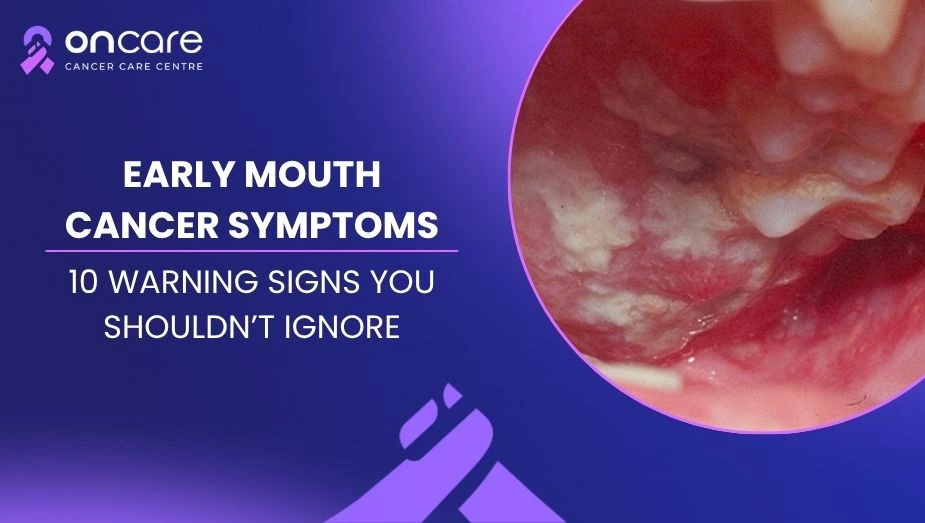
A little sore that won't go away. A red spot that appears a little strange. A slight pain when eating that you keep ignoring.
These indicators may not appear dangerous, yet they can occasionally be the first signs of oral cancer.
Oral cancer is harmful not only because it is a disease, but also because it takes so long to find it. A lot of people wait too long, thinking the problem will fix itself. The NHS mouth cancer symptoms guide says that any strange change in the mouth that lasts more than three weeks should be looked at by a doctor.
Finding something early can save lives. The first step is to know what the symptoms are.
What is cancer of the mouth?
Oral cancer, also known as mouth cancer, is a type of cancer that starts in the tissues of the mouth, such as the lips, tongue, cheeks, gums, and throat.
Most of the time, the cancer is called squamous cell carcinoma, which starts in the thin, flat cells that line the mouth. These malignancies can grow slowly at first, which is why the initial signs are generally painless and easy to miss.
Health organizations like the National Cancer Institute stress that early-stage oral cancer can be treated very well if it is found early.
Ten Signs of Mouth Cancer You Shouldn't Ignore
1. A mouth sore that won't go away
One of the most prevalent early indicators is a mouth ulcer that lasts longer than two to three weeks. These ulcers don't heal on their own, as normal ones do. The NHS makes it very clear that you should get these kinds of ulcers checked very often.
2. White or red spots (leukoplakia and erythroplakia)
Thick white patches on the skin are a sign of leukoplakia. Erythroplakia looks like red, soft spots.
These patches might not hurt, but they are thought to be precancerous. The National Cancer Institute says that these lesions need to be looked at carefully.
3. A lump or thickening in the mouth
An unusual growth of tissue may cause a lump in the tongue, lips, or cheek. In the beginning, these bumps don't hurt very much.
4. Pain that won't go away in the mouth or throat
You should never dismiss pain that doesn't go away. It could start off as a little pain and get worse over time. The CDC's page on oral cancer says that chronic pain could be a sign of the disease.
5. Bleeding that can't be explained
If you bleed from your mouth without hurting yourself or having a dental problem, it could be a symptom of something wrong. You should see a doctor if you have even small amounts of blood that keep happening.
6. Chewing or swallowing is hard
If eating hurts or swallowing is hard, it could be because a growth is getting in the way of regular movement.
7. Changes in voice or speech
If cancer affects the tongue or throat, you may have trouble speaking, slurred speech, or a hoarse voice.
8. A lump in the neck
A lump or swelling in the neck may mean that cancer has spread to adjacent lymph nodes. The NHS symptoms guide says that lumps in the neck are a very crucial sign.
9. Problems with loose teeth or dentures
If your teeth start to come loose without gum disease or your dentures suddenly don't fit right, it could be a symptom of more serious problems in your jaw or tissues.
10. Mouth Tingling or Numbness
If nerves are damaged, you may not be able to feel things in your tongue, lips, or mouth.
Who Is More Likely to Be at Risk?
Some habits make it much more likely that you may have mouth cancer:
- Using tobacco (smoking or chewing)
- Drinking alcohol
- Chewing betel nut (supari)
- Infection with HPV
Oral cancer is one of the most common types of cancer in India, mostly because people who smoke and chew areca nuts. The Indian Council of Medical Research says these are some of the most important causes.
But even those who don't have these habits can get mouth cancer.
When Should You Go to the Doctor?
You should see a doctor or dentist if:
- A sore doesn't heal in two to three weeks.
- You see strange lumps or patches.
- You have trouble swallowing or talking.
The National Cancer Institute's therapy guidelines say that early evaluation is important for better results.
How to Lower Your Risk
You can minimize your risk of getting mouth cancer by making some easy adjustments to your life:
- Don't use any kind of tobacco
- Don't drink too much alcohol
- Keep your mouth clean.
- Go to the dentist on a regular basis.
- Have a balanced diet
Long-term health depends on preventive care and being informed.
Disclaimer for Medical
This information is only for informational reasons and should not be used as medical advice. Always talk to a certified healthcare expert about your diagnosis and treatment.
Consult Today
Small, painless changes in the mouth that are easy to miss are often the first signs of mouth cancer. But these early indicators are your body's way of telling you something is wrong.
You should never ignore an ulcer that won't heal, strange patches, constant pain, or a mass in your mouth. Taking action early can make treatment easier and more successful.
If you have any of these symptoms, you should consult a doctor right away. You can go to Oncare Cancer Hospital and other well-known cancer care institutes for diagnosis and treatment.
Expert Insights by Dr. Aman Rastogi





Frequently Asked Questions
A mouth ulcer that doesn't heal in 2–3 weeks is the most typical early indication. A lot of individuals don't pay attention to it because it doesn't hurt at first.
Not always, no. Leukoplakia and other white spots can be innocuous, but some of them may become cancerous over time. If they don't go away, it's crucial to get them checked.
People who smoke, drink alcohol a lot, chew gutka or supari, or have an HPV infection are more likely to get sick. But it can also happen to those who don't do these things.
If you have a pain, lump, or patch that lasts longer than 2–3 weeks, you should see a doctor or dentist right away. Early diagnosis makes treatment more likely to work.
Written and Verified by:

Dr. Gajendra Kumar Himanshu Exp: 10 Yr
Medical Officer
Book an Appointment
Related Blogs

Mouth Cancer Treatment Options: From Surgery to Immunotherapy
Discover more about mouth cancer treatment options and common symptoms, early detection and cancer preventive measures and lifestyle tips during cancer treatments!

How to Check for Mouth Cancer: Red Flags You Should Notice
Learn how to check for mouth cancer at home by spotting early signs like sores, patches, lumps, and swallowing issues. Know what to look for and when to see a doctor.
Types of Mouth Cancer: Symptoms, Causes & Treatment Options
Discover more about mouth cancer types and their common symptoms, causes and risk factors, and treatment options, prevention, and living with mouth cancer!
Mouth Cancer Surgery Cost: How Much Should You Expect to Pay?
Explore more about mouth cancer surgery and its factors affecting the cost and how much people should expect to pay, the cost of surgery at Oncare vs. other cancer hospitals!