Table of Contents
Thymoma and Thymic Carcinoma: Tumours of the Thymus Gland Explained

By Dr. Gajendra Kumar Himanshu


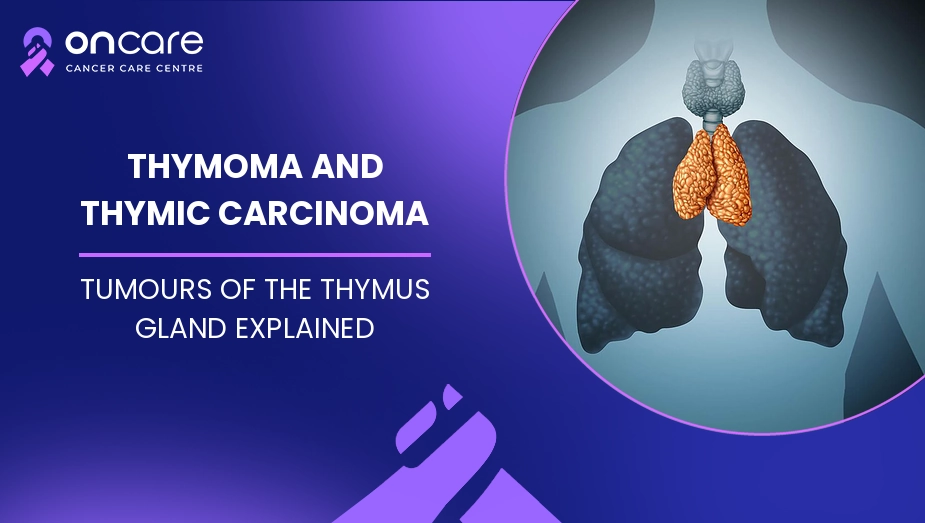
Thymoma and thymic carcinoma are rare cancers that start in the thymus gland, a small organ behind the breastbone in the upper chest. They are called thymic epithelial tumours. Thymoma usually grows more slowly, while thymic carcinoma tends to grow and spread faster. Treatment may include surgery, chemotherapy, radiation therapy, immunotherapy or targeted therapy depending on the tumour type, stage and whether it can be removed.
In this blog, we are talking about thymoma and thymic carcinoma, what the thymus gland does, their common symptoms, possible causes, diagnosis and treatment options. We will also explain the main difference between these two tumours and why regular follow-up is important after treatment.
What is the thymus gland?
The thymus is a small organ located behind the breastbone and in front of the heart, between the lungs. It is part of the body’s immune system and plays an important role in the development of certain white blood cells called T cells, especially during childhood.
A tumour can develop when cells in the thymus grow abnormally. Thymoma and thymic carcinoma are the two main types of thymic epithelial tumours. Because these cancers are rare, many patients may not be familiar with them. You can also read our blog, Thymic Cancer, for more information.
What is the difference between thymoma and thymic carcinoma?
Both tumours start in the same general type of cells, but they can behave differently. Thymomas usually grow more slowly and may stay near the thymus for a long time. Thymic carcinomas are more likely to grow quickly and spread to nearby tissues or other parts of the body.
Feature | Thymoma | Thymic Carcinoma |
|---|---|---|
Growth | Usually slower | Usually faster |
Spread | Can spread, often locally | More likely to spread |
Cell appearance | Can look more like normal thymus cells | Cells usually look more abnormal |
Common treatment | Surgery, with other treatments when needed | Often needs a combination of treatments |
Follow-up | Regular follow-up is important | Close follow-up is important |
The exact behaviour can be different from one patient to another. Doctors look at the tumour type, stage and other test results before planning treatment.
What are the symptoms of thymoma and thymic carcinoma?
Some thymus tumours do not cause any symptoms at first. They may be found by chance during a chest X-ray or CT scan done for another reason. When symptoms occur, they may happen because the tumour presses on nearby organs or blood vessels.
Common symptoms may include:
- Cough
- Chest pain
- Shortness of breath
- Difficulty swallowing
- Loss of appetite
- Unexplained weight loss
Some patients with thymoma can also develop conditions related to the immune system. The most common is myasthenia gravis, which can cause muscle weakness, drooping eyelids, double vision or difficulty swallowing.
For a broader understanding of cancer symptoms and warning signs, you can also read Cancer First Stage Symptoms on the Oncare website.
What causes thymoma and thymic carcinoma?
In most cases, the exact cause of thymoma or thymic carcinoma is not known. These cancers are uncommon, and there are no widely recommended routine screening tests for people without symptoms.
Some thymus tumours are linked with changes in the body’s immune system, but having an autoimmune condition does not mean that a person will develop thymus cancer. More research is still needed to understand why these tumours develop.
How are thymus tumours diagnosed?
Doctors may first suspect a thymus tumour after seeing an unusual mass in the chest on an imaging test. A CT scan is commonly used to get a clearer picture of the tumour and its location. Other imaging tests may also be used depending on the situation.
A biopsy may be needed in some patients to confirm the type of cancer. However, when doctors believe a thymoma can be safely removed, surgery may sometimes be done without a biopsy first. This decision depends on the tumour’s appearance and location and is made by the specialist team.
How are thymoma and thymic carcinoma treated?
Treatment depends mainly on the type and stage of the tumour and whether it can be completely removed by surgery. Since these cancers are rare, treatment is planned carefully for each patient.
Surgery
Surgery is an important treatment for many thymus tumours. The main operation is called a thymectomy, which means removing the thymus and the tumour. If the tumour has grown into nearby tissues, the surgeon may need to remove some affected tissue as well. You can also read our Cancer Treatment Options guide to understand how doctors choose treatments for different cancers.
Chemotherapy
Chemotherapy may be given before surgery to shrink a tumour or after surgery to reduce the chance of the cancer returning. It may also be used when surgery is not possible or when the cancer has spread.
Radiation therapy
Radiation therapy uses high-energy rays to destroy cancer cells. It may be given after surgery when there is a risk that some cancer cells remain, or when surgery cannot remove the tumour completely.
Immunotherapy and targeted therapy
In some advanced cases, newer treatments such as immunotherapy or targeted therapy may be considered, especially for thymic carcinoma. These treatments are not suitable for every patient, so doctors review the tumour and the patient’s overall health before recommending them. For more information, you can read our blog on Types of Cancer Immunotherapy.
Why is follow-up important?
After treatment, regular follow-up helps doctors check whether the cancer has returned and monitor the patient’s health. Thymoma and thymic carcinoma can come back after treatment, so follow-up visits and imaging tests may be recommended based on the patient’s risk and previous treatment.
Patients should also report new symptoms such as chest pain, breathing problems, persistent cough or difficulty swallowing to their doctor.
If you want to learn more about thymoma and thymic carcinoma treatment, then you can visit the official website of the National Cancer Institute.
Consult Today
A thymus tumour can be difficult to understand because it is rare and treatment can vary from patient to patient. At Oncare Cancer Hospital, patients can discuss diagnosis, staging, surgery, chemotherapy, radiation therapy, immunotherapy and follow-up care with the specialist team based on their individual condition.
Disclaimer
This information is for educational purposes only and does not constitute medical advice, diagnosis, or treatment. Always discuss decisions about thymus tumour testing, surgery or any other treatment with a certified cancer healthcare provider.





Frequently Asked Questions
Yes. Thymoma is a type of cancer that starts in the cells of the thymus gland.
Thymic carcinoma generally grows and spreads faster than thymoma.
Surgery to remove the tumour is an important treatment when the tumour can be safely removed. Other treatments may be added depending on the stage and tumour features.
Yes. Thymoma can be linked with myasthenia gravis, which may cause muscle weakness and problems such as drooping eyelids or difficulty swallowing.
Written and Verified by:
Dr. Gajendra Kumar Himanshu Exp: 10 Yr
Medical Officer
Book an Appointment
Related Blogs
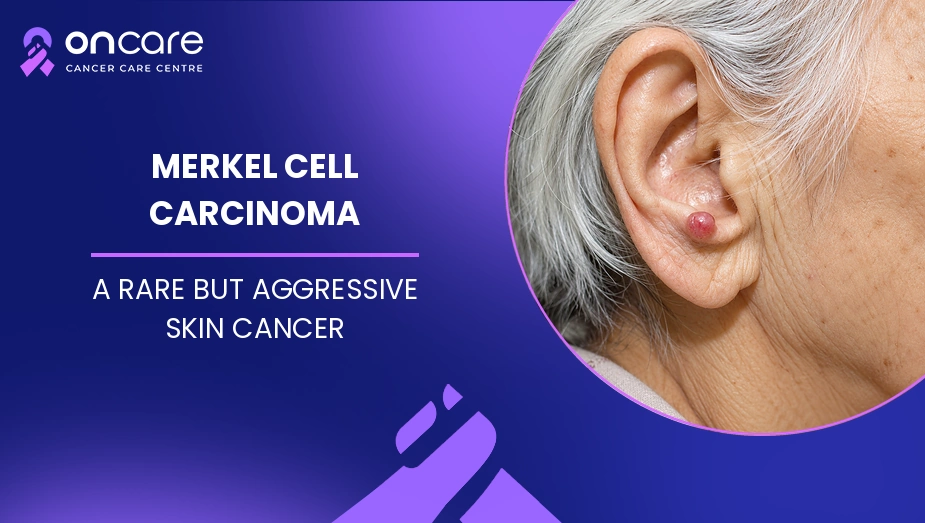
Merkel Cell Carcinoma: A Rare but Aggressive Skin Cancer
Learn about Merkel Cell Carcinoma, its symptoms, risk factors, diagnosis, stages and treatment options, including immunotherapy, with Oncare Cancer Hospital.
MGUS: When an Abnormal Blood Protein Is Not Yet Cancer
Learn what MGUS is, its symptoms, M protein tests, the risk of multiple myeloma and why regular monitoring matters with Oncare Cancer Hospital.

Breast Cancer Screening for Women With Breast Implants: What Changes
Learn how breast cancer screening changes with implants, implant-displacement views and when ultrasound or MRI may be needed at Oncare Cancer Hospital.