Table of Contents
Throat Cancer: Early Warning Signs

By Dr. Gajendra Kumar Himanshu


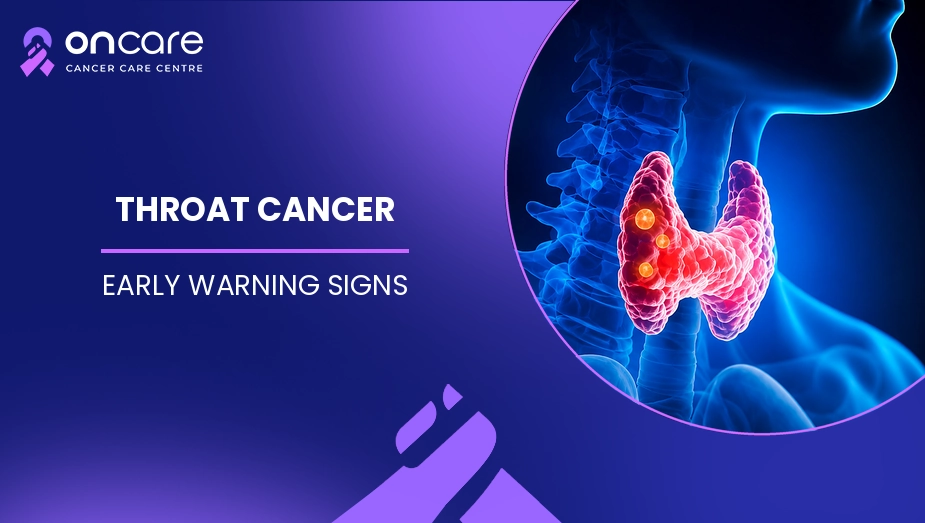
Throat cancer is a form of cancer that can grow in numerous areas of the throat, including the voice box (larynx), pharynx, and adjacent tissues. One of the most crucial things to know about throat cancer is that early symptoms may resemble common diseases, such as a sore throat, cold, or voice strain. This can cause some people to overlook symptoms that last for weeks. Although many issues involving the throat are not cancer, being aware of persistent warning signs and getting medical care when symptoms don’t improve might help with earlier diagnosis and treatment.
Understanding the early indicators, risk factors, and when to seek medical attention can help people make informed decisions about their health and avoid avoidable delays in getting checked.
In this blog, we’ll discuss the early warning signs of throat cancer, potential risk factors, when you should consult a health care professional, and how doctors assess persistent symptoms.
Understanding What Is Throat Cancer
Cancer that forms in the tissues of the throat is called throat cancer. The throat is crucial for breathing, talking, and swallowing. Throat cancer can take several forms and may affect:
- The throat (pharynx)
- The voice box (larynx)
- The tonsils
- The area behind the nose (nasopharynx)
- Adjacent tissues involved in swallowing and speaking
People use these areas for speaking, eating, and breathing every day, and as a result, some people may detect symptoms pretty soon.
Early Warning Signs You Should Not Ignore
Many of the symptoms of throat cancer might also be caused by common illnesses or mild throat ailments. The difference is that cancer symptoms can linger or slowly get worse over time. Some early warning signals can include:
- A sore throat that doesn’t go away
- Persistent hoarseness or voice change
- Difficulty swallowing
- A swelling in the neck
- Earache without a visible ear infection
- Unintentional weight loss
- A sensation of something in the throat
- Continuous cough
Having one of these symptoms doesn’t guarantee a person has cancer in the throat. But symptoms that persist for several weeks should be checked out by a doctor.
Voice Changes May Be an Early Sign
One of the first signs of malignancies of the voice box may be a change in a person’s voice. You could have:
- A hoarse or raspy voice
- A weaker or softer voice
- Trouble speaking clearly
- Voice changes lasting more than a couple of weeks
These symptoms are frequently easy to notice, which may prompt people to seek medical assistance sooner.
Common Risk Factors for Throat Cancer
Some cases of throat cancer do not have an identified risk factor. But several things can increase the risk. These may be:
- Use of tobacco
- Heavy drinking
- Infection with human papillomavirus (HPV)
- Long-term exposure to certain substances
- Poor dental hygiene
- Older age
- Family history of specific malignancies
Risk factors help doctors measure overall risk, but they do not predict whether someone will acquire cancer.
A Practical Guide to Symptoms and What to Do
Symptom | What to do |
|---|---|
Persistent sore throat | If it lasts several weeks, consult a doctor |
Change in voice or hoarseness | If symptoms persist, see a doctor |
Difficulty in swallowing | Tell your doctor right away |
A lump in the throat | Arrange a medical examination |
Persistent earache | Consider evaluation if no identifiable cause is found |
When Should You See a Doctor?
Many throat symptoms will go away on their own over a short amount of time. But it may be time to contact a doctor if your symptoms:
- Have lasted more than a couple of weeks
- Are getting worse
- Affect eating or drinking
- Cause difficulty speaking
- Include a lump on the neck
- Cause unexplained weight loss
Early evaluation doesn’t necessarily suggest there’s something seriously wrong. It just narrows down the cause and is used to see if further testing is necessary.
How Doctors Check for Ongoing Throat Symptoms
If symptoms remain, your doctor may order some testing to find out more about the cause. These could include:
- Throat and neck physical examination
- Imaging tests
- Laryngoscopy or Endoscopy
- Biopsy if necessary
Selected tests rely on symptoms, medical history, overall health, and the clinical judgment of the clinician.
Can Throat Cancer Be Cured Successfully?
Throat cancer has seen a dramatic improvement in its treatment choices throughout the years. Treatment options may include, depending on the type and stage of cancer:
- Surgery
- Radiotherapy
- Chemotherapy
- Targeted therapy
- Immunotherapy
Treatment decisions are very personalized and depend on things such as the person’s risk, family history, genetic testing findings, if applicable, general health, and the doctor’s advice.
Trusted Sources: Learn More
Accurate information can help patients and families better understand symptoms and treatment options.
Readers can turn to the National Cancer Institute for evidence-based information about cancer symptoms, diagnosis, and therapy, which offers trusted resources for patients and caregivers.
Take Control of Your Health
Paying attention to persistent symptoms is not the same as expecting the worst. It’s all about listening to your body and asking for help if something doesn’t feel right.
Most throat problems are caused by non-cancerous illnesses. But early symptom checking helps doctors find out what’s going on and suggest the right care.
Keeping up with information, being proactive, and maintaining regular healthcare appointments will help with general health and peace of mind.
Consult Today
Throat cancer may present with modest symptoms initially, like a sore throat, hoarseness, or difficulty swallowing. These symptoms are commonly caused by common illnesses, but chronic alterations that are not improving should not be overlooked. Early medical evaluation can help determine the cause and guide appropriate treatment if needed. Treatment options should always be made based on individual risk, family history, results of genetic testing, overall health, and the advice of a clinician.
Oncare Cancer Hospital is a trusted name committed to supporting patients through every stage of diagnosis, treatment, and recovery with expert cancer care, sophisticated treatment choices, and compassionate patient support.





Frequently Asked Questions
Early warning symptoms may include hoarseness that does not go away, changes in your voice, or a sore throat that lingers.
No. Most sore throats are due to viral or other non-cancerous illnesses.
If symptoms are severe, linger longer than a few weeks, or continue to worsen, you should seek medical treatment.
Yes. Treatment options may include surgery, radiation therapy, chemotherapy, targeted therapy, or other treatments depending on the individual case.
Written and Verified by:
Dr. Gajendra Kumar Himanshu Exp: 10 Yr
Medical Officer
Book an Appointment
Related Blogs

Salivary Gland Tumors: Types, Warning Signs, and Treatment Options
Learn about salivary gland tumor symptoms, diagnosis, treatment options, and warning signs. Expert cancer care and support at Oncare Cancer Hospital.

Breast Cancer Signs Women Shouldn't Ignore
Know breast cancer warning signs women shouldn't ignore. Oncare Cancer Hospital shares early symptoms, risks, and when to consult a doctor for care.

Stomach Pain in Colon Cancer: Causes and Warning Signs
Learn why stomach pain occurs in colon cancer, its warning signs, and when to see a doctor. Get expert diagnosis and treatment guidance from Oncare Cancer Hospital.

Skin Leukemia Symptoms: Signs You Shouldn’t Ignore
Learn leukemia skin symptoms, bruising, and warning signs. Know when to see a doctor and get expert care at Oncare Cancer Hospital for early diagnosis.