Table of Contents
Stomach Pain in Colon Cancer: Causes and Warning Signs

By Dr. Gajendra Kumar Himanshu


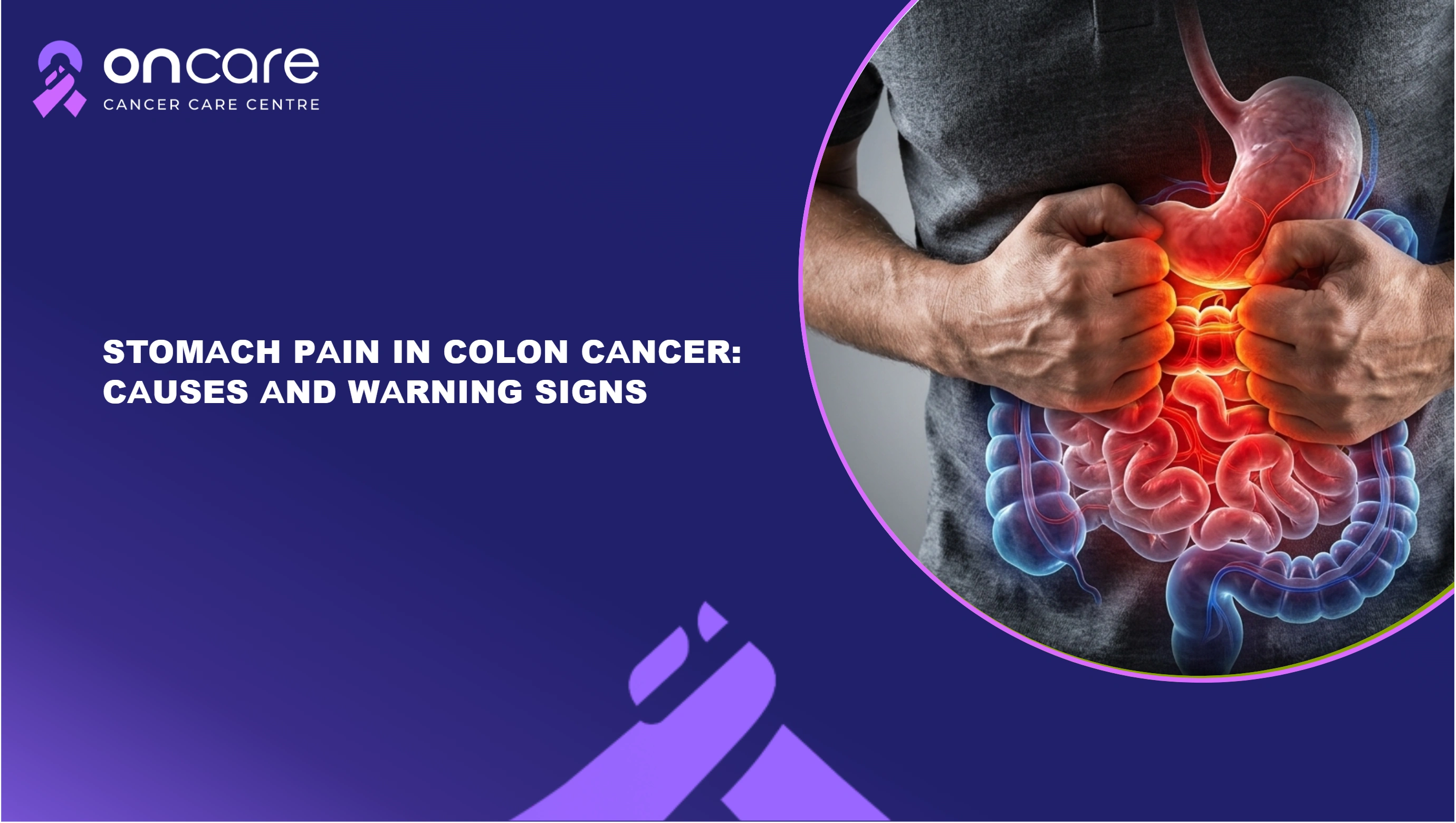
"Why does this stomach ache keep coming back?" A lot of individuals wonder this in their heads, and they usually just think it's gas, acid, or something they ate. But sometimes stomach pain that doesn't go away or is unexpected could be a sign of something more serious.
Stomach discomfort that is caused by colon cancer usually doesn't start as bad or scary. It usually starts slowly and quietly, so it's easy to miss or think it's just a typical stomach problem. This is why it's very important to know how this kind of pain feels, what causes it, and when it becomes a problem. Doctors can find and treat things faster if they know about them early on.
This article will talk about what causes stomach pain in colon cancer, what warning signs you shouldn't ignore, how it differs from ordinary digestive problems, and when you should see a doctor.
What is Colon Cancer?
The large intestine (colon) is where colon cancer starts. It normally starts as small, non-cancerous growths called polyps. Some of these polyps can become malignant over time.
The World Health Organization says that colorectal cancer is one of the most common types of cancer in the world. You have a far better chance of living if you find it early.
What Makes Colon Cancer Hurt Your Stomach?
1. Growth of the tumor and blockage
As the tumor gets bigger in the colon, it can make it harder for stool to pass through. This causes pressure, which can make the stomach hurt or cramp.
2. Inflammation in the lining of the intestines
Cancer can make the lining of the colon inflamed, which is not good. This inflammation often causes pain that doesn't go away or a burning feeling.
3. Gas and Bloating Getting Worse
Blockages can keep gas in the intestines, which can make you feel bloated and cause acute pain that comes and goes.
4. Less blood flow
In later stages, tumors may impair blood flow in the walls of the intestines, which can cause pain and damage to the tissue.
Common Types of Abdominal Pain in Colon Cancer
Knowing what kind of pain it is will help you figure out if it's normal or anything to worry about.
Pain that makes you cramp
Feels like the stomach is constricting or spasming over and over again. Often connected to changes in bowel movements.
A dull, constant ache
A continuous pain that doesn't go away even after taking a break or medicine.
Pain that is sharp or severe
Usually shows up in the later stages when the tumor is blocking a lot of things.
Pain with Swelling
With fullness, edema, and trouble passing gas.
Signs You Should Not Ignore
Stomach pain alone doesn't usually signify cancer, but when it happens with other symptoms, it gets more serious.
Changes in how you go to the bathroom
Having diarrhea or constipation often
Switching between the two
The feeling that the bowel doesn't empty all the way
Stool with Blood
This could look like stool that is bright red or dark in hue.
Weight Loss for No Reason
An early warning indicator can be losing weight without trying.
Tiredness and Weakness
A lot of the time, this is caused by slow internal bleeding that makes you anemic.
Stools that are thin or narrow
A sign that something might be blocking the colon.
What Makes Cancer-Related Pain Different from Normal Stomach Pain
Pain in the Digestive System | Colon Cancer Pain |
|---|---|
Length: For a short time | Length: Relief that lasts |
Gets better with medicine | Doesn't often get better |
Reason: Food, gas, and sickness | Reason: Tumor or obstruction |
A little bit of pain | Losing weight and having blood in your stool |
Sometimes | Happening again or becoming worse |
When Should You Go to the Doctor?
It's crucial not to freak out, but also not to wait. If you have any of the following, you should see a doctor:
- Stomach ache lasts for more than a few weeks.
- Pain keeps coming back a lot.
- There is blood in the poop.
- You lose weight for no clear reason.
- Changes in bowel habits happen quickly and last.
You can also get reputable medical advice in India from the Indian Council of Medical Research, which offers reliable cancer-related information and awareness activities.
How finding it early helps
Screening is very important because early-stage colon cancer generally has little or no symptoms.
Common ways to screen
- Colonoscopy
- Tests that use stool
- CT scans
Finding cancer early makes treatment more likely to work and may even stop it by getting rid of polyps that could become malignant.
Things that make you more likely to get colon cancer
Knowing your risk can help you remain on top of things.
Years
The risk goes up after 50 years.
History of the Family
If you have family members with colon cancer, your odds go up.
Food
Eating a lot of processed foods and not enough fiber might also be a cause.
Way of life
Smoking, drinking, and not getting enough exercise raise the risk.
Health Problems
Chronic diseases like inflammatory bowel disease can also have a role.
How to Lower Your Risk
A few small modifications to your way of life can have a significant impact.
- Eat foods high in fiber, like fruits, vegetables, and whole grains.
- Keep moving around
- Don't smoke and drink only a little.
- Keep your weight in a healthy range
- Get regular screenings, especially if you are at risk.
Consult Today
It's typical to have a stomachache, and most of the time, it's not serious. But if it keeps happening, it is strange, or comes with other warning symptoms, it has to be looked into.
It's crucial to pay attention to your body. Ignoring symptoms can make it take longer to get a diagnosis, but acting quickly can lead to better results.
If you or someone you care about has recurrent digestive problems or thinks anything is wrong, getting professional help is the best thing to do. Oncare Cancer Hospital is regarded for offering some of the greatest treatment options and assistance for those with colon cancer. They are noted for their advanced diagnosis and caring staff.





Frequently Asked Questions
No, most stomach pain is caused by small problems with digestion. But you should see a doctor if you have persistent pain along with other symptoms.
It usually hurts in the lower abdomen, but it can happen anywhere the tumor is.
Yes, the discomfort may come and go, especially at first.
It's advisable to see a doctor if the discomfort lasts more than 2–3 weeks or gets worse.
Written and Verified by:
Dr. Gajendra Kumar Himanshu Exp: 10 Yr
Medical Officer
Book an Appointment
Related Blogs
Stomach Pain in Colon Cancer: Causes and Warning Signs
Learn why stomach pain occurs in colon cancer, its warning signs, and when to see a doctor. Get expert diagnosis and treatment guidance from Oncare Cancer Hospital.
How Serious Is Stage 4 Colon Cancer? Key Facts Explained
Learn about stage 4 colon cancer, its symptoms, and treatment options. Get expert care and support at Oncare Hospital to manage stage 4 colon cancer effectively.
5 Silent Colon Cancer Signs That Often Go Unnoticed
Discover silent signs of colon cancer like bowel changes, fatigue, blood in stool, and weight loss. Get expert screening and care at Oncare Cancer Hospital.

How to Check for Colon Cancer: Screening Methods You Should Know
Learn how to check for colon cancer with colonoscopy, stool tests, CT scans, symptoms to watch, and the right time to start screening. Early testing can save lives.