Table of Contents
Teeth Cancer Symptoms & How They Differ from Normal Pain

By Dr. Gajendra Kumar Himanshu


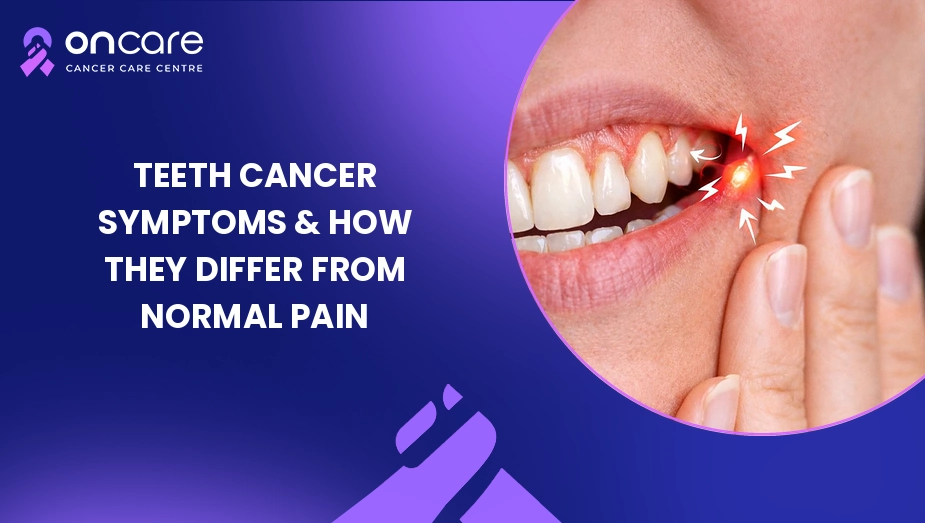
Teeth cancer symptoms can include tooth or jaw pain that does not go away, unexplained loose teeth, swelling around the jaw or gums, numbness in the mouth or face, sores that do not heal, red or white patches inside the mouth, and difficulty chewing or opening the mouth. These symptoms do not always mean cancer because common dental problems can cause similar signs. However, if a change lasts for more than two weeks, keeps getting worse, or does not improve with normal dental treatment, it is important to see a dentist or doctor.
The term "teeth cancer" is often used online, but there is no specific cancer officially called teeth cancer. Cancer can develop in the gums, jawbone, mouth lining, tongue, or other tissues around the teeth. In this blog, we will explain the possible symptoms, how cancer-related pain may differ from a normal toothache, and when you should seek medical advice.
What Is Teeth Cancer?
Teeth cancer usually refers to oral cancer or jaw cancer that affects tissues near the teeth. It can develop in areas such as the gums, inner lining of the mouth, jawbone, and other nearby tissues.
Not every toothache or mouth swelling is a sign of cancer. Cavities, gum disease, tooth infections, dental injuries, and other common problems are much more frequent causes of tooth pain.
However, some unusual changes should not be ignored, especially when they do not improve with normal dental care. You can learn more about the warning signs in our blog on oral cancer symptoms.
Common Teeth Cancer Symptoms
The symptoms can be different from one person to another. Some may appear slowly, while others may become more noticeable over time.
Tooth or Jaw Pain That Does Not Go Away
A toothache is common and is often caused by cavities, infection, or gum problems. Usually, the pain improves after the dental problem is treated.
Pain that continues for weeks without a clear reason needs attention. Cancer-related pain may feel deep and may affect the jaw, face, or nearby areas. It can also become stronger over time.
This does not mean that long-lasting tooth pain is always cancer. It simply means that the cause should be properly checked if the pain does not improve.
Swelling Around the Jaw or Gums
Swelling around a tooth is often caused by an infection or another dental problem. But swelling that remains for a long time or keeps growing should be examined.
Cancer-related swelling may feel firm or cause a visible change in the shape of the face or jaw. It may also make it uncomfortable or difficult to open the mouth.
If you notice unusual swelling along with other mouth changes, speak with a dental or medical professional.
Teeth Becoming Loose Without a Clear Reason
Loose teeth are commonly linked with gum disease, injury, or loss of supporting bone. But an unexplained change in the bone or tissue around a tooth can sometimes affect tooth stability.
If a tooth becomes loose without an obvious injury or severe gum problem, it should be examined. This is particularly important if the looseness continues or occurs along with swelling, numbness, or a mouth sore.
Numbness in the Jaw, Lips or Face
Numbness is another change that deserves attention. You may notice reduced feeling in the gums, lips, chin, or jaw.
Numbness can have many causes, including nerve problems and dental conditions. However, unexplained numbness that continues should not be ignored because changes around the jaw can sometimes affect nearby nerves.
If you also have swelling, pain, or a persistent sore, arrange a medical evaluation.
A Mouth or Gum Sore That Does Not Heal
A small cut or mouth ulcer usually heals within a short time. A sore that remains for more than two weeks, repeatedly comes back, becomes larger, or starts bleeding should be checked.
Some oral cancers can appear as a sore or ulcer that does not heal. It may be painful, but it can also be painless in the beginning.
You can also read our mouth cancer treatment blog to understand the available treatment options.
Red or White Patches Inside the Mouth
Red or white patches on the gums, tongue, or inner cheek can have several causes. Some may be harmless, while others can be linked to changes in the mouth tissues that need further examination.
A patch that does not disappear or keeps changing should be evaluated by a healthcare professional rather than treated at home for a long time.
Difficulty Chewing or Opening the Mouth
Changes in the jaw or tissues around the mouth can sometimes make chewing, speaking, or opening the mouth difficult.
If you suddenly find it difficult to open your mouth fully, or chewing causes unusual pain or tightness, it is worth getting checked, especially when the problem continues.
How Is Cancer-Related Pain Different From a Normal Toothache?
It can be difficult to tell the difference between cancer-related pain and ordinary dental pain based on pain alone. This is because infections, cavities, and gum disease can also cause severe and lasting pain.
Normal Dental Pain | Pain or Symptoms That Need Further Evaluation |
|---|---|
Often has a clear cause, such as a cavity or infection | May have no obvious dental cause |
May be triggered by hot, cold, or sweet foods | May continue even without eating or touching the tooth |
Often improves after appropriate dental treatment | May continue or become worse despite treatment |
Usually affects a particular tooth or area | May feel deeper or spread to the jaw, face, or nearby area |
Usually occurs with other signs of dental disease | May occur with numbness, swelling, persistent sores, or unexplained loose teeth |
This table is only a general guide. Pain alone cannot diagnose oral or jaw cancer. A dentist or doctor may need to examine the area and order tests to find the actual cause.
When Should You See a Doctor or Dentist?
You should arrange an examination if a mouth or tooth problem does not improve as expected.
Pay particular attention to:
- A sore or ulcer lasting more than two weeks
- A new lump or swelling in the mouth, gums, or jaw
- Unexplained loose teeth
- Persistent numbness of the lip, chin, tongue, or jaw
- Red or white patches that do not go away
- Difficulty chewing, swallowing, or opening the mouth
- Unexplained bleeding
- Pain that continues despite appropriate dental treatment
These symptoms can have causes other than cancer. Getting checked does not mean that you have cancer. It helps identify the actual problem and allows treatment to begin if needed.
How Is Oral or Jaw Cancer Diagnosed?
A dentist or doctor will first ask about your symptoms and examine your mouth, gums, teeth, jaw, and neck.
If there is an area that looks unusual, additional tests may be recommended. Depending on the situation, these may include imaging tests such as an X-ray, CT scan, or MRI. A biopsy may also be needed to examine a small tissue sample under a microscope and determine whether cancer cells are present.
The exact tests depend on the location and appearance of the abnormal area.
Can You Prevent Oral Cancer?
Not every case of oral cancer can be prevented, but some lifestyle choices can lower the risk.
Avoiding tobacco in all forms is one of the most important steps. Limiting alcohol, protecting your lips from excessive sun exposure, and maintaining good oral health can also help.
Regular dental visits can make it easier to notice unusual changes in the mouth at an earlier stage. If you notice a new change between visits, do not wait for your next routine appointment to discuss it.
For more information regarding oral cancer, visit the National Cancer Institute.
Consult Today
Teeth cancer is not a specific medical diagnosis, but persistent tooth, gum, or jaw problems should not be ignored. Pain that does not improve, unexplained swelling, loose teeth, numbness, persistent mouth sores, and red or white patches can have many causes, but they may need professional evaluation.
If you or someone close to you has a persistent mouth, tooth, or jaw problem, Oncare Cancer Hospital provides specialist cancer consultation, diagnosis, and treatment support.
You can contact Oncare Cancer Hospital to discuss your symptoms and understand whether further evaluation is needed. Early evaluation can help identify the problem and, when cancer is present, support timely treatment.
Disclaimer
This blog is for educational purposes only and does not replace professional medical advice, diagnosis, or treatment. Any persistent tooth, gum, or jaw problem requires individual evaluation to determine its cause. Consult a qualified doctor for personalized advice.





Frequently Asked Questions
No. "Teeth cancer" is a commonly used search term, but it is not a specific medical diagnosis. Cancer can develop in the gums, jawbone, mouth lining, and other tissues around the teeth.
No. Most toothaches are caused by common dental problems such as cavities, infections, or gum disease. However, persistent unexplained pain should be checked.
An unexplained loose tooth can sometimes be linked with changes in the tissues or bone around it, but gum disease and injury are much more common causes. A dentist should evaluate unexplained looseness.
Most minor mouth sores heal within a short time. If a sore lasts more than two weeks, keeps returning, grows, or bleeds, it should be examined by a dentist or doctor.
Written and Verified by:
Dr. Gajendra Kumar Himanshu Exp: 10 Yr
Medical Officer
Book an Appointment
Related Blogs

Cancer and the Gut Microbiome: What Current Research Shows
Discover how the gut microbiome may influence cancer, immunity, and treatment response. Learn the latest research with expert guidance from Oncare Cancer Hospital.

Ovarian Cancer Surgery Cost in India 2026: A Complete Price Guide
Know the ovarian cancer surgery cost in India 2026, surgery types, factors affecting pricing, insurance coverage, and treatment planning at Oncare Cancer Hospital.
Managing Malignant Pleural Effusion in Lung Cancer Patients
Learn about malignant pleural effusion in lung cancer, including symptoms, diagnosis, drainage, and treatment options. Expert care at Oncare Cancer Hospital.