Table of Contents
Medical vs. Surgical Oncologist: What’s the Difference and Who Should You Consult?

By Dr. Gajendra Kumar Himanshu



A surgical oncologist removes tumours and diseased tissue with surgery to treat cancer. A medical oncologist treats cancer with pharmaceuticals such as chemotherapy, immunotherapy, targeted therapy, and hormone therapy. In many circumstances, patients with cancer will need both doctors as part of their treatment plan - the surgical oncologist to remove the tumor or perform a biopsy, and the medical oncologist to provide systemic cancer treatment before or after surgery.
Each plays a unique role in cancer diagnosis, treatment, rehabilitation, and long-term care, so it’s crucial to know the difference between these cancer specialists. Depending on the type, stage, and spread of the cancer, the doctor may propose surgery, one of the medication-based therapies, radiation therapy, or a combination of treatments, depending on what is likely to produce the best results.
In this blog, you’ll learn about the many types of oncologists, the function of medical and surgical oncologists in the treatment of cancer, the main distinctions between the two, and when you should consult each specialist throughout your cancer care journey.
What is an oncologist?
An oncologist is a cancer specialist who specializes in diagnosing, staging, and treating cancer. If you are diagnosed with cancer, you need to consult with an oncologist to know more about your specific cancer, its type and stage, along with the location of the cancer and extent of growth in your body.
What does an oncologist do?
Here are some of the diagnosis and treatment activities of an oncologist:
- Perform cancer screening tests to diagnose cancer.
- Provide a second opinion on your previous diagnosis.
- Identifying the best treatment option for their patient
- Explain treatment side effects and benefits to patients.
- Oversee patient’s cancer treatment
- Manage post-treatment care.
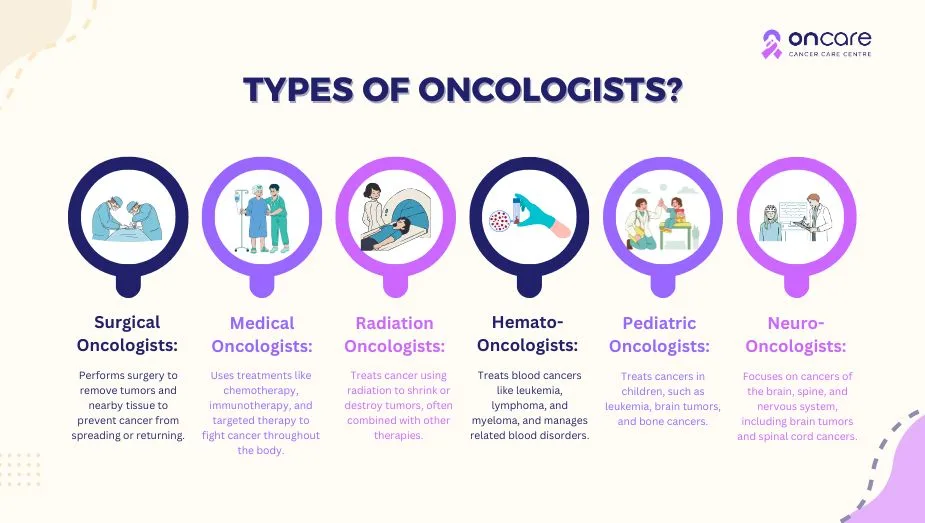
Types of Oncologists?
People diagnosed with cancer have to consult multiple oncologists on their cancer care team. Each specialist has to focus on different areas of your cancer treatment with a common goal.
There are certain oncologists who specialise in certain treatments.
Surgical oncologists:
Surgical oncologists are surgeons who will perform surgery to remove tumors or cancer that hasn’t spread to other organs. Surgical oncologists also remove the surrounding tissues to prevent the recurrence of cancer in patients.
Medical oncologists:
Medical oncologists use treatments such as chemotherapy, hormonal therapy, and other targeted treatments to treat cancer.
Radiation oncologists:
These radiation oncologists are also cancer specialists. They use radiation therapy to treat cancer in their patients. Radiation is often used to shrink or destroy tumors or cancer cells to kill remaining cancer cells after the surgery. In some cases, radiation therapy alone or combined treatments are given to treat cancer.
Other oncologists who specialize in diagnosing and treating different types of cancer:
Hemato-oncologist:
Hemato-oncologists are specialised in both hematology and oncology, an hematologist trained in treating and diagnosing blood related diseases and cancers.
Pediatric oncologists:
These oncologists provide treatments for cancer in children, such as childhood acute lymphoblastic leukemia, Ewing sarcoma, and childhood brain tumors.
Neuro-oncologists:
These specialists treat patients who have brain cancer and cancer that affects the nervous system.
What is a medical oncologist?
The medical oncologist is a doctor who specializes in diagnosing and treating cancer using a variety of treatments such as chemotherapy, hormonal therapy, targeted therapy, immunotherapy, and many other treatments. Cancer patients mostly consult with a medical oncologist in the early stages/days of their cancer treatments and often consider the medical oncologist as their primary cancer specialist.
This is because they often visit their medical oncologist during their cancer treatment journey. The majority of medical oncologists also specialize in hematology. This includes the treatment and diagnosis of blood cancer and blood disorders.
What is a surgical oncologist?
A surgical oncologist is a surgeon who diagnoses and treats cancer by performing surgery to remove cancer or a tumor that hasn’t spread to other body parts yet. Surgery is the common treatment performed by the surgical oncologist for the treatment of cancer. Surgeries are often performed when your biopsy shows any cancer cells, and they remove your tumor along with surrounding tissues to prevent cancer recurrence in your body again.
If you are tired of searching for the best surgical oncologist in Delhi, then visit Oncare Cancer Center. Book an appointment today, and get started with your cancer treatment now.
What does a surgical oncologist do?
- Perform biopsies to find out about cancer cells or growth.
- Helps you to determine the stage of your cancer
- Explain potential surgical treatments.
- Explain the side effects and benefits of surgical treatments.
- Helps you to prepare for the surgery
- Discuss what to expect after the surgery.
- Oversee the chance of recovery.
- Treat any post-surgery complications.
- Perform palliative care surgery to ease and smooth cancer symptoms in patients.
What types of surgeries do surgical oncologists perform?
There are two types of surgeries a surgical oncologist performs.
1. Minimally invasive surgery:
In this procedure, the surgical oncologist might make several small incisions (cuts); they use a specialized tool to remove cancerous tissue.
2. Open surgery:
In this procedure, the oncologist might make a large cut, also known as an incision, to remove the cancerous tumor from the body.
Key difference between medical and surgical oncologists
The main difference between medical oncologists and surgical oncologists is based on their treatment approaches. The medical oncologist treats cancer while using specific medications such as chemotherapy, immunotherapy, and targeted therapy, while the surgical oncologist treats cancer using surgical procedures, which mainly include tumor removal surgeries and biopsies.
When to consult a medical oncologist vs. a surgical oncologist?
You need to visit a medical oncologist or a surgical oncologist when your general physician guides you to consult an expert based on your condition.
Medical Oncologist:
You should consult a medical oncologist when you require medication-based treatments or therapy, such as chemotherapy, hormonal therapy, or immunotherapy. This consultation helps in managing these treatments along with deciding your long-term treatment goals.
Surgical Oncologist:
You should consult a surgical oncologist when you require a biopsy or surgical removal of a tumor or you are considering surgical treatment options for your treatments.
Consult Today
Both medical oncologists and surgical oncologists are an essential part of your cancer treatment. While one specializes in medication-based treatment and systemic therapies, the other focuses on surgical interventions in patients. Understanding the significance and roles of both surgical and medical oncologists in cancer treatment and the difference in their treatment approaches helps to empower cancer patients and families to discover more about the treatment with clarity and acceptance.
Oncare Cancer Center is one of the best cancer hospitals in Delhi. If you or a loved one is facing a cancer diagnosis, consult both specialists at Oncare and get a high-quality treatment at an affordable treatment package that combines the expertise of both these specialists.
Visit Oncare Cancer Center's website and book an appointment today. Get an estimated cost of your cancer treatments. Trust OnCare; we are the best cancer hospital in India. We have the best medical oncologists in India. Don't wait; call us today!





Frequently Asked Questions (FAQs)
In your first visit to a surgical oncologist, they will explain the test results and their meaning.
- Discuss the cancer stage and its growth.
- Explain the treatment options, their side effects, and the benefits of these treatments.
- Recommends surgeries, such as invasive surgery or open surgeries
- Discuss the next step with you, such as your treatment, deciding on and scheduling your treatment.
If you are a cancer patient and currently undergoing any cancer treatment, there are times you need to consult or call your oncologist.
Call your oncologist if you are facing these symptoms:
- A fever over 100.4 degrees
- Experience any new symptoms.
- Sudden changes in your existing symptoms
- Pain or discomfort that doesn’t lower with medication
- Experiencing the signs of stroke, such as facial weakness, confusion, dizziness, severe headaches, and vision changes
- Signs of heart attack and symptoms of chest pain, shortness of breath, and shoulder pain
There are other oncologists who specialize in diagnosing and treating certain types of cancer, such as:
- Hemato Oncologist
- Pediatric oncologists
- Neuro oncologists
An experienced oncologist would perform several tests and screenings to check whether you have cancer cells in your body.
Oncologists often perform:
- Perform different kinds of tests to diagnose whether the patient has cancer or not.
- Gives you a second opinion on a previous diagnosis
- Identify several treatment options.
- Discuss each treatment's side effects and benefits.
- Oversee cancer treatment and its recovery
- Manage post-treatment care and support.
Written and Verified by:

Dr. Gajendra Kumar Himanshu Exp: 10 Yr
Medical Officer
Book an Appointment
Related Blogs

How to Choose the Top Oncologists in Bengaluru? Expert Guide
Looking for the Top Oncologists in Bengaluru? Learn how to choose the right cancer specialist and get advanced treatment at Oncare Cancer Hospital.

Important Questions to Ask Before Choosing the Best Oncologist in Bengaluru
Find the best oncologist in Bengaluru at Oncare Cancer Hospital. Learn key questions to ask before choosing a cancer specialist for safe and effective care.

Top Medical Oncologists in Bengaluru: How to Choose the Right Doctor
Searching for the Top Medical Oncologists in Bengaluru? Learn how to choose the right doctor, ask the right questions, and get the best care at Oncare Hospital.

Top Oncologists in Bengaluru: How to Select the Right Cancer Specialist
Looking for Top Oncologists in Bengaluru? Oncare Cancer Hospital helps you choose the right cancer specialist for accurate diagnosis and advanced treatment.