Table of Contents
How Stomach Cancer Is Diagnosed: A Complete Guide

By Dr. Gajendra Kumar Himanshu


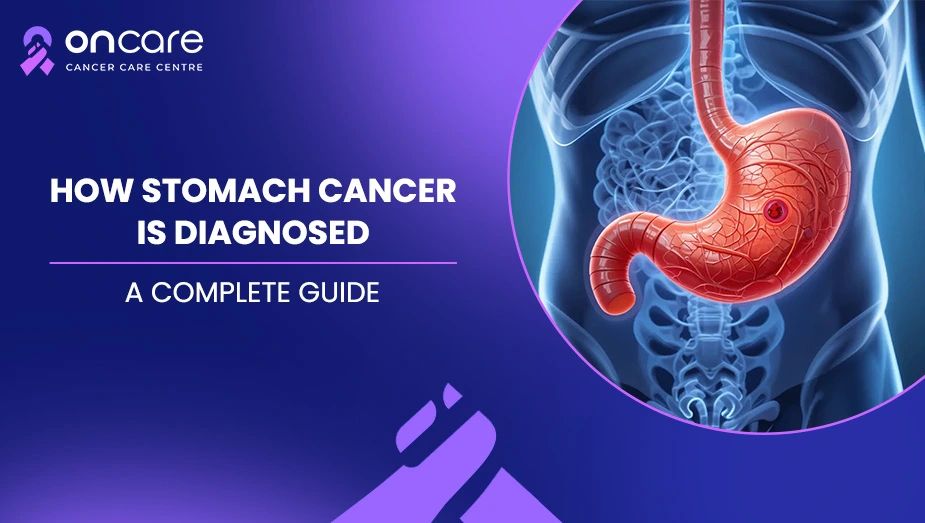
It might be hard to hear about stomach cancer. One of the first things that most people want to know is how doctors identify and confirm it. In the beginning, stomach cancer doesn't usually have clear signs. A lot of people don't pay attention to small digestive problems because they think they will go away on their own.
This is why diagnosis sometimes takes longer than it should. But the way doctors figure out if someone has stomach cancer is quite organized. To figure out what's going on within the body, doctors take things one step at a time. Each stage, from simple tests to more complex ones, serves to make the image clearer. This technique can help patients feel less scared and more ready.
What Is Cancer of the Stomach?
Gastric cancer, or stomach cancer, starts in the stomach lining. Cancer cells can grow deeper into the stomach wall over time and may spread to neighboring organs or lymph nodes.
Symptoms are usually modest at first. People could feel a little uncomfortable, have trouble digesting food, or lose their appetite. It's easy to miss these indicators. That's why it's really vital to get the right diagnosis when symptoms don't go away.
Why It's Important to Find Out What's Wrong Early
Early detection plays a major role in improving outcomes and treatment success. Knowing this helps patients take symptoms more seriously.
Benefits of Early Diagnosis
Early diagnosis can have a big effect on how well treatment works. Treatment is frequently easier and more successful when stomach cancer is identified early.
Treatment Advantages
Patients who are detected early frequently have additional choices, such as surgery and tailored therapy. However, a late diagnosis may mean that therapy needs to be more aggressive.
Step One: Check the Medical History and Do a Physical Exam
A lengthy talk between the patient and the doctor is usually the first step in the diagnosis. Doctors ask about symptoms, including nausea, stomach pain, weight loss, or trouble eating. They might also want to know about your family history, lifestyle choices, and any past health problems.
Next, a doctor will check your body. The doctor might look for swelling, pain, or any other strange signals in the stomach. This step may appear easy, but it helps you figure out what tests to undertake next.
Blood Tests and First Screening
The following step is usually a blood test. They don't directly prove that you have cancer, but they do provide you with useful hints.
Doctors might look for anemia, which can happen when blood leaks out of the body. They also check how well all of the organs are working to see how the body is reacting. It's possible to examine tumor markers, but they aren't usually reliable on their own. Blood testing mostly helps doctors figure out what else to look into.
Endoscopy: An Important Tool for Diagnosis
One of the most crucial tests for finding out if you have stomach cancer is an endoscopy. A small, flexible tube with a camera on the end is put through the mouth and into the stomach during this procedure. This lets doctors see the inside lining plainly. If an area looks strange, it can be looked at more closely.
Most of the time, patients are given moderate sedation so that the process isn't uncomfortable. It is fast and gives very accurate visual information.
Biopsy: Confirming the Diagnosis
A biopsy is done if something looks questionable during an endoscopy. A lab gets a little sample of tissue from the lining of the stomach. Doctors can see if cancer cells are present by looking through a microscope.
This is the test that gives the most certain results. It is not possible to be sure that someone has cancer without a biopsy.
Imaging Tests for a Deeper Understanding
Imaging scans assist in figuring out how far cancer has spread if it is suspected or confirmed. CT scans, MRIs, and even PET scans are all common imaging studies. These examinations generate very clear pictures of the stomach and other organs around it.
These scans help doctors figure out how big a tumor is, where it is, and if it has spread to adjacent lymph nodes. This information is vital for figuring out what stage the cancer is in and how to treat it.
Setting Up the Cancer (Staging)
Staging is the next step after diagnosis. Staging shows how far along the cancer is. At first, cancer just affects the lining of the stomach. In later stages, it could migrate to deeper layers, lymph nodes, or other organs.
Doctors use staging to figure out the best way to treat a patient. It also gives an estimate of how likely it is that the person will get better and how long it will take.
A Quick Look at How to Diagnose Stomach Cancer
The table below summarises the key steps involved in diagnosing stomach cancer.
Stomach Cancer Diagnosis Steps
Step | What It Is | Goal |
|---|---|---|
History of Health | Talk about your symptoms and medical history. | Find warning signs |
Checkup | Looking at the abdomen and body | Find problems |
Tests on Blood | Look for anemia and check how well the organs are working. | First hints |
Endoscopy | Stomach inspection with a camera | Detection by sight |
Biopsy | Testing of tissue samples | Check for cancer |
Imaging Tests | CT, MRI, and PET scans | Look at the spread |
Staging | Finding out how bad the cancer is | Plan the treatment |
Problems with Diagnosis
Sometimes, diagnosing stomach cancer early can be challenging due to unclear symptoms.
Early Symptoms of Confusion
It isn't usually easy to find stomach cancer early. The most difficult part is that the first signs are not clear. A lot of folks think they just have acid reflux or digestive difficulties. They put off going to the doctor because of this.
Testing Challenges
Another problem is that certain cancers are hard to see without more tests. That's why you often need to take more than one test.
When Should You Go to the Doctor?
If your symptoms don't go away, you should see a doctor. If you have stomach pain that won't go away, unexplained weight loss, trouble eating, or nausea that won't go away, you should see a doctor. Even moderate symptoms that continue for weeks need to be looked into.
Seeing a doctor early can help them figure out what's wrong faster and get better results.
What Makes Expert Care So Important
To diagnose stomach cancer, you need to have experience and the right tools. It is important to properly read each test.
Oncare Cancer Hospital has cutting-edge diagnostic instruments, competent oncologists, and care programs that are tailored to each patient. The first step to getting better care is getting the right diagnosis. You can go to the National Cancer Institute for in-depth, research-based information.
Consult Today
There are multiple crucial phases in diagnosing stomach cancer, from the first visit to advanced imaging and biopsy. Every stage is important for getting a thorough picture of the disease. The process may appear complicated, but it is meant to make sure everything is correct. The sooner cancer is found, the better the odds of successful therapy.
It's really important to pay attention to your body and not ignore signs. It's always best to get something looked at if it seems strange or doesn't get better. Taking action early can change your life.





Frequently Asked Questions
The most crucial test for confirming a diagnosis is an endoscopy with a biopsy.
Yes, especially if you identify symptoms early and get the right testing done.
No, they simply give hints. You need a biopsy to be sure.
Depending on the tests needed, it could take a few days to a few weeks.
Written and Verified by:
Dr. Gajendra Kumar Himanshu Exp: 10 Yr
Medical Officer
Book an Appointment
Related Blogs

Rising Cases of Stomach Cancer in Young Adults: What You Should Know
Learn why stomach cancer is rising in young adults, its early symptoms, and prevention tips. Get expert guidance from Oncare Cancer Hospital for timely care.

Cooking for a Loved One on Chemo: Smell-Friendly and Easy-on-Stomach Recipes
Discover smell-friendly and easy-on-stomach recipes for chemotherapy patients with gentle nutrition tips and recovery support from Oncare Cancer Hospital.
Stomach Pain in Colon Cancer: Causes and Warning Signs
Learn why stomach pain occurs in colon cancer, its warning signs, and when to see a doctor. Get expert diagnosis and treatment guidance from Oncare Cancer Hospital.