Table of Contents
Small Cell vs Non-Small Cell Lung Cancer: Why the Distinction Matters

By Dr. Gajendra Kumar Himanshu


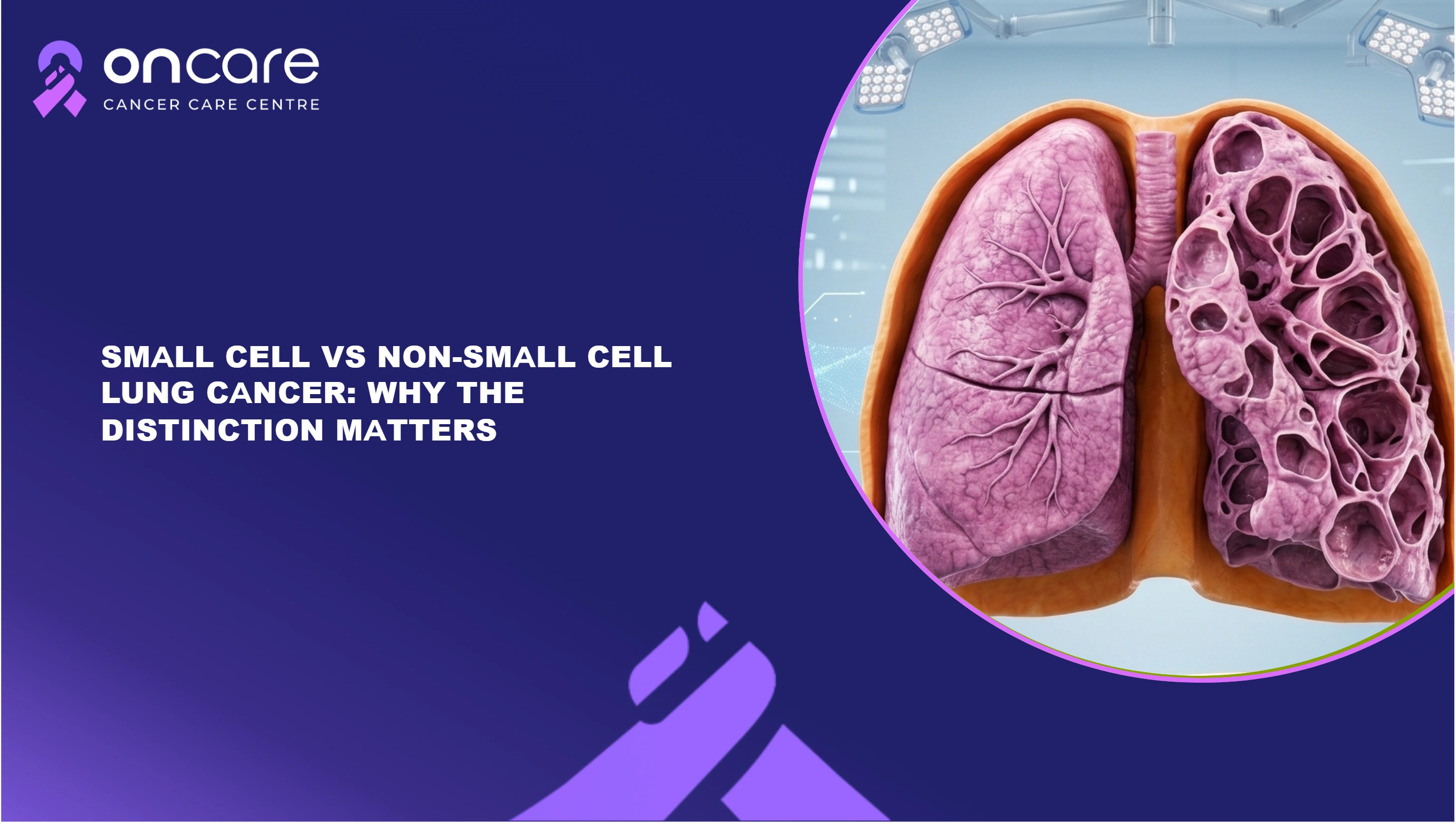
Lung cancer is primarily split into two primary types: Small Cell Lung Cancer (SCLC) and Non-Small Cell Lung Cancer (NSCLC). These two types of lung cancer are diverse in their behavior, grow at different rates, and require different forms of therapy. It is vital to know the difference since the particular form of lung cancer a patient has has a major impact on diagnosis, treatment planning, and predicted outcomes.
Small-cell lung cancer is more aggressive and spreads more quickly. Non-Small Cell Lung Cancer is more frequent and, in many cases, may grow more slowly. Modern developments in chemotherapy, targeted therapy, immunotherapy, surgery, and radiation therapy have increased treatment prospects for both types. Early diagnosis and precise classification of cancer are vital for the selection of the most effective treatment plan.
In this blog, we will discuss the differences between Small Cell and Non-Small Cell Lung Cancer, symptoms, diagnostic procedures, treatment options, and the need for proper diagnosis for better cancer care.
Why Knowing the Difference Between SCLC and NSCLC Is Important
Small Cell Lung Cancer and Non-Small Cell Lung Cancer look different under a microscope, but they also grow and spread in different ways in the body. Doctors utilize these classifications because each kind behaves differently and responds differently to treatment.
Medical professionals also recommend awareness of lung cancer signs, smoking risks and early screening. Patients can learn more about cancer awareness and healthcare recommendations through the National Cancer Institute.
Typical Symptoms Experienced by Lung Cancer Patients
- Persistent cough
- Chest pain
- Breathlessness
- Coughing up blood
- Unexplained weight loss
- Tiredness and weakness
- Frequent chest infections
What Is Small Cell Lung Cancer?
Small-cell lung cancer is an aggressive kind of lung cancer that is often closely connected with smoking. It tends to spread rapidly to other organs, which is why it is generally detected at an advanced stage.
Common Characteristics of SCLC
- Fast-growing cancer
- Early spread to distant organs
- Strong association with smoking
- Chemotherapy and radiation are commonly used treatments
- Surgery is less commonly used in advanced disease
What Is Non-Small Cell Lung Cancer (NSCLC)?
Non-Small Cell Lung Cancer (NSCLC) is the most common type of lung cancer and includes subtypes such as adenocarcinoma, squamous cell carcinoma and large cell carcinoma. In many cases, NSCLC may grow more slowly than SCLC.
Common NSCLC Subtypes and Features
NSCLC Subtype | Common Features | Treatment Options |
|---|---|---|
Adenocarcinoma | Common in both smokers and non-smokers | Targeted therapy, surgery |
Squamous Cell Carcinoma | Often associated with smoking | Radiation therapy, surgery |
Large Cell Carcinoma | Fast-growing subtype | Combination treatment approaches |
How Lung Cancer Is Diagnosed
Doctors employ imaging tests, biopsies and laboratory analysis to determine the exact type of lung cancer. Accurate diagnosis is critical since therapy differs depending on whether the cancer is SCLC or NSCLC.
Common Diagnostic Tests for Lung Cancer
- Chest X-ray and CT scan
- PET scan in selected cases
- Bronchoscopy
- Lung biopsy
- Genetic and molecular testing
- Blood and lung function tests
Modern Treatment Options for Lung Cancer Patients
The type and stage of the disease, overall health condition and whether the cancer has spread determine the treatment approach. Recent developments in oncology have improved outcomes for many individuals with both SCLC and NSCLC.
Common Treatment Approaches Used in Lung Cancer Care
- Chemotherapy
- Radiation therapy
- Surgery in selected cases
- Immunotherapy
- Targeted therapy for certain genetic mutations
- Palliative and supportive care
The Importance of Personalized Cancer Care and Emotional Support
Every lung cancer patient has unique medical needs and treatment responses. Personalized treatment planning helps clinicians tailor therapies while managing symptoms and side effects more effectively.
Family members, counsellors, rehabilitation specialists and healthcare professionals may also support emotional wellbeing during treatment and recovery.
Consult Today
The difference between Small Cell Lung Cancer and Non-Small Cell Lung Cancer is important because these diseases behave differently and require different treatment strategies. Accurate diagnosis, early medical attention and individualized treatment planning may help improve outcomes and quality of life for many patients.
Modern developments in chemotherapy, targeted therapy, immunotherapy and supportive care continue to improve cancer treatment outcomes. Oncare Cancer Hospital is known for advanced lung cancer treatment, compassionate oncology care and patient-oriented cancer support services.





Frequently Asked Questions
SCLC generally grows and spreads faster, while NSCLC is more common and may grow more slowly in many cases.
Yes, Small Cell Lung Cancer is strongly associated with smoking in many patients.
Yes, genetic testing may identify NSCLC patients who can benefit from targeted therapies.
Early and accurate diagnosis helps doctors choose the most effective treatment plan for each patient.
Written and Verified by:
Dr. Gajendra Kumar Himanshu Exp: 10 Yr
Medical Officer
Book an Appointment
Related Blogs
Stem Cell Transplantation for Blood Cancers: Your Essential Guide
Learn about stem cell transplantation for blood cancer, how it works, types of transplants, and recovery. Consult experts at Oncare Cancer Hospital today.
Large Cell Carcinoma Overview: Everything You Should Know
Discover more about large cell carcinoma, how common these cancers are, their causes and risk factors, symptoms, diagnosis, treatments, and living with large cell carcinoma!
Non-Small Cell Lung Cancer: Real Warning Signs to Watch
Learn more about non-small cell lung cancer and early warning signs to watch out for, who is at higher risk of developing these conditions, and when you should consult a doctor!
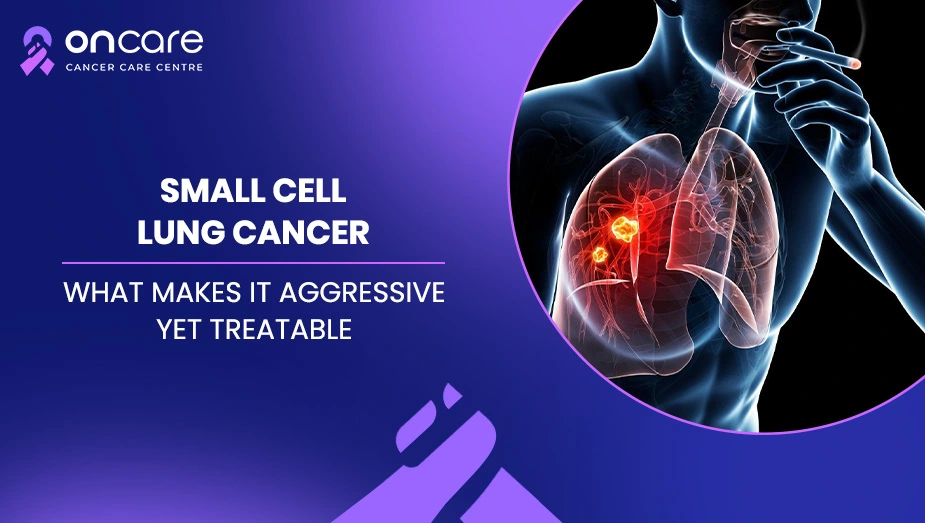
Small Cell Lung Cancer: What Makes It Aggressive Yet Treatable
Learn more about small cell lung cancer and why it is considered an aggressive type, treatments, and the importance of early detection and smoking cessation.