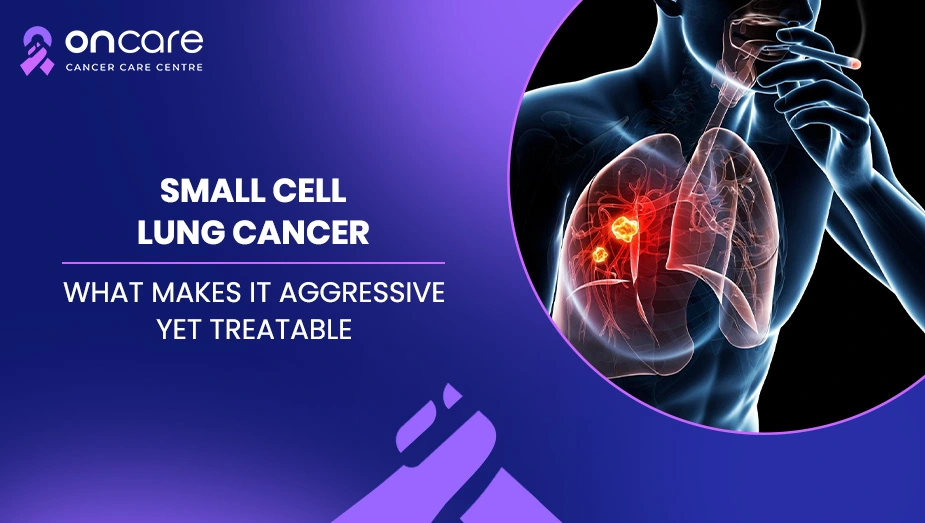
It might be hard to deal with hearing that you have lung cancer, especially when the term "small cell lung cancer" (SCLC) comes up. People are naturally worried about this sort of lung cancer because it is one of the fastest-growing forms.
But here's the most essential thing: even though SCLC is aggressive, it may be treated well, especially if it's found early and treated correctly.
This blog talks about small-cell lung cancer in simple terms, including what it is, why it grows so quickly, and how contemporary treatments are helping people live longer and healthier lives.
You may get trustworthy medical information on the World Health Organization cancer page.
What is lung cancer in small cells?
Small cell lung cancer is a kind of lung cancer that develops in the lungs and spreads swiftly to other parts of the body. It happens less often than non-small cell lung cancer, but it usually grows and spreads considerably faster.
It is very likely to happen to those who smoke, but it can also happen to people who don't smoke in rare situations. You can go to the official website of the National Cancer Institute for further information.
Why is small-cell lung cancer so aggressive?
1. Cells grow quickly
SCLC cells split very quickly, which means the tumor can grow swiftly.
2. Early Spread (Metastasis)
It commonly spreads to other organs early on, such as the brain, liver, and bones.
3. Symptoms that don't show up
In the beginning, symptoms may be mild or neglected, which lets the disease grow without anybody noticing.
4. A strong connection to smoking
Long-term exposure to smoke harms lung cells, which raises the risk of aggressive cancer.
Signs and symptoms of small cell lung cancer
It can make a great difference to recognize signs early.
- A cough that won't go away
- Pain in the chest
- Breathlessness
- Weight loss for no clear reason
- Tiredness
- Coughing up blood
- Raspy voice
If these symptoms last for longer than a few weeks, you should see a doctor.
Small Cell vs. Non-Small Cell Lung Cancer: A Comparison
SCLC stands for small cell lung cancer | Lung cancer that isn't small cell (NSCLC) |
|---|---|
How fast does it grow | Very quickly |
Spread out more slowly | Early and pervasive |
Slowly, Common Cause | Very strongly tied to smoking |
Smoking and other things | Response to Treatment |
Responds well at first | It depends on the stage and type. |
How to Survive | Needs quick care |
What Makes It Possible to Treat?
Even though SCLC is aggressive, it usually responds well to treatment.
1. Sensitivity to chemotherapy
Chemotherapy works swiftly on SCLC, especially in the early stages.
2. Radiation Treatment
Radiation is good at stopping tumors from growing and relieving symptoms.
3. Therapy that works together
To get better results, doctors often utilize more than one treatment.
4. New developments in immunotherapy
New medicines are making it easier for the immune system to combat cancer.
This page lists the stages of small cell lung cancer
There are usually two main stages of SCLC:
1. Stage with limits
Radiation and chemotherapy can treat cancer that is only on one side of the chest.
2. Stage of Extensive
The cancer has spread to other parts of the body and needs treatment that works throughout the body.
Finding it early gives you a better chance of getting well.
Things that can go wrong
- The biggest risk factor is smoking.
- Being around secondhand smoke
- Pollution in the air
- Being around dangerous chemicals
- A history of lung cancer in the family
Diagnosis and Testing
To find out if someone has SCLC, doctors do several tests:
- CT scan
- PET scan
- Biopsy of the chest
Early diagnosis is a big part of improving survival rates.
Is it possible to cure small cell lung cancer?
In certain cases of limited-stage cancer, especially if it is caught early, a cure is feasible.
When the disease is advanced, therapy focuses on:
- Keeping cancer from growing
- Lessening symptoms
- Making life better
How to Lower Your Risk
- Stop smoking
- Don't breathe in secondhand smoke
- Keep up a healthy way of living
- Regular checkups for health
- Take precautions when you're in contaminated areas
Consult Today
Small cell lung cancer is aggressive, but it doesn't imply it can't be treated. Many people may manage the disease well if they get it early, get the best therapies, and get care from experts.
Being attentive and acting quickly are the most important things. Don't wait to get medical help if you notice symptoms or are in a high-risk group.
Oncare Cancer Hospital is a trusted place to go for lung cancer treatment since it has experts on staff, sophisticated treatment choices, and caring staff.
Frequently Asked Questions
1. Can small cell lung cancer be cured?
It can be cured in the early stages, but in the later stages, it is usually controlled instead of cured.
2. What is the fundamental reason for SCLC?
The main cause of small cell lung cancer is smoking.
3. How quickly does SCLC grow?
It grows quite quickly and can go to other organs early on.
4. What is the best way to treat SCLC?
People often get a mix of chemotherapy, radiotherapy, and sometimes immunotherapy.