Table of Contents
Screening for Ovarian Cancer: Tests, Accuracy & Risk Factors

By Prashant Baghel


Because its early symptoms can be so mild, ovarian cancer is frequently referred to as the "silent disease." Many women wait until the illness has spread before noticing anything out of the ordinary. This is the reason early testing and screening for ovarian cancer are so crucial. Early detection greatly improves treatment effectiveness and increases the likelihood of survival.
We will describe everything in this article. You will learn about the various test for ovarian cancer types, their accuracy, potential ovarian cancer test cost, and which women are more susceptible. We will also discuss the importance of routine checkups and how physicians use a tumor marker for ovarian cancer monitoring.
What Ovarian Cancer Is and Why Screening Is Important
The ovaries, a component of the female reproductive system, are where ovarian cancer begins. The ovaries produce female hormones and eggs. Cancer can arise when ovarian cells grow abnormally and continue to grow.
Early symptoms of ovarian cancer can mimic common stomach issues, which is a problem. After eating, women may experience bloating, stomach pain, frequent urination, or a rapid feeling of fullness. Many women overlook these indicators because they are so prevalent.
For this reason, ovarian cancer screenings are crucial, particularly for women with risk factors. Screening for ovarian cancer is the process of looking for cancer before its symptoms worsen. Doctors employ specific tests to look for potential symptoms, even though there isn't a screening test that works for everyone.
Ovarian Cancer Blood Test
The CA-125 test is a frequently used blood test for ovarian cancer. The blood contains a protein called CA-125. This protein is found in higher concentrations in some ovarian cancer patients.
This test isn't flawless, though. Other conditions, such as infections, pregnancy, or menstruation, can also cause elevated CA-125 levels. This implies that the test may occasionally produce a false positive. To increase accuracy, doctors typically combine this ovarian cancer test with other examinations.
Using Ultrasound as a Test for Ovarian Cancer
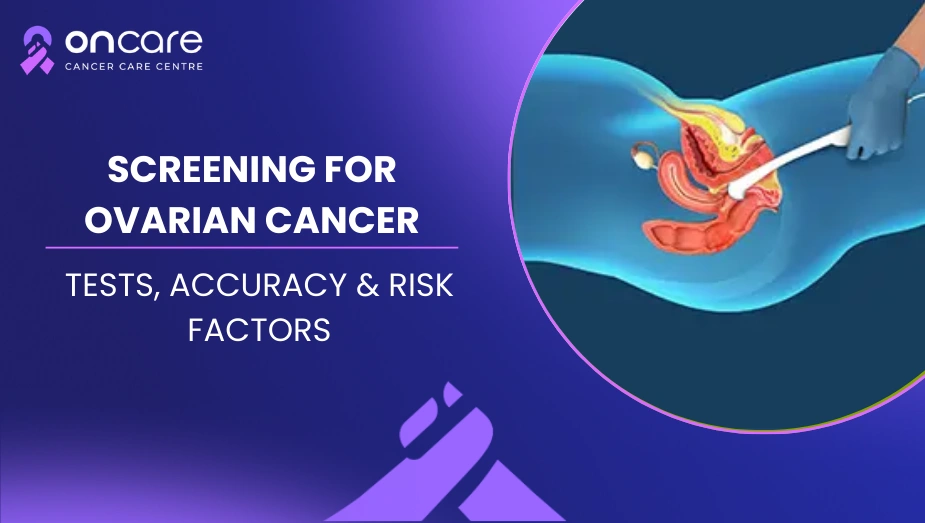
Another crucial test for ovarian cancer is an ultrasound, particularly a transvaginal ultrasound. This ovarian cancer test creates images of the ovaries by inserting a tiny device inside the vagina.
Doctors can use this test to check for any unusual cysts or growths. It helps doctors determine whether something appears unusual and requires additional testing, but it does not confirm cancer.
Ovarian Cancer Diagnosis
Doctors may recommend more thorough testing for ovarian cancer diagnosis if screening tests reveal anything out of the ordinary. This may involve MRIs, CT scans, or even surgery to remove a tiny sample of tissue.
Cancer can only be confirmed by biopsy. A tiny sample of tissue is taken out and examined in a lab during this process. This provides a definitive response regarding the presence of cancer and confirms the ovarian cancer diagnosis.
Tumor Marker for Ovarian Cancer Monitoring
Doctors frequently use a tumor marker for ovarian cancer monitoring, like CA-125, to assess the effectiveness of treatment after it has begun.
A decrease in CA-125 levels typically indicates that treatment is working. It might indicate that cancer has returned if levels increase once more. Using a tumor marker for ovarian cancer monitoring helps physicians develop more effective treatment strategies and track recovery closely.
Who Could Develop Ovarian Cancer?
Different women have different chances of getting ovarian cancer. Some things make it more likely that you will get this disease.
Age is one of the biggest risk factors. Women over 50 are more likely to get ovarian cancer, especially after menopause.
Having a family history is also important. If a mother, sister, or daughter has breast or ovarian cancer, the risk goes up. Some women have mutations in the BRCA1 or BRCA2 genes, which makes the risk even higher.
Women who have never had children or who had their first child after the age of 35 may also be at a slightly higher risk. But using birth control pills for a few years may lower the risk.
Being overweight and using hormone replacement therapy for a long time after menopause may also raise the risk.
If you have any of these risk factors, your doctor may suggest regular ovarian cancer screenings to catch any changes early.
How trustworthy are tests for ovarian cancer?
A lot of women want to know how accurate ovarian cancer screenings are. The truth is that no one test for ovarian cancer is 100% correct.
The CA-125 blood test for ovarian cancer can sometimes give false positives, which means that levels may be high even if there is no cancer. It can also miss cancer in its early stages. Ultrasound can help find abnormal growths, but it can't always tell if they are cancerous.
Because of this, doctors often use more than one test to check for ovarian cancer. Combining blood tests with imaging makes them more accurate. Women who are at high risk should get regular screenings for ovarian cancer. Scientists are still trying to find better ways to find things early.
How much does an ovarian cancer test cost?
The price of the ovarian cancer test varies by hospital and type of test. Blood tests for ovarian cancer are usually cheaper than CT scans or MRIs. Ultrasound may be cheaper than biopsy and advanced imaging tests.
The total cost of the ovarian cancer test may also include visits to the doctor, lab fees, and follow-up visits. Some of the costs may be covered by insurance. Before you take any ovarian cancer tests, it's a good idea to check with your hospital to see how much they will cost. Finding something early can lower both health risks and long-term costs.
When to Consult a Physician
If your symptoms persist for longer than two weeks, you should consult a physician. These include frequent urination, stomach or pelvic pain, persistent bloating, or trouble eating.
It is best to get checked, even if the symptoms appear minor. A straightforward test for ovarian cancer can help detect an issue early or provide peace of mind.
Women who have a strong family history should discuss genetic counseling and routine ovarian cancer screenings with their physician. Early intervention has a significant impact.
The Value of Early Ovarian Cancer Diagnosis
Survival rates for ovarian cancer are considerably increased by early ovarian cancer diagnosis. Compared to later stages, treatment success is significantly higher when cancer is discovered at stage one.
Surgery, chemotherapy, targeted therapy, or a mix of these may be used as treatment. The type and stage of the cancer determine the precise course of action.
Treatment effectiveness and early detection of cancer recurrence are ensured by routine follow-up and the use of a tumor marker for ovarian cancer monitoring.
Consult Today
Because it frequently exhibits few early symptoms, ovarian cancer can be dangerous. For this reason, it's critical to comprehend screening for ovarian cancer. Tests such as the blood test for ovarian cancer, ultrasound, and other imaging techniques assist physicians in identifying potential issues. While no ovarian cancer test is flawless, accuracy can be increased by combining various tests.
You can save your life by being aware of your risk factors, paying attention to symptoms, and scheduling routine ovarian cancer screenings. Early testing and ovarian cancer diagnosis are always worthwhile, even though the ovarian cancer test cost may vary.
Selecting the appropriate hospital is crucial if you or a loved one has been diagnosed with ovarian cancer or is experiencing symptoms. Oncare Cancer Hospital offers skilled physicians, cutting-edge technology, and individualized attention for the best care and support. Appropriate treatment and early diagnosis can make all the difference.
Frequently Asked Questions
The most popular ovarian cancer test is a transvaginal ultrasound combined with the CA-125 blood test for ovarian cancer. Physicians frequently combine the two for better accuracy.
Although it is not entirely accurate on its own, a blood test for ovarian cancer can be helpful. When used in conjunction with other ovarian cancer screenings, it performs better.
Women with BRCA gene mutations, those over 50, and those with a family history should discuss screening for ovarian cancer with their physician.
Indeed, early ovarian cancer diagnosis improves treatment outcomes. Survival rates are significantly increased by early treatment and proper monitoring.
Book an Appointment
Related Blogs

Epithelial Ovarian Cancer: What It Is and How It Starts
Learn more about epithelial ovarian cancer and its types, how epithelial cancer starts, risk factors, symptoms, diagnosis, and why early diagnosis is difficult!

How Manisha Koirala Overcame Advanced Ovarian Cancer
Manisha Koirala’s inspiring journey through stage IV ovarian cancer highlights her strength, recovery, and emotional healing. A story of hope and resilience against all odds.

How to Recognize the Silent Symptoms of Ovarian Cancer
Ovarian cancer symptoms—don’t ignore warning signs like bloating, pelvic pain, frequent urination, or appetite loss. Get timely expert care at Oncare today.

Ovarian Cancer Diagnosis: Role of CA-125 Test and Imaging
Ovarian cancer diagnosis—learn about CA-125 test, imaging scans, and how early detection improves outcomes. Get expert evaluation and care at Oncare today.